- Encrypted paymentSecure, encrypted checkout
- Tracked worldwideFree on 3+ bottle bundles
- 30-day guaranteeMoney-back if it is not for you
- Clear labellingCoverage and results stated honestly
Stock up & save
Choose your RustGuard™ bundle
Listed in USD and billed in USD; your bank converts to CAD at checkout.
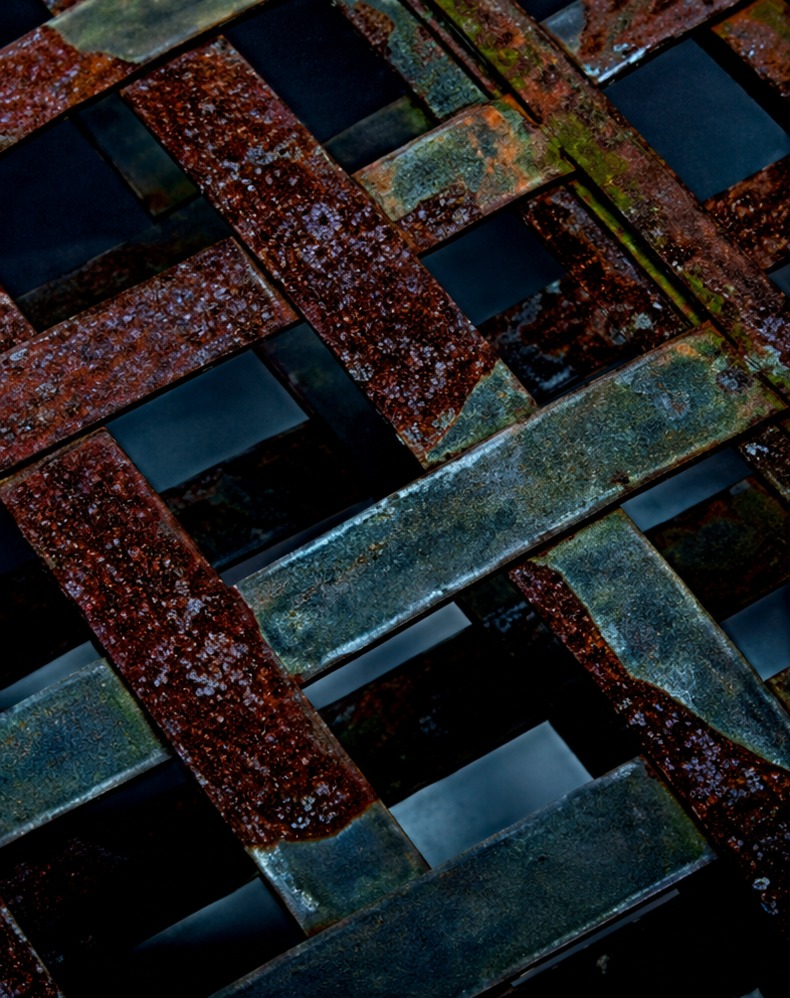
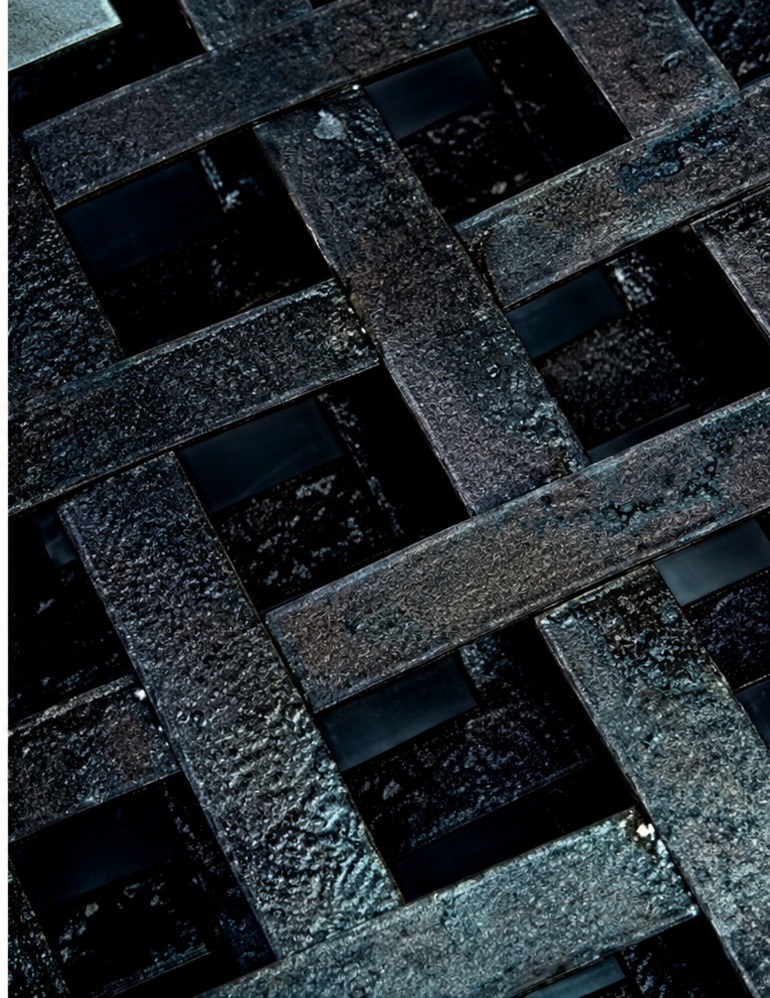
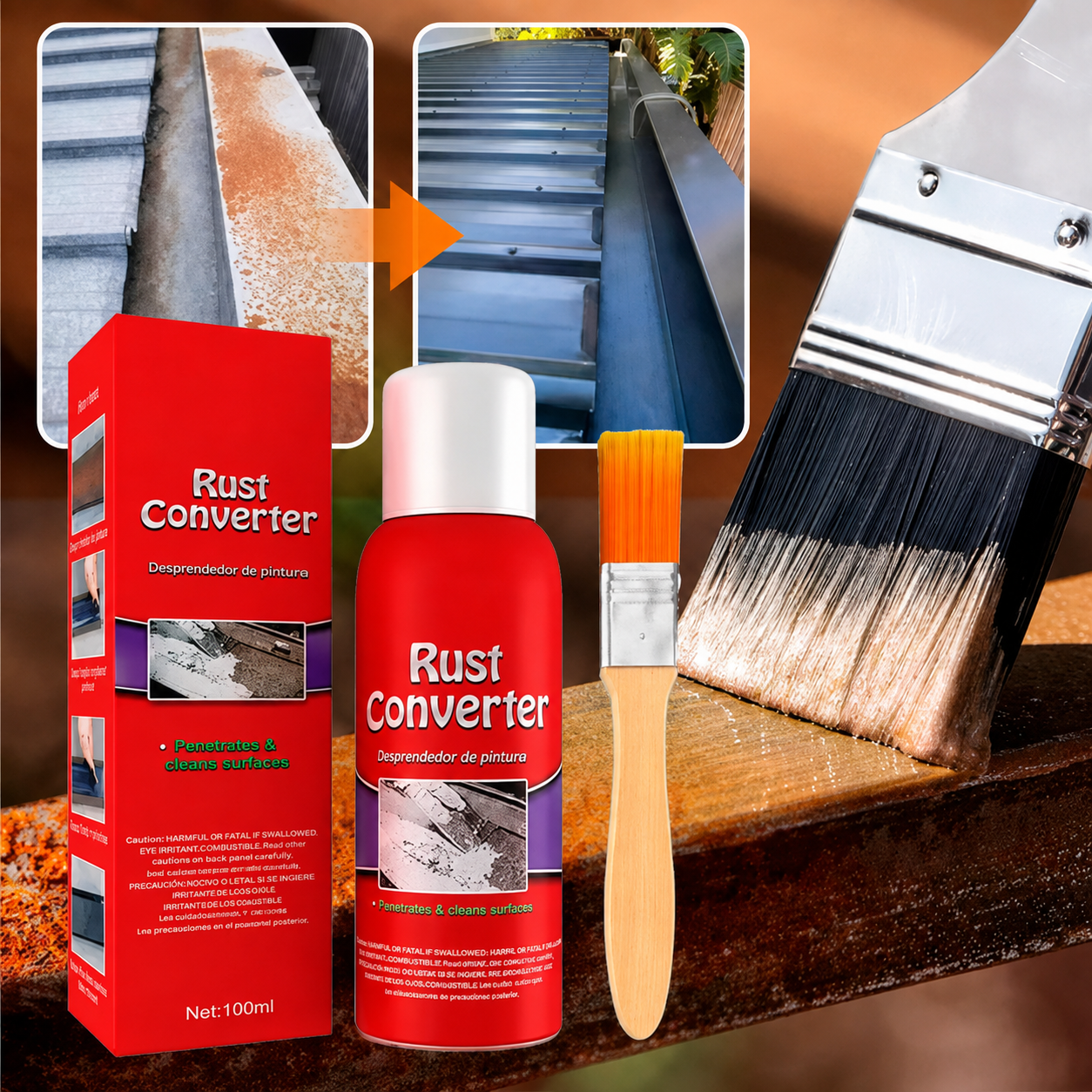
Rusted metal in, paint-ready surface out
Brush RustGuard™ over sound rust, let it cure, then paint. Images are illustrative — results depend on surface condition and preparation.
The short answer
On a metal roof, conversion is usually the only realistic option: you cannot blast it, you cannot rinse acid off it, and sanding an entire roof is not happening. Sweep and wash the sheets, treat the fastener heads and lap joints where rust always starts, brush or roll converter over the corroded areas, then apply a roof-grade topcoat after 24 hours. Plan around 55 sq ft per bottle and buy the five- or eight-pack.
- Fastener heads, lap joints, cut edges and valleys rust first — treat those before the fields
- Red rust on failed galvanising is a valid candidate; bright unrusted galvanising is not
- Never work a roof alone, in wind, or on wet or hot steel
- A 20 x 30 ft roof section is roughly 600 sq ft — eight to eleven bottles for full coverage
Where rust shows up first
The areas worth checking before you order.
- Corrugated and trapezoidal steel sheeting
- Ridge caps, barge boards and flashing
- Gutters, downpipe brackets and valley trays
- Purlins and exposed steel framing in barns and workshops
- Fixing washers and screw heads showing rust bleed
- Roller shutter housings and canopy frames
Step-by-step on this job
- 01
Survey from below first
Daylight through a sheet, or a soft spot when you press it from inside, means replacement for that panel.
- 02
Clean the surface
Brush off moss, lichen and loose scale, wash down, and give it a full dry day.
- 03
Treat fixings and laps first
Screw heads and sheet overlaps are where rust starts. Do them before the open field of the sheet.
- 04
Apply with a roller or decanted sprayer
Large flat runs suit a roller on an extension pole. Work up the slope in manageable bays.
- 05
Topcoat with a roof-grade coating
After 24 hours, use a coating rated for roof exposure and thermal movement.
What not to do
The cautions that save a re-do.
- Roof work is a fall risk — use crawl boards, harnesses and a spotter, or hire a contractor
- Never walk on a sheet that has soft or perforated areas
- Do not apply if rain is forecast within a few hours
- Existing sheets that flex underfoot need replacing, not coating
Typical quantities
A starting point based on the jobs customers order for most often.
| Job | Bottles |
|---|---|
| Small shed roof, 100 sq ft | 2 bottles |
| Single-garage roof, 250 sq ft | 5 bottles |
| Barn section, 450 sq ft | 8 bottles |
| Gutters and flashing only | 1–2 bottles |
| Large barn, 900 sq ft | 8-pack plus 8-pack |
Work out your exact quantity
Area
100 sq ft
Bottles needed
3
Recommended bundle
×3 — $42
Based on up to 55 sq ft per bottle on smooth steel, adjusted for surface condition. Estimates only — measure generously.
Why converters win
RustGuard™ vs the old ways
| Method | RustGuard™ | Grinding / sanding | Naval jelly | Paint straight over rust |
|---|---|---|---|---|
| Works on pitted rust you cannot reach | Partly | |||
| No power tools required | ||||
| Leaves a paint-ready surface | After priming | |||
| Stops the treated rust spreading | ||||
| Low dust, low mess | ||||
| Cost for a 100 sq ft panel | From $24 | Discs + hours | $$ | Repaint yearly |
Read the detail: rust converter vs naval jelly · converter vs remover · how to choose one
What buyers say
Rated by people who hate sanding
Saved my truck bed
Wire-brushed the loose scale, brushed a coat on and left it overnight. Next morning it was a flat black surface that took primer without fighting me.
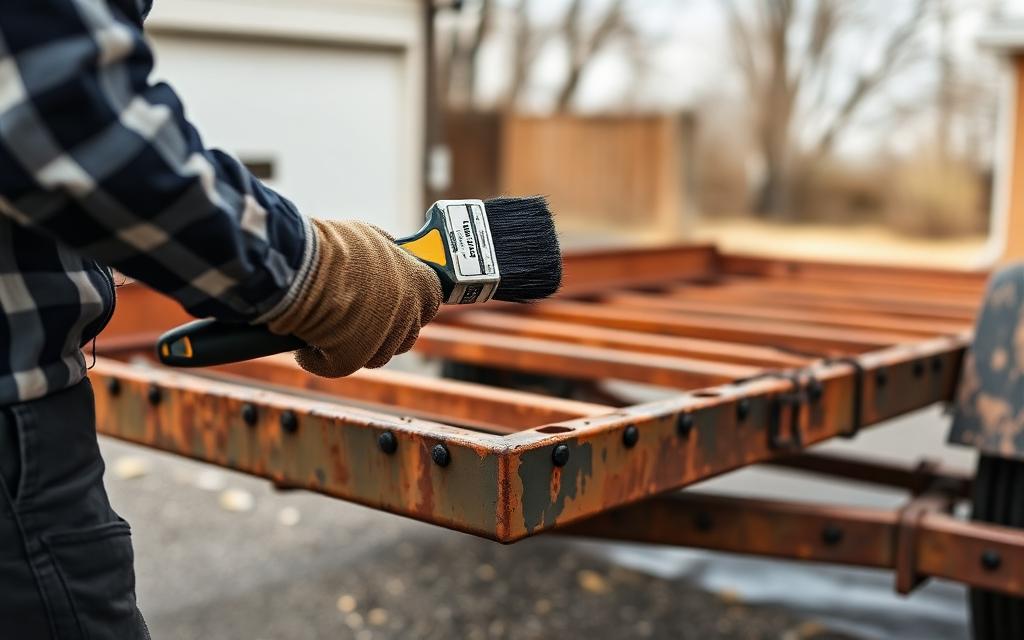
Dale R. · Tucson, AZ
No more grinding for hours
I restore gates and railings. This cut my prep time in half on pitted sections where the grinder just polishes the rust around.
Marcus H. · Leeds, UK
Held up through the wet season
Treated the shed roof sheets and topcoated them. Two seasons of rain later the treated panels still look the way I left them.
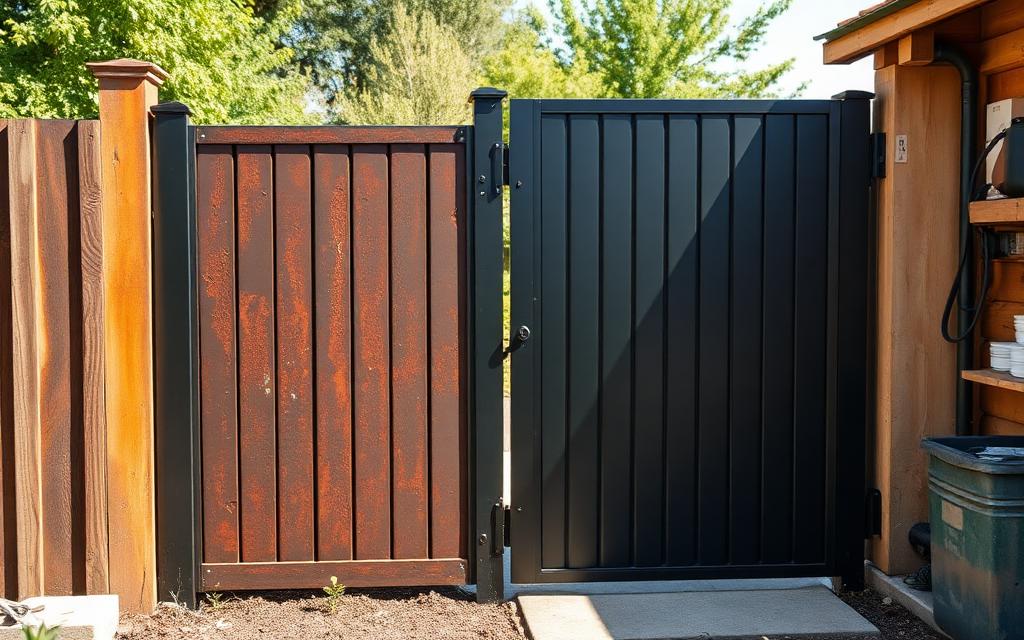
Janine K. · Brisbane, AU
Trailer frame looks new
Frame rails were surface-rusted everywhere. Two bottles covered the whole thing with enough left over for the tongue and jack.
Tom V. · Hamilton, ON
Simple to use
Shake, brush, wait. No mixing, no strong acid smell like the jelly products I used before.
Ricardo M. · Houston, TX
Bought the 5-pack, no regrets
Fence posts, patio furniture and a mower deck off one bundle. Ordering the workshop pack was cheaper than buying singles twice.
Ellen S. · Portland, OR
Reviews shown are illustrative sample copy while we collect verified customer feedback.
Buy with confidence
Nothing to lose but the rust
Worldwide shipping
Tracked delivery to the US, UK, Canada, Australia, EU and more. Free on 3-bottle bundles and above.
Encrypted payment
Card details are captured on a secure, encrypted checkout page. We never see or store your card number.
30-day guarantee
If RustGuard™ is not right for your project, contact support within 30 days for a refund of the product price.
No grinder needed
Brush-on chemistry designed for pitted, hard-to-reach rust where abrasives cannot get a bite.
Secure checkout
Order your RustGuard™ bundle
Pick a bundle, tap checkout — that's it. No account, no forms to fight. Your delivery address and payment are collected on the secure checkout page.
Step 1 — Choose your bundle
One bottle covers about 55 sq ft. Treating a whole vehicle, trailer or roof section? Most people need 3 or more.
Free tracked shipping unlocked
Most projects use more than they expect — the ×8 pack drops you to $9.00/bottle (you pay $11.00 now).
Step 2 — Checkout securely
Apple Pay, Google Pay and all major cards are accepted on the secure Shopify checkout — address, payment and confirmation, all in one place.
- 1Tap checkoutYour bundle is reserved in a secure cart.
- 2Pay your wayCard, Apple Pay or Google Pay — under a minute.
- 3Tracked dispatchConfirmation email instantly, packed in 1 business day.
“Ordered the 5-pack, treated the whole trailer frame and still had a bottle spare.”
Tom V. · Hamilton, ON
“Arrived tracked in five days and the brush kit saved me a trip to the store.”
Dale R. · Tucson, AZ
Reviews are illustrative while verified feedback is collected.
Roofs fail at the details, not in the middle of the sheet
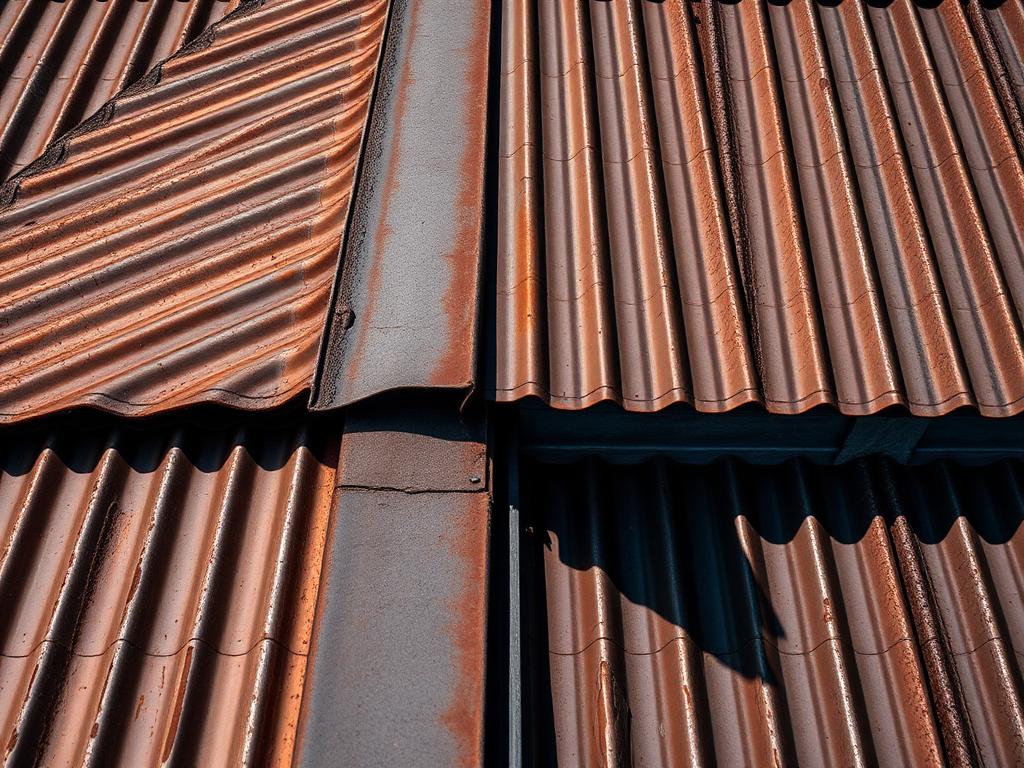
Walk any rusting metal roof and the pattern is the same. Fastener heads go first, because the coating is thinnest where the screw was driven and water sits in the washer dish. Then lap joints, where two sheets trap capillary moisture. Then cut edges, which have no factory coating at all. The open field of the sheet is usually the last thing to go.
That gives you a sensible order of work and a way to spend less product. Treat every fastener head and lap first with a small brush, then the cut edges and valleys, then only the field areas that have actually gone red. On a roof with early corrosion that can be a third of the area rather than all of it.
It also tells you what to fix while you are up there. A blocked gutter, a valley full of leaves, a lifted flashing or a screw that has backed out will undo the coating work in two seasons. Clear and reseal as you go.
Roof area to bottle count
Measure the roof plane, not the building footprint — a pitched roof is larger than the ground it covers.
| Roof | Approx. area | Spot-treating details only | Full coverage |
|---|---|---|---|
| Small shed, 8 x 10 ft | 80 sq ft | 1 bottle | 2 bottles |
| Double garage, 20 x 20 ft | 400 sq ft | 2–3 bottles | 8 bottles |
| Barn section, 20 x 30 ft | 600 sq ft | 3 bottles | 8–11 bottles |
| Verandah or lean-to, 10 x 30 ft | 300 sq ft | 2 bottles | 5–6 bottles |
| Gutter and fascia run, 60 ft | 60 sq ft | 1 bottle | 1–2 bottles |
| Fastener heads only, 500 screws | — | 1 bottle | 1 bottle |
Roof method, safely and in the right order
- 01
Plan access and never work alone
Roof ladder, harness where appropriate, crawl boards on old or corroded sheets. Corroded roof steel can fail underfoot — assume it will.
- 02
Sweep, then wash
Remove leaves and grit, then wash with detergent to strip the chalky oxide film and any moss. Rinse and let it dry completely.
- 03
Wire-brush the loose scale
Hand brush around fasteners and along laps. You are removing flakes, not the whole coating.
- 04
Check and reseal the details
Replace backed-out screws, clear valleys and gutters, and note any flashing that needs attention before you coat.
- 05
Treat fasteners, laps and cut edges first
Small brush, worked into the washer dish and the joint. This is where most of the rust actually is.
- 06
Roll the field areas that have gone red
Short-nap roller on a pole for open sheet, working down the slope so you are never standing on wet film.
- 07
Cure 24 hours, then topcoat
A roof-grade acrylic or metal roof paint over the cured film. Check the forecast: rain on an uncured film means re-treating that section.
Galvanised, colour-bonded and rainwater questions
Bright, sound galvanising has no iron oxide on it, so a converter has nothing to react with and will not bond properly. Where galvanising has broken down and gone red, however, you are looking at iron rust and the converter works normally. In practice most old farm and shed roofs are a patchwork of both — treat the red areas and prime the sound galvanised areas conventionally.
Colour-bonded sheeting is the same logic with paint on top. Feather back any lifting paint to a sound edge, treat the exposed rust, and then topcoat the whole sheet so the repair does not read as a patch. Spot-painting a bonded roof almost always looks worse than coating the panel.
If the roof feeds a rainwater tank used for drinking water, take it out of service before you start and keep it out until the topcoat has fully cured and the roof has had a good rinse of rain. Neither the converter nor the topcoat belongs in a potable supply, and no coating we know of is certified for that use.
Roof-specific cautions
- Do not apply to hot metal in direct sun — work early morning or on the shaded slope
- Do not work in wind: a light roller mist travels a long way onto cars and neighbours
- Do not step on treated film; work down the slope and plan your exit
- Disconnect rainwater harvesting before you start and flush thoroughly afterwards
- Do not coat over rust holes or badly thinned sheet — replace those sheets
- Watch the forecast: the film needs a dry 24 hours to cure properly
When a roof needs replacing, not coating
- Perforation, pinholing or sheet you can flex like foil — coating that is money wasted
- Bright, unrusted galvanising, which has nothing for the converter to react with
- Aluminium or zinc-alu sheeting, which corrodes without iron oxide
- Roofs feeding a potable rainwater supply that cannot be taken offline
- Structural purlins or trusses with section loss, which need an engineer
- Any roof you cannot access safely — the coating is not worth a fall
Shipping to Canada
- Tracked delivery coast to coast, typically 5–12 business days.
- Listed in USD and billed in USD; your bank converts to CAD at checkout.
- Free tracked shipping on bundles of 3 bottles and above.
- 30-day money-back guarantee from the date of delivery.
Frequently asked questions
How do I measure roof area?
Length × slope width per pitch, then add both pitches. Add about 15% for corrugation profile — the metal surface is longer than the flat span.
Can I apply it in the sun?
Avoid hot metal. Early morning or a cloudy day keeps the film wet long enough to react properly.
What about rust bleeding from screw heads?
Treat the screw heads individually with a small brush. If a washer has failed, replace the fixing before you coat.
Will it stop existing leaks?
No. A converter is not a sealant. Fix the leak path, then treat the corrosion around it.
How much rust converter for a metal roof?
Roughly 55 sq ft per bottle. A 20 x 20 ft garage roof is about 400 sq ft, so eight bottles for full coverage or two to three if you are only treating fasteners, laps and the rusted areas.
Can I use it on galvanised roofing?
Only where the galvanising has failed and red rust has formed. Bright, sound galvanising needs a conventional galv primer instead.
Do I have to topcoat a roof?
Yes. UV and rain will break down bare converted film, and a roof gets the worst of both.
Can I spray it on a roof instead of rolling?
You can, but wind makes overspray a real problem at height, and sprayed film reaches pit floors less well. Roll the fields, brush the details.
What about the screws themselves?
Treat the heads and washers — they are usually the worst corrosion on the roof. Replace any that have backed out or lost their seal before coating.
Is it safe for a roof over a rainwater tank?
Take the tank offline before starting and keep it offline until the topcoat has cured and the roof has been rinsed by rain. It is not certified for potable water systems.
Will it stop a leak?
No. A converter is not a sealant. Fix the leak with the correct flashing or sealant, then treat the corrosion around it.
Keep reading
- Rust converter spray, or a brush-on bottle you can control? — CanadaCanada: Thinking about rust converter spray? Compare aerosol coverage, waste and control against the RustGuard™ brush-on bottle before you buy.
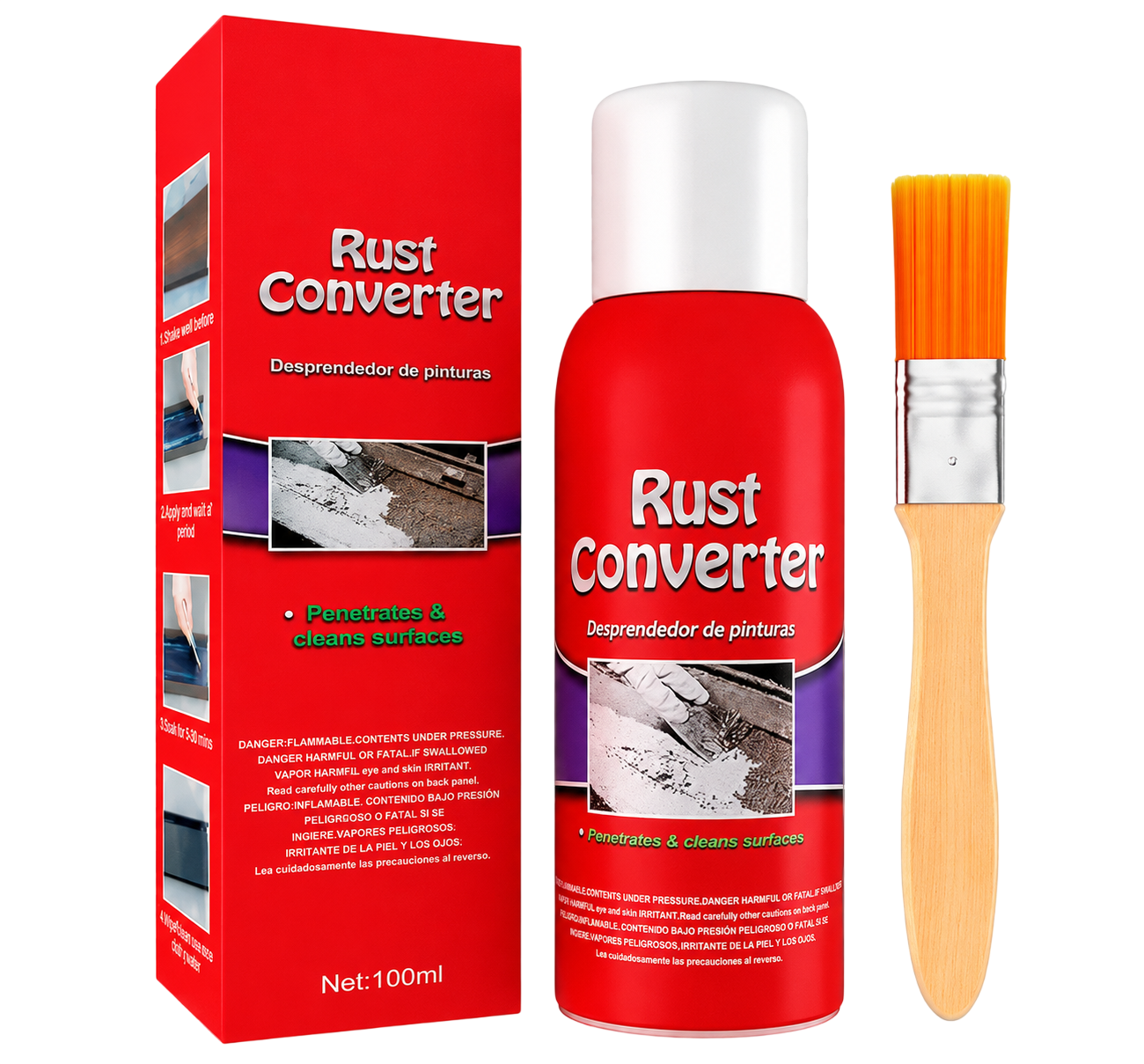
- Rust converter for iron and steel that leaves a paint-ready surface — CanadaCanada: Brush RustGuard™ onto rusted iron or steel, convert the corrosion and topcoat in 24 hours. Bundles from $24, free shipping on 3+.
Last step
Ready to stop the rust?
Tracked delivery coast to coast, typically 5–12 business days. 30-day money-back guarantee.