- Encrypted paymentSecure, encrypted checkout
- Tracked worldwideFree on 3+ bottle bundles
- 30-day guaranteeMoney-back if it is not for you
- Clear labellingCoverage and results stated honestly
Stock up & save
Choose your RustGuard™ bundle
Prices in USD. Free tracked shipping on 3-bottle bundles and above.
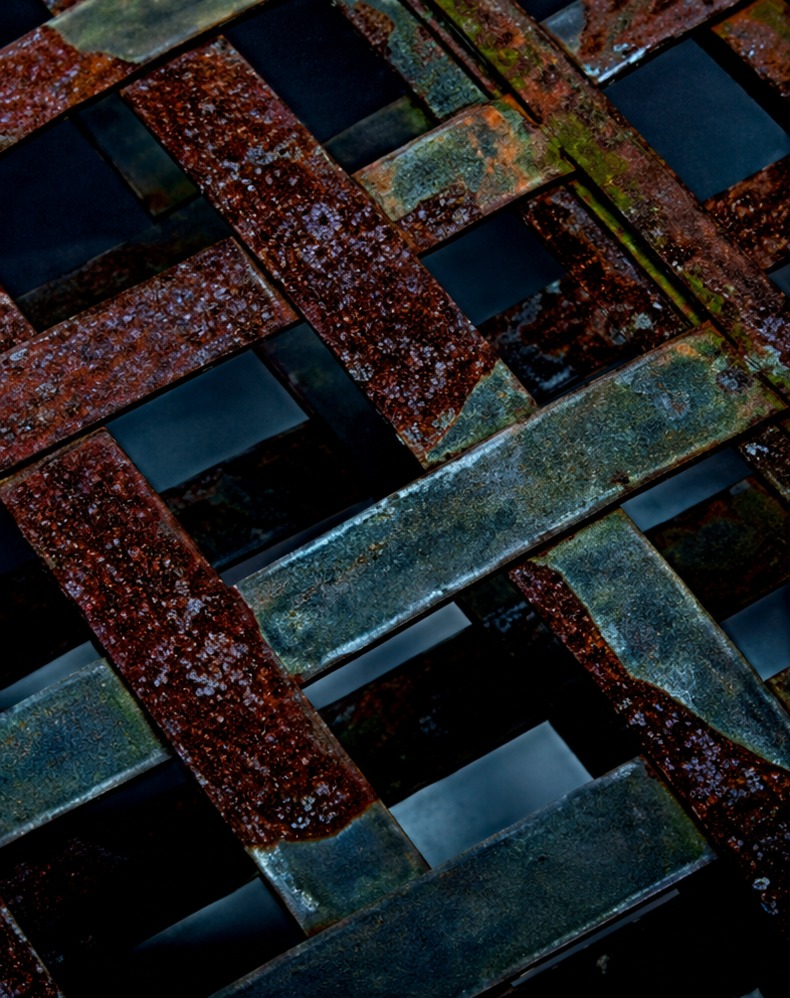
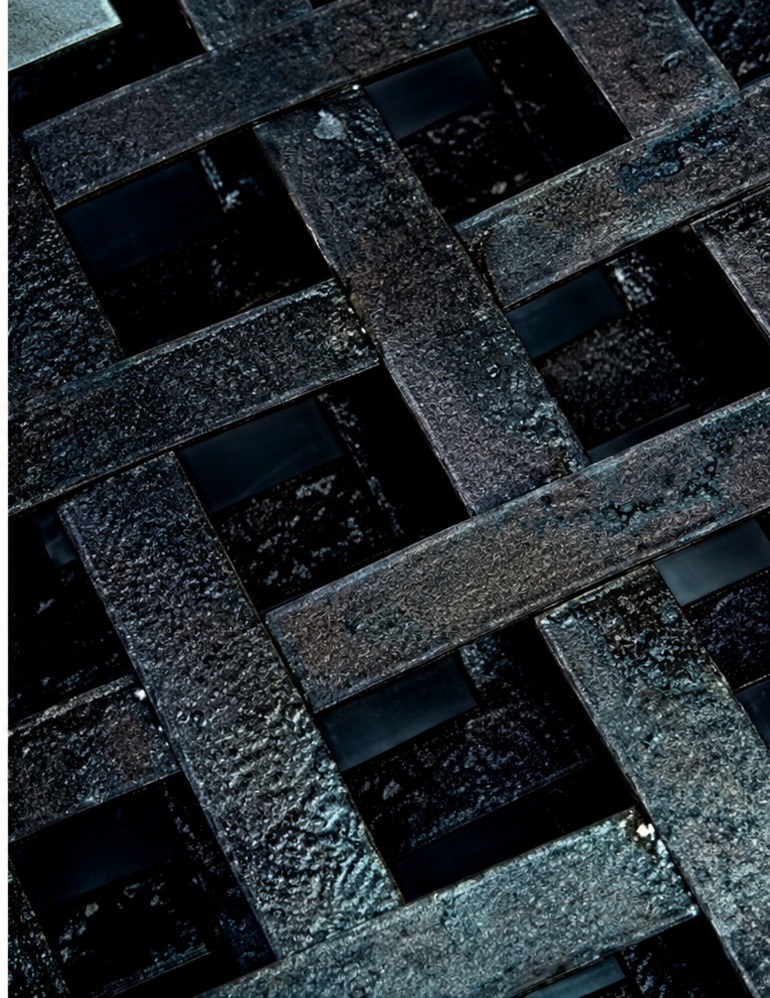
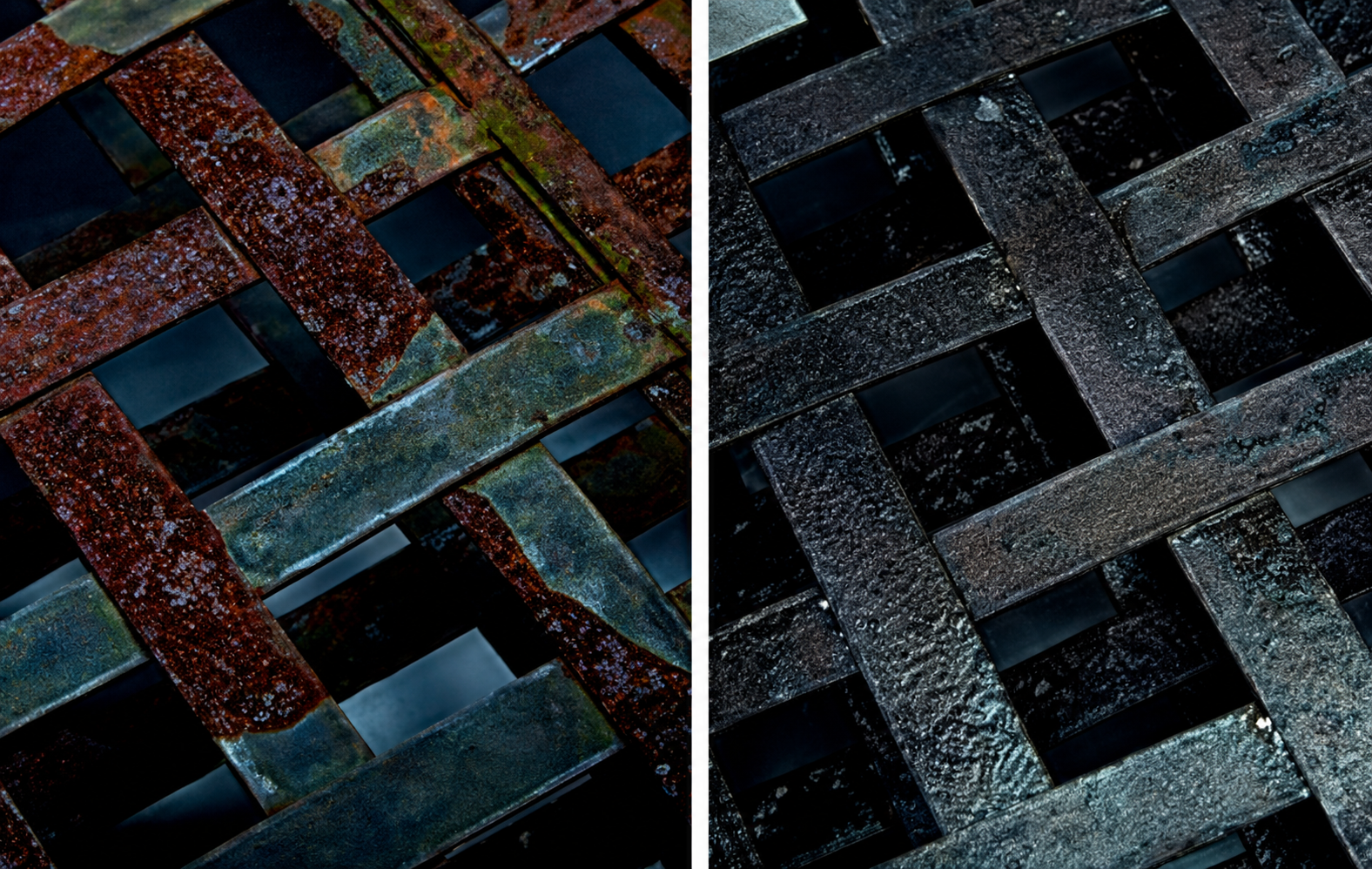
Rusted metal in, paint-ready surface out
Brush RustGuard™ over sound rust, let it cure, then paint. Images are illustrative — results depend on surface condition and preparation.
The short answer
RustGuard™ works on ferrous metal — mild steel, cast iron, wrought iron and the red rust that appears on failed galvanising — because it reacts with iron oxide specifically. It does nothing useful on aluminium, stainless, copper, brass or bright zinc, because those metals corrode by a different chemistry and produce no iron oxide for it to convert.
- Works: mild and structural steel, cast iron, wrought iron, red rust on old galvanising
- Does not work: aluminium, stainless, copper, brass, bronze, bright galvanising
- A magnet is the quickest field test — if it sticks, the chemistry applies
- Surface must be rusty: on clean bare steel there is nothing to convert
Compatibility by metal
| Metal | Suitable | Notes |
|---|---|---|
| Mild / carbon steel | Yes | The primary target — sheet, plate, box section, tube |
| Cast iron | Yes | Porous, so expect lower coverage per bottle |
| Wrought iron | Yes | Ideal for gates, railings and scrollwork |
| Galvanised steel | Partially | Only where red rust shows through failed zinc |
| Chrome-plated steel | Partially | Treats the exposed steel; will not restore plating |
| Weathering steel | Yes, with care | Converting removes the intended patina look |
| Aluminium | No | Different oxide chemistry entirely |
| Stainless steel | No | Use a stainless cleaner or passivation |
| Copper, brass, bronze | No | Patina is not iron oxide |
Prep by surface type
- 01
Sheet and plate steel
Scrape and wire brush the loose material, degrease, and apply one thin coat — two on pitting.
- 02
Cast iron
Wire brush the texture, degrease twice, and expect the porous surface to take more product.
- 03
Tube and box section
Do the underside and the inner corners of angle iron; that is where water sits.
- 04
Galvanised with red rust
Treat the failed patches only, feathering into the sound zinc, then topcoat the whole run for an even finish.
- 05
Mesh and grating
Wet both faces of each strand. Coverage per bottle drops by roughly a third.
Estimate for your surface
Area
100 sq ft
Bottles needed
3
Recommended bundle
×3 — $42
Based on up to 55 sq ft per bottle on smooth steel, adjusted for surface condition. Estimates only — measure generously.
Why converters win
RustGuard™ vs the old ways
| Method | RustGuard™ | Grinding / sanding | Naval jelly | Paint straight over rust |
|---|---|---|---|---|
| Works on pitted rust you cannot reach | Partly | |||
| No power tools required | ||||
| Leaves a paint-ready surface | After priming | |||
| Stops the treated rust spreading | ||||
| Low dust, low mess | ||||
| Cost for a 100 sq ft panel | From $24 | Discs + hours | $$ | Repaint yearly |
Read the detail: rust converter vs naval jelly · converter vs remover · how to choose one
What buyers say
Rated by people who hate sanding
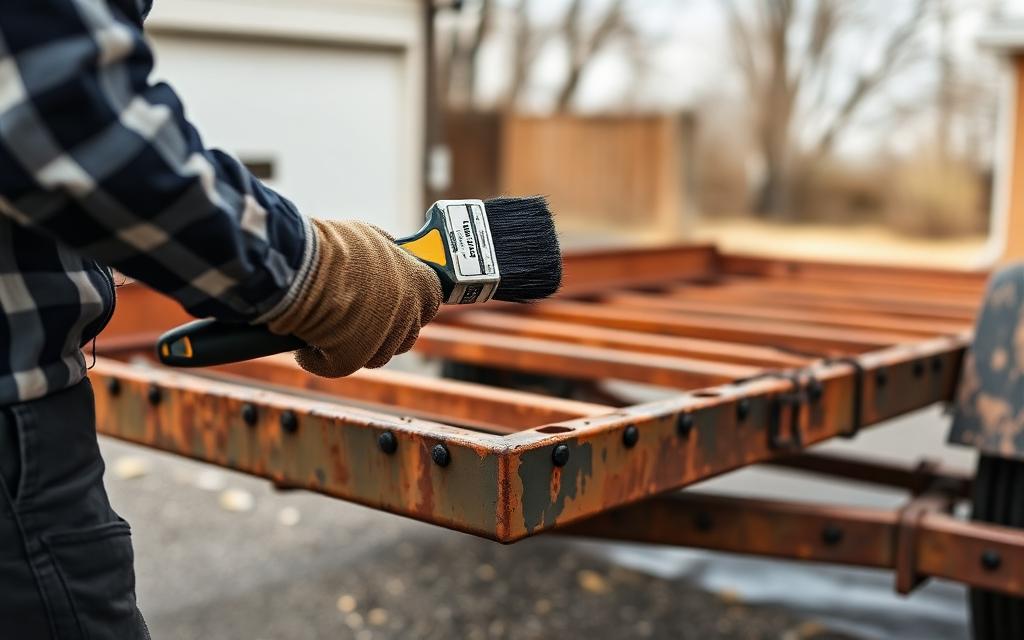
Saved my truck bed
Wire-brushed the loose scale, brushed a coat on and left it overnight. Next morning it was a flat black surface that took primer without fighting me.
Dale R. · Tucson, AZ
No more grinding for hours
I restore gates and railings. This cut my prep time in half on pitted sections where the grinder just polishes the rust around.
Marcus H. · Leeds, UK
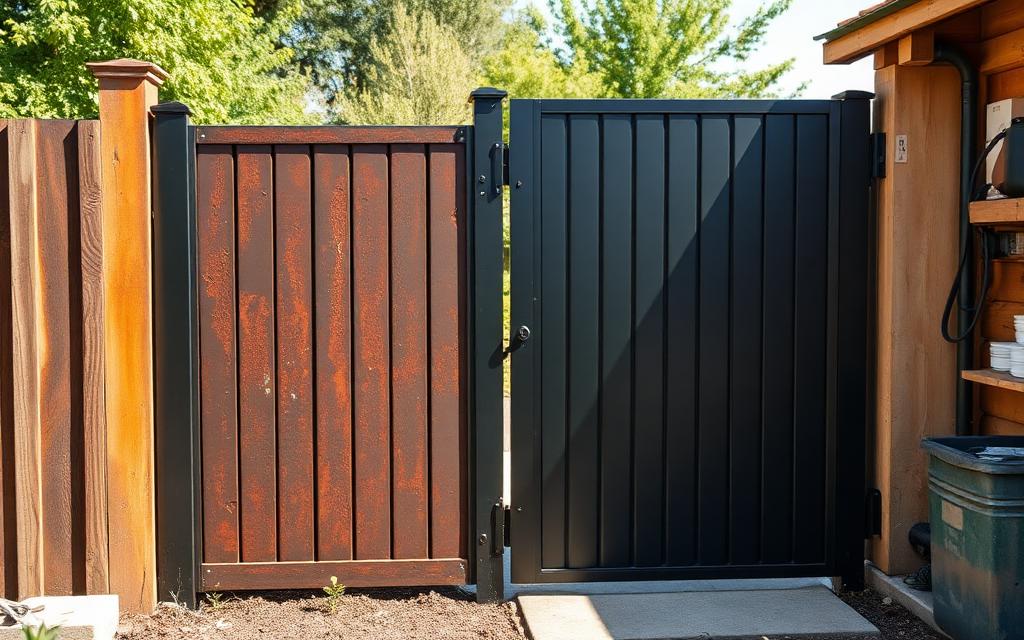
Held up through the wet season
Treated the shed roof sheets and topcoated them. Two seasons of rain later the treated panels still look the way I left them.
Janine K. · Brisbane, AU
Trailer frame looks new
Frame rails were surface-rusted everywhere. Two bottles covered the whole thing with enough left over for the tongue and jack.
Tom V. · Hamilton, ON
Simple to use
Shake, brush, wait. No mixing, no strong acid smell like the jelly products I used before.
Ricardo M. · Houston, TX
Bought the 5-pack, no regrets
Fence posts, patio furniture and a mower deck off one bundle. Ordering the workshop pack was cheaper than buying singles twice.
Ellen S. · Portland, OR
Reviews shown are illustrative sample copy while we collect verified customer feedback.
Buy with confidence
Nothing to lose but the rust
Worldwide shipping
Tracked delivery to the US, UK, Canada, Australia, EU and more. Free on 3-bottle bundles and above.
Encrypted payment
Card details are captured on a secure, encrypted checkout page. We never see or store your card number.
30-day guarantee
If RustGuard™ is not right for your project, contact support within 30 days for a refund of the product price.
No grinder needed
Brush-on chemistry designed for pitted, hard-to-reach rust where abrasives cannot get a bite.
Secure checkout
Order your RustGuard™ bundle
Pick a bundle, tap checkout — that's it. No account, no forms to fight. Your delivery address and payment are collected on the secure checkout page.
Step 1 — Choose your bundle
One bottle covers about 55 sq ft. Treating a whole vehicle, trailer or roof section? Most people need 3 or more.
Free tracked shipping unlocked
Most projects use more than they expect — the ×8 pack drops you to $9.00/bottle (you pay $11.00 now).
Step 2 — Checkout securely
Apple Pay, Google Pay and all major cards are accepted on the secure Shopify checkout — address, payment and confirmation, all in one place.
- 1Tap checkoutYour bundle is reserved in a secure cart.
- 2Pay your wayCard, Apple Pay or Google Pay — under a minute.
- 3Tracked dispatchConfirmation email instantly, packed in 1 business day.
“Ordered the 5-pack, treated the whole trailer frame and still had a bottle spare.”
Tom V. · Hamilton, ON
“Arrived tracked in five days and the brush kit saved me a trip to the store.”
Dale R. · Tucson, AZ
Reviews are illustrative while verified feedback is collected.
Why it only works on iron and steel
The active chemistry is an acid that reacts with iron oxide — ordinary red rust — and converts it into a stable iron complex locked into a polymer film. Every part of that reaction depends on iron being present. Where there is no iron oxide, there is no reaction, and what you get is a thin plastic film sitting on the surface with nothing holding it there.
That is why aluminium is a hard no. Aluminium corrodes to a white, powdery oxide that is chemically unrelated, and the acid can etch the base metal without producing any protective conversion. Stainless steel resists corrosion by way of a chromium oxide layer, and treating it is at best pointless and at worst mildly damaging to that layer.
Galvanised steel is the interesting middle case. While the zinc coating is intact you have zinc, not iron, at the surface, so the product has nothing to do. Once the zinc has been sacrificed and the steel underneath is showing red rust, you are back on iron and the treatment applies normally to those failed areas.
Compatibility by metal
| Metal | Use it? | What to do instead |
|---|---|---|
| Mild and structural steel | Yes — the primary use | — |
| Cast iron | Yes, expect higher consumption on rough surfaces | — |
| Wrought iron railings and gates | Yes | — |
| Weathered corrugated steel sheet | Yes | — |
| Galvanised, red rust showing | Yes, on the rusted areas | Leave the sound zinc alone |
| Galvanised, bright and intact | No | Etch primer and paint if you want colour |
| Aluminium | No | Aluminium-specific etch primer |
| Stainless steel | No | Passivation or a specialist stainless cleaner |
| Copper, brass, bronze | No | A metal polish or an appropriate lacquer |
| Chrome plating | No | Chrome polish, or replate if pitted through |
Prep by surface type
- 01
Identify the metal first
Magnet test. If it holds, you are on ferrous metal. If it slides off, stop and check what you actually have before opening anything.
- 02
Smooth panel steel
Scrape loose flakes, scuff the surrounding paint, degrease and wipe dry. One coat is often enough on light surface rust.
- 03
Pitted or salted steel
Wire-brush the scale out of the pits, degrease hard, then plan on two thin coats — the pits hold contamination as well as rust.
- 04
Cast iron
Brush the loose graphite-heavy scale away and expect the rough surface to drink 20–30 per cent more product than its measured area suggests.
- 05
Corrugated sheet
Measure with a rib allowance of about 15 per cent over flat area, and work along the sheet so the overlaps get wetted properly.
- 06
Failed galvanising
Treat the red rust patches, feather the edges into the sound zinc, and topcoat the whole panel so the repair is not visible.
How much rust needs to be there
It needs a visible, even layer of red rust to work with. On bare, freshly ground steel there is no oxide to convert, so the film has nothing to key into and will peel in sheets later. If you have ground a patch back to bright metal, prime that patch conventionally and use the converter on the surrounding rusted area.
At the other end, loose flaking scale must come off. The chemistry converts rust that is attached to the metal; it cannot glue down a flake that is already detached. If you can lift it with a fingernail or a scraper, remove it, then treat what remains.
The ideal substrate is a firmly adhered, matte, orange-brown surface with the loose material removed and no oil on it. That is what produces the even blue-black film that tells you the reaction has done its job.
Field tests before you open the bottle
- Magnet test to confirm the metal is ferrous
- Fingernail test: anything that lifts is loose scale and must be removed
- Screwdriver test on the worst pit: through it means welding, not coating
- Water splash test: beading means grease is still present, sheeting means clean
- Shade check: bright orange means active rust, near-black may already be treated or oiled
Estimate for your surface
Area
100 sq ft
Bottles needed
3
Recommended bundle
×3 — $42
Based on up to 55 sq ft per bottle on smooth steel, adjusted for surface condition. Estimates only — measure generously.
Metals and situations to keep it away from
- Aluminium of any grade, including trailer bodies and boat superstructure
- Stainless steel fittings, fasteners and splashbacks
- Copper, brass, bronze and chrome-plated surfaces
- Bright, intact galvanising with no red rust present
- Freshly ground bare steel with no oxide left to convert
- Food contact surfaces and grill grates that touch food directly
Frequently asked questions
How do I tell steel from aluminium?
A magnet. Steel and iron are magnetic; aluminium, copper and most stainless grades are not.
Can I treat a mix of metals on one item?
Yes, but treat only the ferrous parts. Mask the aluminium and stainless components.
Will it work on painted steel?
It reacts with rust, not paint. Feather the paint back to expose the rust you want treated.
What about very thin sheet metal?
It works, provided the sheet still has metal in it. Perforated sheet needs replacing.
Which metals does rust converter work on?
Ferrous metals only: mild and structural steel, cast iron, wrought iron, and red rust breaking through failed galvanising. If a magnet sticks, the chemistry applies.
Can I use it on aluminium?
No. Aluminium corrosion is a different oxide entirely and there is nothing for the product to convert. Use an aluminium etch primer instead.
What about galvanised steel?
Only where the zinc has failed and red rust is showing. Bright, intact galvanising has no iron oxide at the surface, so treating it achieves nothing.
Does it work on stainless?
No, and it is not worth trying. Stainless protects itself with a chromium oxide layer; use a specialist stainless cleaner or passivation product.
Does the metal have to be rusty?
Yes. It needs a firmly attached layer of red rust to react with. Bare ground steel should be primed conventionally.
Will it work through paint?
No. Feather back any lifted or blistered paint to a sound edge so the product reaches the corrosion underneath.
Can I use it on cast iron cookware?
No. Keep it away from anything that contacts food; season cast iron cookware conventionally instead.
Keep reading
- Rust vs corrosion: what's the difference?Rust is one type of corrosion — the iron kind. Why that distinction decides whether a rust converter will work on your metal at all.
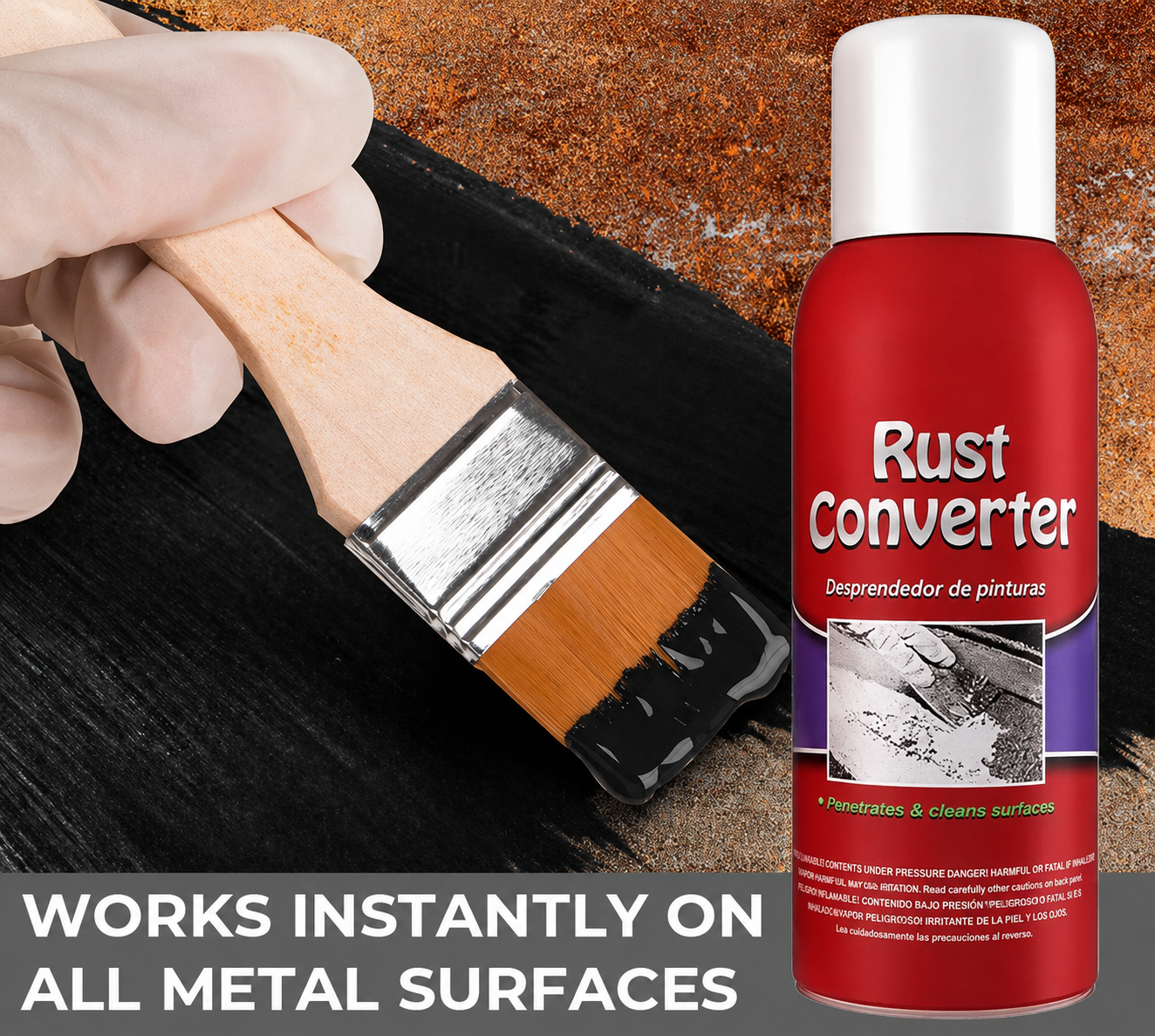
- Rust converter for iron and steel that leaves a paint-ready surfaceBrush RustGuard™ onto rusted iron or steel, convert the corrosion and topcoat in 24 hours. Bundles from $24, free shipping on 3+.
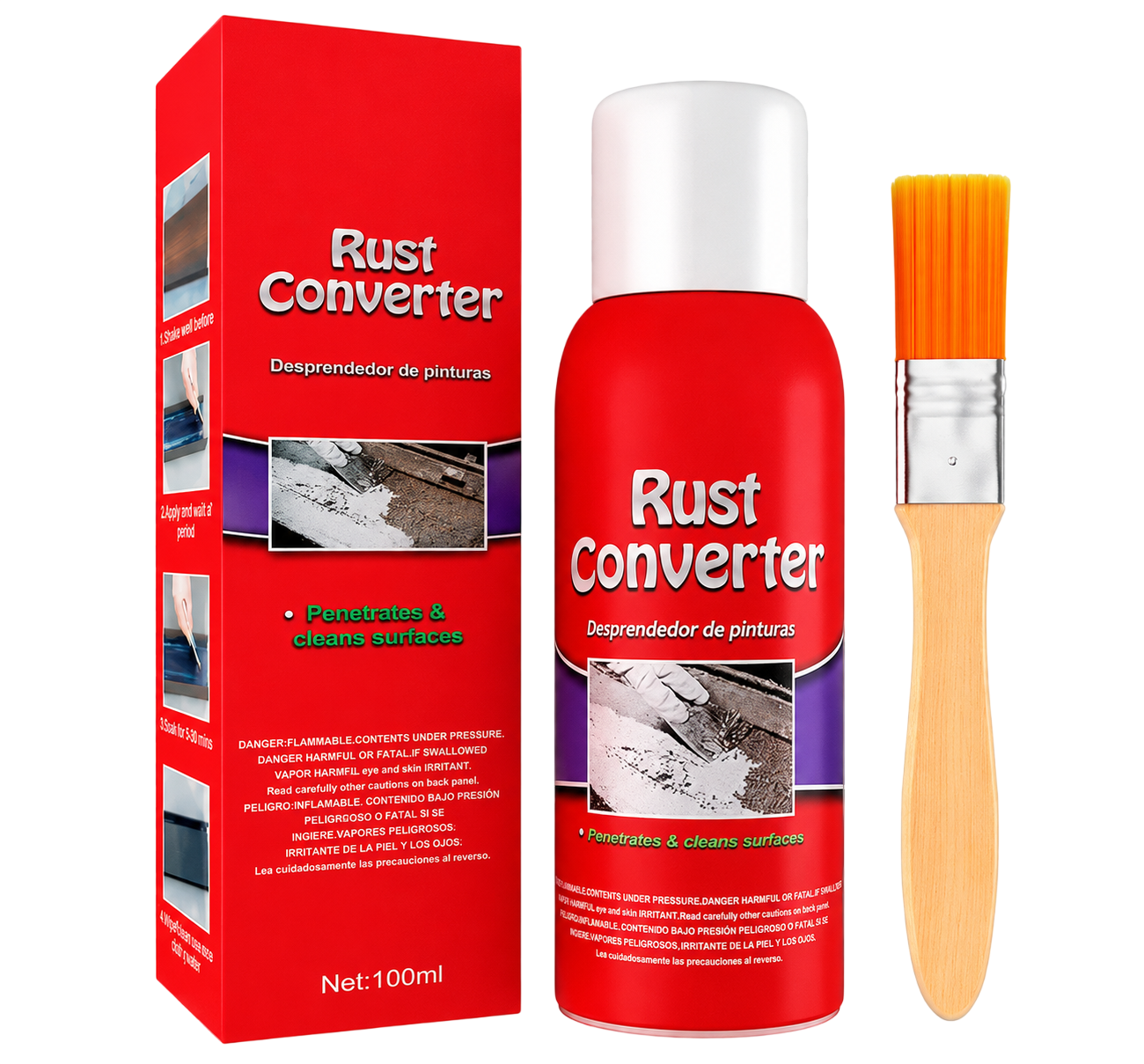
- How to remove rust from metalAbrasives, acids, electrolysis, chelation and conversion — what each rust removal method costs in time and effort, and when each one is the right call.
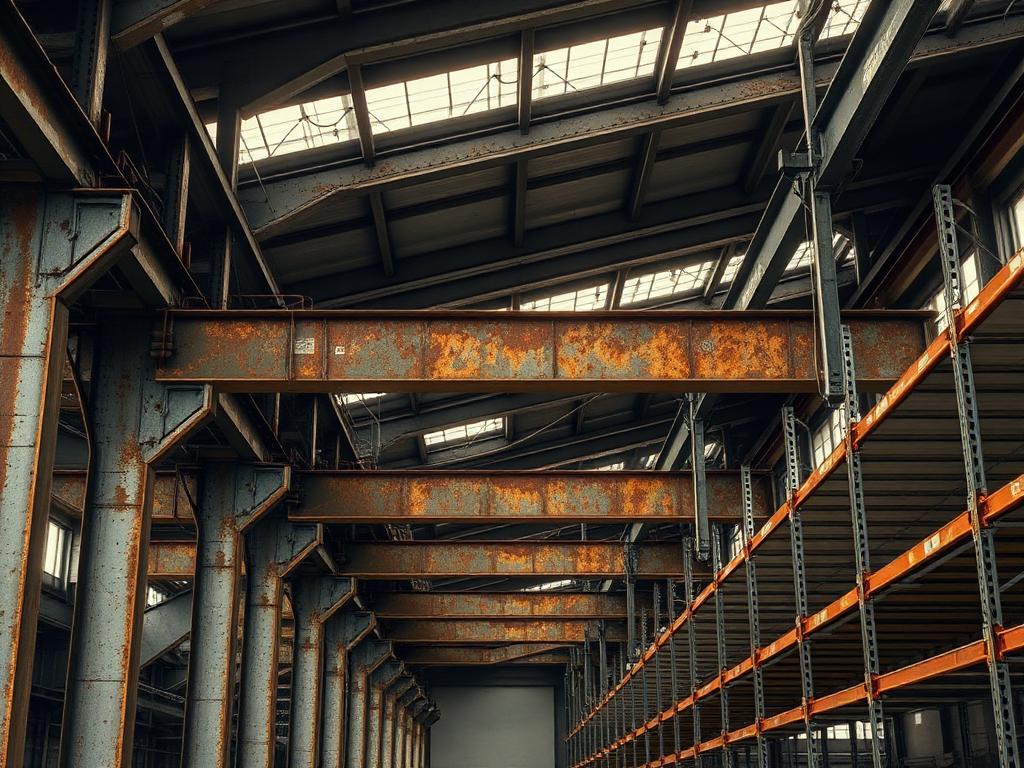
- Rust converter for industrial and structural steelMaintenance coating for structural steelwork, plant, tanks and handrails. Coverage planning, prep grades and topcoat systems.
- Rust converter coverage calculatorWork out exactly how many bottles of RustGuard™ your job needs. Enter your area or pick a common job and get a bundle recommendation.
Last step
Ready to stop the rust?
Ships from our US fulfilment partner, typically 3–7 business days. 30-day money-back guarantee.