- Encrypted paymentSecure, encrypted checkout
- Tracked worldwideFree on 3+ bottle bundles
- 30-day guaranteeMoney-back if it is not for you
- Clear labellingCoverage and results stated honestly
Stock up & save
Choose your RustGuard™ bundle
Prices in USD. Free tracked shipping on 3-bottle bundles and above.
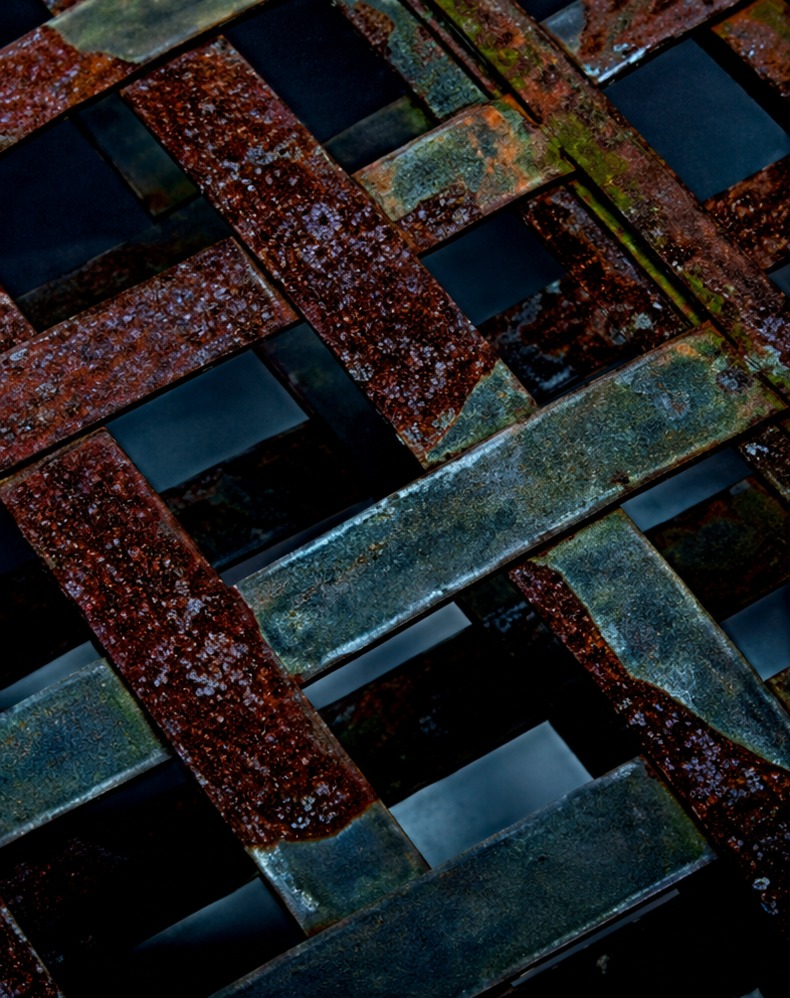
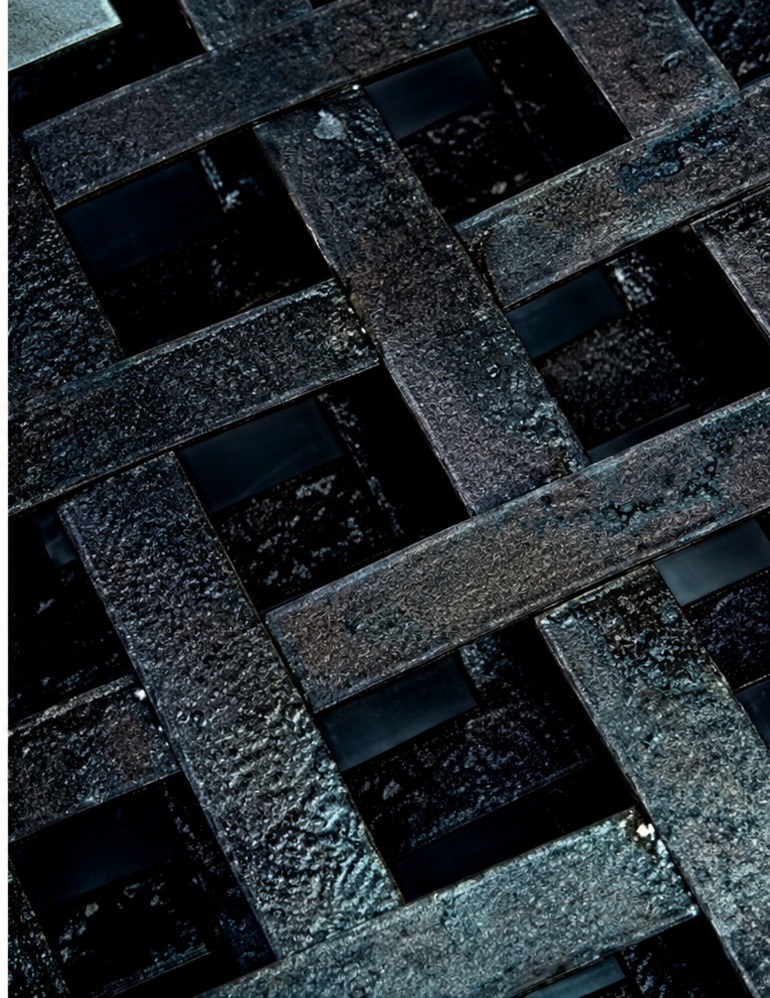
Rusted metal in, paint-ready surface out
Brush RustGuard™ over sound rust, let it cure, then paint. Images are illustrative — results depend on surface condition and preparation.
The short answer
Remove everything loose, degrease until water sheets instead of beading, let the metal dry completely, then brush a thin even coat into the rust. It darkens within 20 minutes to two hours. Add a second thin coat on pitting after three to four hours, wait a full 24 hours, then topcoat. Almost every failure traces back to grease, loose scale, or painting too early.
- Do not sand to bare metal — the converter needs rust to react with
- Work between 50–95°F on a dry surface, out of direct sun and rain
- Two thin coats beat one heavy coat every time
- 24 hours before topcoat, and topcoat within about a week
What you need
Nothing exotic — most of this is already in the shed.
- RustGuard™ Rust Converter (see the calculator below for quantity)
- Wire brush, scraper, and a wire cup brush for a drill on bigger areas
- Detergent or degreaser, a bucket, and clean rags
- Synthetic-bristle brush or short-nap roller, plus masking tape
- Nitrile gloves and eye protection
- Your chosen topcoat, ready for the day after
The method
- 01
1. Remove everything loose
Scrape and wire brush until nothing flakes off under a fingernail. You are not chasing bare steel — you want tightly adhered rust and no lifting paint edges.
- 02
2. Degrease and rinse
Wash with detergent or degreaser, rinse well, and test by splashing water: if it beads instead of sheeting, there is still oil there. Degrease again.
- 03
3. Let it dry completely
Damp pitting or a wet seam will dilute the film and slow the reaction. Give it hours in warm air, longer in a cold garage.
- 04
4. Mask what must stay clean
Good paint, glass, trim, brake surfaces, threads and rubber. Two minutes of tape beats twenty minutes of wiping.
- 05
5. Brush on a thin, even coat
Work it into pitting and seams rather than laying it on thick. The film should look wet and uniform, not puddled.
- 06
6. Watch for the colour change
Rust darkens as it converts, typically within 20 minutes to a couple of hours depending on temperature and humidity.
- 07
7. Second coat on heavy rust
Once the first coat has turned dark and is touch-dry, add a second thin coat to deeply pitted areas.
- 08
8. Cure 24 hours before topcoating
The film needs a full day. Then apply your topcoat within a few days, while the surface is still clean and keyed.
Timings at a glance
| Stage | Typical time |
|---|---|
| Colour change begins | 20 minutes – 2 hours |
| Touch dry | 2 – 4 hours |
| Recoat with converter | 4 hours |
| Cure before topcoat | 24 hours |
| Topcoat window | Within about 7 days |
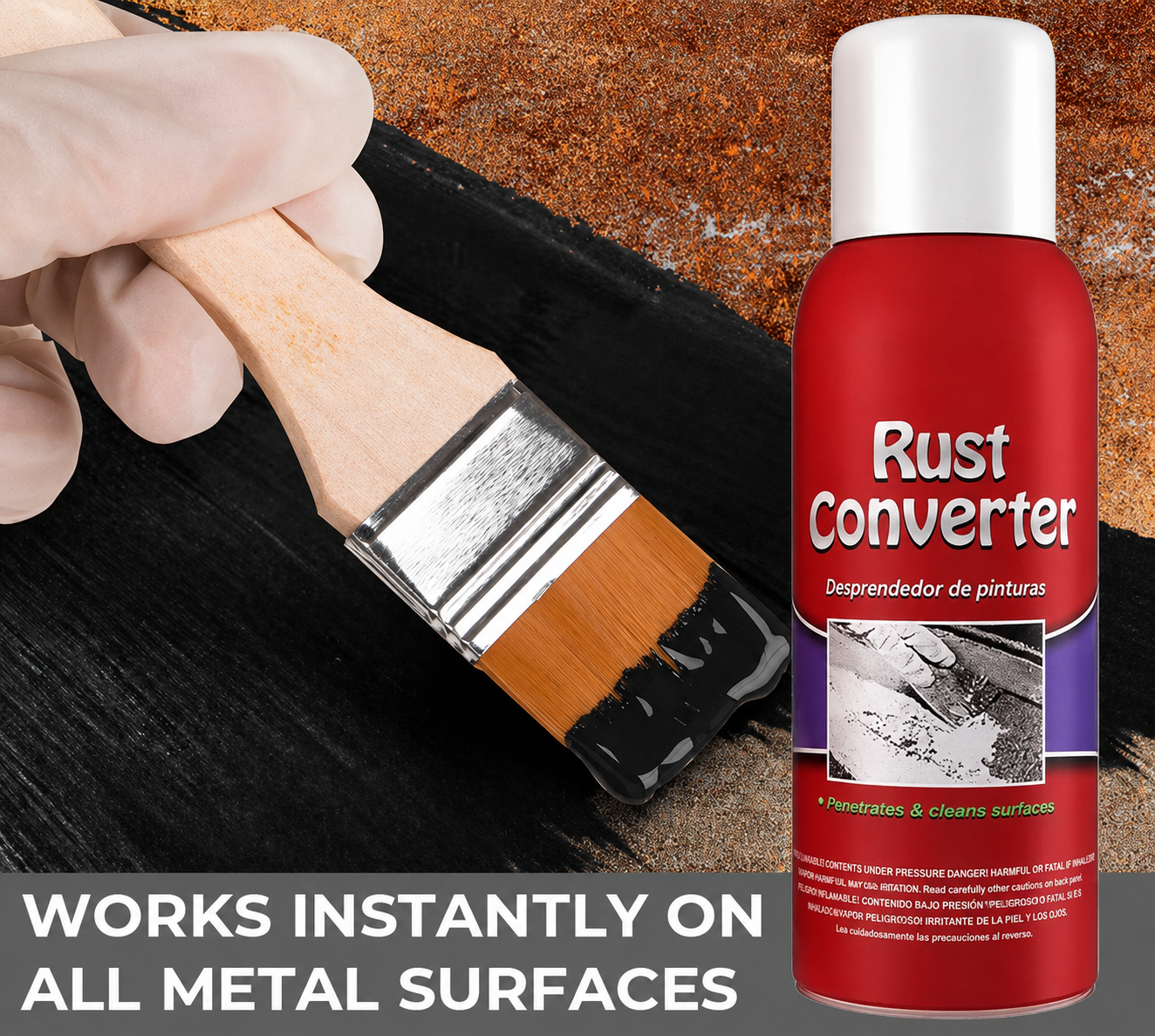
The five mistakes people make
- Applying over grease or wax — the film beads and never bonds
- Laying it on thick, which traps moisture and skins over
- Topcoating too early, which blisters the paint later
- Applying in freezing temperatures or on hot metal in direct sun
- Treating perforated metal and expecting the hole to close
How much will your job need?
Area
100 sq ft
Bottles needed
3
Recommended bundle
×3 — $42
Based on up to 55 sq ft per bottle on smooth steel, adjusted for surface condition. Estimates only — measure generously.
Reading the colour change, and what it tells you
The colour change is your instrument panel. Rust that is converting darkens from orange-brown through purple-grey to a matte blue-black. In warm dry air that happens in twenty minutes; in a cool garage it can take a couple of hours. Nothing is wrong with a slow turn as long as it turns.
Areas that stay orange are telling you something specific and useful. Either there is still oil, wax or silicone on the surface so the product never touched the metal, or there was no real rust there to convert — the film is just sitting on sound paint or bare steel acting as a primer.
Patchy dark-and-light mottling usually means uneven film thickness: the thin spots turned faster and the thick spots skinned over and are still reacting underneath. Give it longer before judging, and if the mottling persists after touch-dry, a second thin coat evens it out.
How temperature and humidity change your timings
Indicative timings for RustGuard™. Cold slows the reaction; heat and sun dry the film before it can react properly.
| Conditions | Colour change | Touch dry | Cure before topcoat |
|---|---|---|---|
| 50°F / 10°C, damp air | 1–3 hours | 5–8 hours | 36–48 hours |
| 60°F / 16°C, average | 40–90 minutes | 3–5 hours | 24–36 hours |
| 70°F / 21°C, dry | 20–45 minutes | 2–4 hours | 24 hours |
| 85°F / 29°C, dry | 15–30 minutes | 1–2 hours | 24 hours |
| 95°F / 35°C, direct sun | Too fast — film dries before reacting | Under 1 hour | Move to shade or wait |
| Below 45°F / 7°C | Stalls | Unreliable | Do not apply |
The degrease test that prevents most failures
- 01
Wash with detergent or a dedicated degreaser
Warm water and a stiff brush. Pay attention to seams, bolt heads and anywhere oil could have crept.
- 02
Rinse thoroughly
Detergent residue is itself a contaminant. Rinse until the water runs clear.
- 03
Splash test while wet
Flick clean water at the surface. If it sheets out flat, the surface is clean. If it beads up anywhere, oil is still present there.
- 04
Degrease the beading areas again
Spot-treat rather than redoing everything. Wax and silicone often need a solvent wipe, not just detergent.
- 05
Dry completely
Hours in warm moving air, longer in a cold space. Pitting and seams hold water long after the surface feels dry.
- 06
Handle it with clean gloves from here
Skin oils on a prepped surface are enough to leave a light patch. Gloves also keep the product off you.
Brush, roller or spray — and how much to load
A synthetic-bristle brush is the default and the best at what actually matters: pushing liquid into pit floors and seams. Use a small brush for detail work around bolts, hinges and lips, and a wider one for open surfaces. Natural bristle swells in water-based product and goes limp, so keep it synthetic.
A short-nap roller is faster on large flat areas — roof sheets, trailer decks, shed frames — and gives a very even film. Roll the fields and brush the details; a roller cannot get into a weld seam and will always leave the awkward 10% untreated if you let it.
Load lightly. The single most common application error is a thick wet coat, which skins over, traps moisture underneath, cures unevenly and blisters when you topcoat it. You want the surface to look uniformly wet, with no puddles, sags or runs — if you can see it moving, there is too much on there.
Troubleshooting, symptom by symptom
- Stayed orange after hours — contamination, or no rust there; degrease and re-treat
- Film wipes off on a rag — applied over oil or wax; strip it back, degrease properly, redo
- Skinned over and tacky underneath — coat too thick; let it cure longer, then apply a thin second coat
- Rain hit it before cure — let it dry, inspect, re-treat any washed-out area
- Topcoat blistered days later — painted before the film cured; sand the blisters, re-treat, wait the full 24 hours
- White chalky bloom on old bare film — UV degradation from being left unpainted; scuff, re-treat, topcoat
- Orange bleeding through the topcoat — a missed seam or pit; spot-treat and repaint the area
What this method cannot fix
- Perforated or paper-thin metal, which needs welding or replacement
- Rust inside a sealed cavity you cannot wet — use a cavity wax there
- Aluminium, stainless, copper, brass or unrusted galvanising
- Surfaces running above about 400°F in service
- Working surfaces that must stay bare: threads, brake discs, mating faces, tool edges
- A water trap left in place — clear the drain or the rust returns
What buyers say
Rated by people who hate sanding
Saved my truck bed
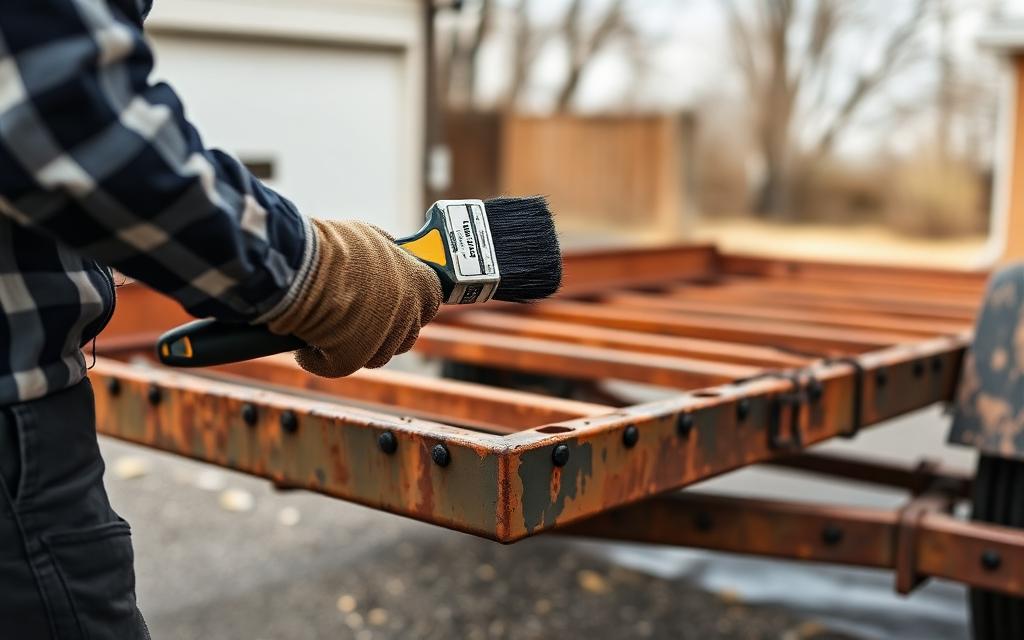
Wire-brushed the loose scale, brushed a coat on and left it overnight. Next morning it was a flat black surface that took primer without fighting me.
Dale R. · Tucson, AZ
No more grinding for hours
I restore gates and railings. This cut my prep time in half on pitted sections where the grinder just polishes the rust around.
Marcus H. · Leeds, UK
Held up through the wet season
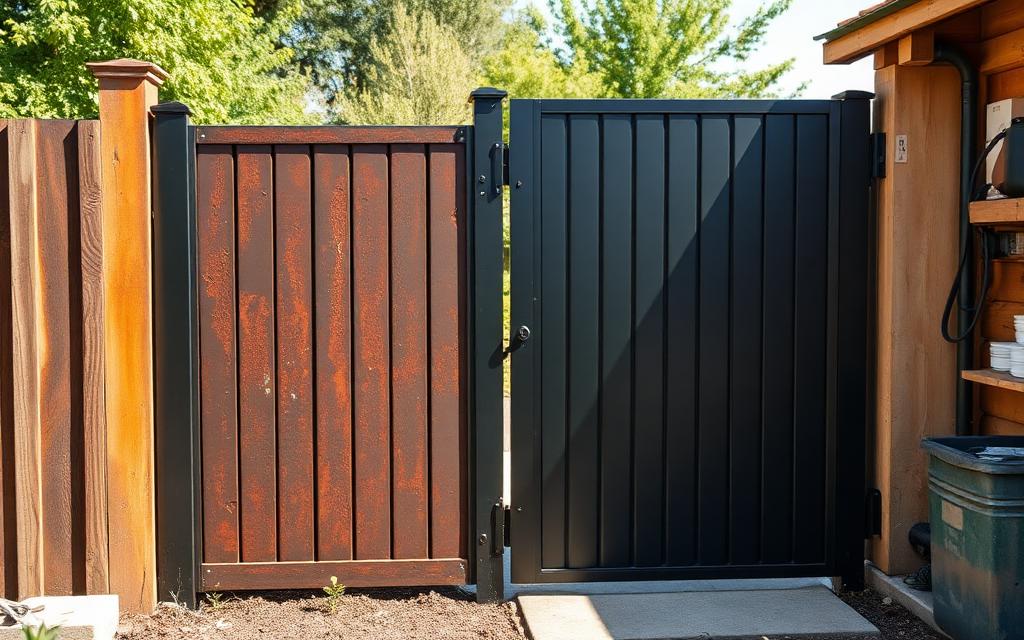
Treated the shed roof sheets and topcoated them. Two seasons of rain later the treated panels still look the way I left them.
Janine K. · Brisbane, AU
Trailer frame looks new
Frame rails were surface-rusted everywhere. Two bottles covered the whole thing with enough left over for the tongue and jack.
Tom V. · Hamilton, ON
Simple to use
Shake, brush, wait. No mixing, no strong acid smell like the jelly products I used before.
Ricardo M. · Houston, TX
Bought the 5-pack, no regrets
Fence posts, patio furniture and a mower deck off one bundle. Ordering the workshop pack was cheaper than buying singles twice.
Ellen S. · Portland, OR
Reviews shown are illustrative sample copy while we collect verified customer feedback.
Buy with confidence
Nothing to lose but the rust
Worldwide shipping
Tracked delivery to the US, UK, Canada, Australia, EU and more. Free on 3-bottle bundles and above.
Encrypted payment
Card details are captured on a secure, encrypted checkout page. We never see or store your card number.
30-day guarantee
If RustGuard™ is not right for your project, contact support within 30 days for a refund of the product price.
No grinder needed
Brush-on chemistry designed for pitted, hard-to-reach rust where abrasives cannot get a bite.
Secure checkout
Order your RustGuard™ bundle
Pick a bundle, tap checkout — that's it. No account, no forms to fight. Your delivery address and payment are collected on the secure checkout page.
Step 1 — Choose your bundle
One bottle covers about 55 sq ft. Treating a whole vehicle, trailer or roof section? Most people need 3 or more.
Free tracked shipping unlocked
Most projects use more than they expect — the ×8 pack drops you to $9.00/bottle (you pay $11.00 now).
Step 2 — Checkout securely
Apple Pay, Google Pay and all major cards are accepted on the secure Shopify checkout — address, payment and confirmation, all in one place.
- 1Tap checkoutYour bundle is reserved in a secure cart.
- 2Pay your wayCard, Apple Pay or Google Pay — under a minute.
- 3Tracked dispatchConfirmation email instantly, packed in 1 business day.
“Ordered the 5-pack, treated the whole trailer frame and still had a bottle spare.”
Tom V. · Hamilton, ON
“Arrived tracked in five days and the brush kit saved me a trip to the store.”
Dale R. · Tucson, AZ
Reviews are illustrative while verified feedback is collected.
Frequently asked questions
Do I need to sand down to bare metal?
No — that defeats the point. Remove loose material only. The converter needs rust to react with.
What temperature range is safe?
Apply between roughly 10–32 °C / 50–90 °F. Below that the reaction stalls; above that the film dries before it reacts.
Can I use a spray gun?
Yes, through low-pressure equipment suited to water-based coatings. Strain the product and flush the gun with water straight after.
What if it rains before it cures?
Let the area dry, check the film, and re-treat any part that looks washed out or patchy.
Do I have to sand before using rust converter?
Only enough to remove flaking material and lifted paint edges. Sanding to bare metal removes the rust the product needs to react with.
How long does rust converter take to work?
The visible colour change starts in 20 minutes to two hours depending on temperature. Touch dry is two to four hours, and full cure before topcoating is 24 hours.
Can I apply a second coat the same day?
Yes — three to four hours after the first, once it has darkened and is touch dry. On pitted steel the second coat is what makes the repair last.
What happens if I paint over it too early?
Moisture trapped under the topcoat blisters it, usually within days to weeks. Sand the blisters back, re-treat and wait the full cure next time.
Can I apply it in a cold garage?
Below about 50°F the reaction stalls and the result is unreliable. Heat the space, or wait for a warmer day.
Does it need to be washed off afterwards?
No. Unlike an acid gel or remover, the film stays on and becomes your primer. There is no rinse or neutralising step.
How do I clean my brushes?
Water, immediately. It is easy to clean wet and very stubborn once cured, so do it before you take a break.
Can I use it on a vertical surface without runs?
Yes, if you keep the coat thin. Load the brush lightly and work upward in short strokes rather than flooding the surface.
Keep reading
- Rust converter for iron and steel that leaves a paint-ready surfaceBrush RustGuard™ onto rusted iron or steel, convert the corrosion and topcoat in 24 hours. Bundles from $24, free shipping on 3+.
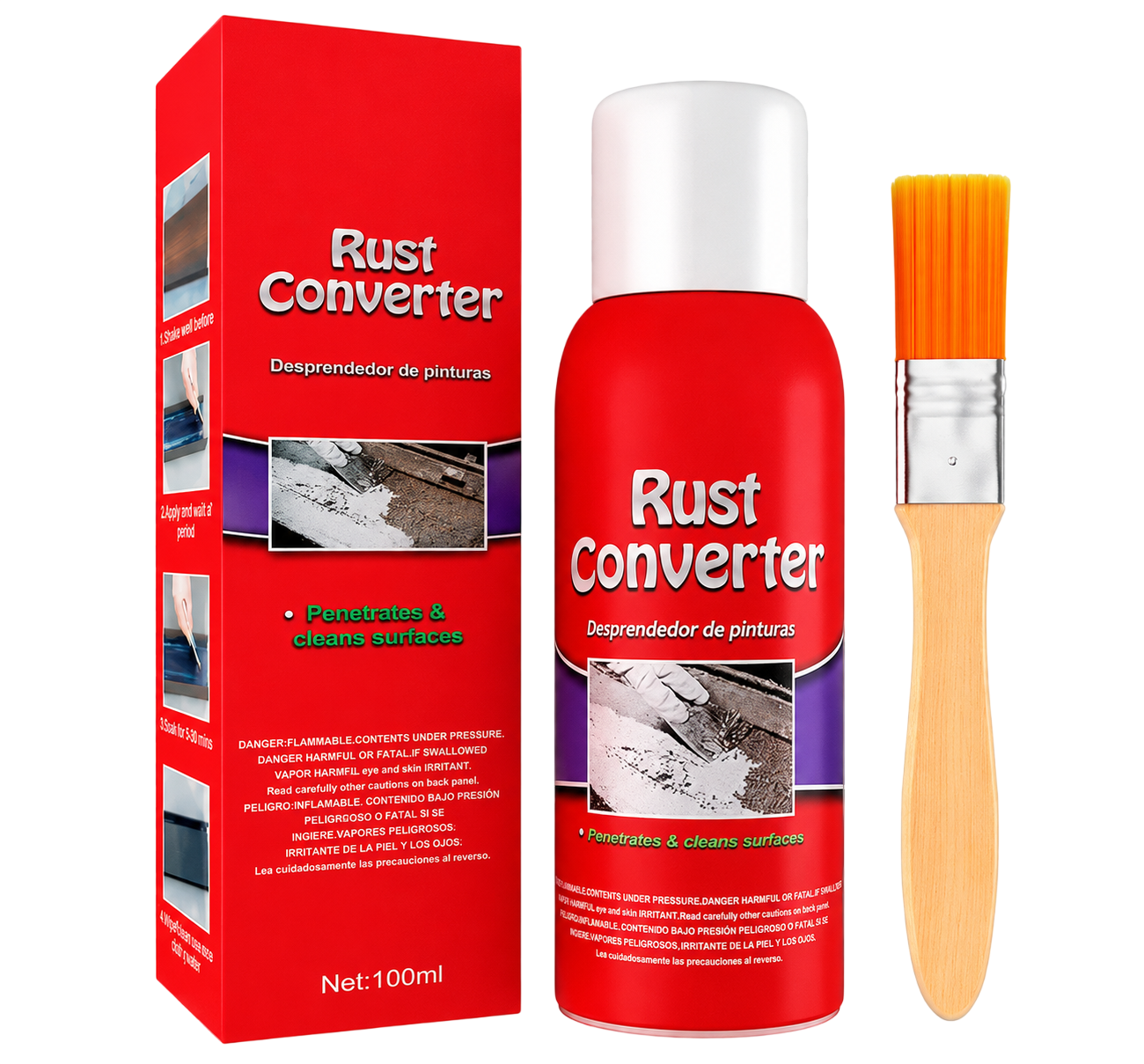
- How to paint over rust properlyPainting straight over rust always fails. Here's the correct sequence — prep, convert, cure, prime, topcoat — and the paints that work over a converted surface.
- Rust converter drying and cure timeColour change, touch dry, recoat and topcoat windows for rust converter — plus how temperature and humidity change every one of them.
- Rust converter coverage calculatorWork out exactly how many bottles of RustGuard™ your job needs. Enter your area or pick a common job and get a bundle recommendation.
- Does rust converter actually work?What a rust converter genuinely does, where it outperforms sanding, and the four situations where it will not help at all.
Last step
Ready to stop the rust?
Ships from our US fulfilment partner, typically 3–7 business days. 30-day money-back guarantee.