- Encrypted paymentSecure, encrypted checkout
- Tracked worldwideFree on 3+ bottle bundles
- 30-day guaranteeMoney-back if it is not for you
- Clear labellingCoverage and results stated honestly
Stock up & save
Choose your RustGuard™ bundle
Prices in USD. Free tracked shipping on 3-bottle bundles and above.
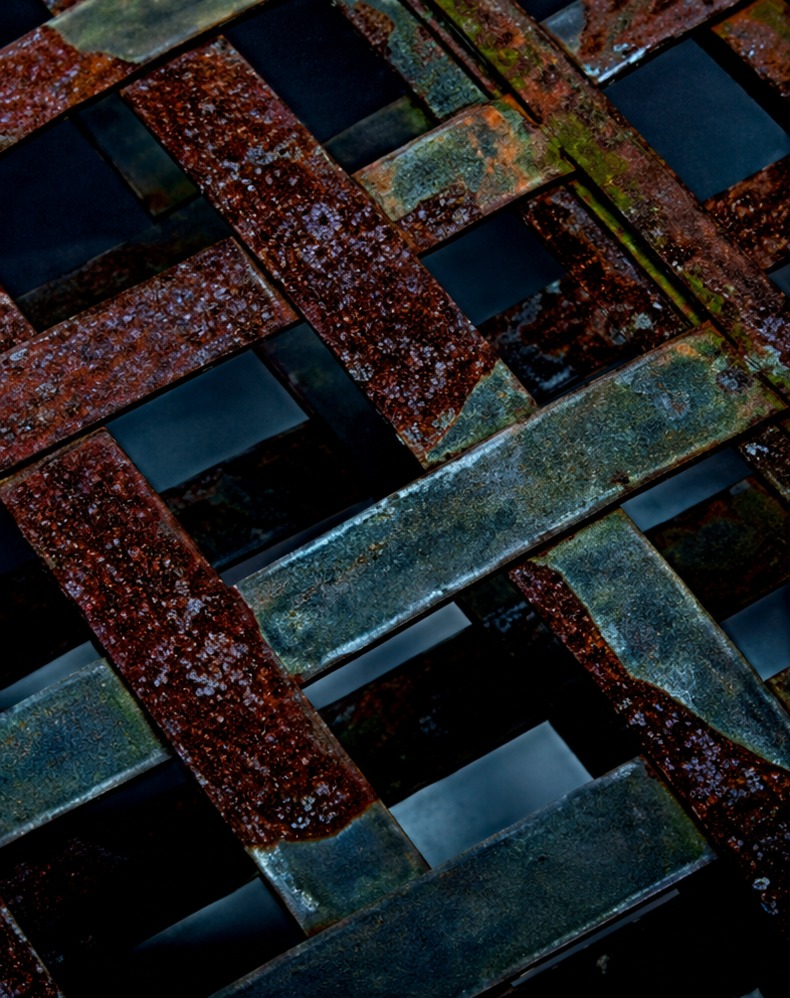
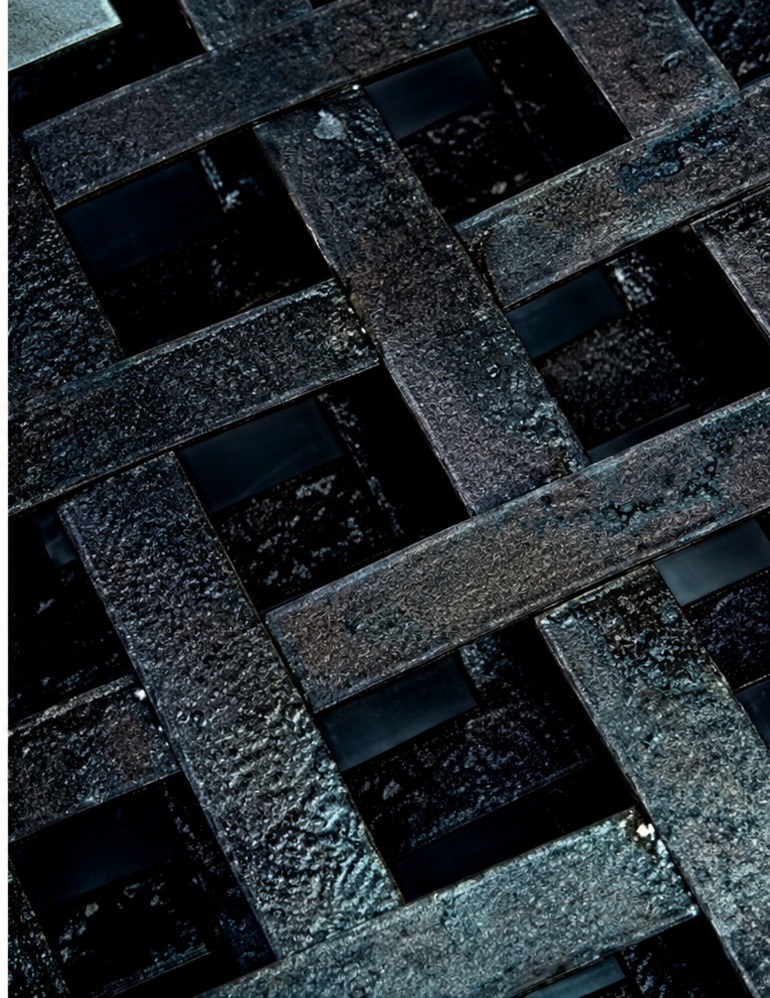
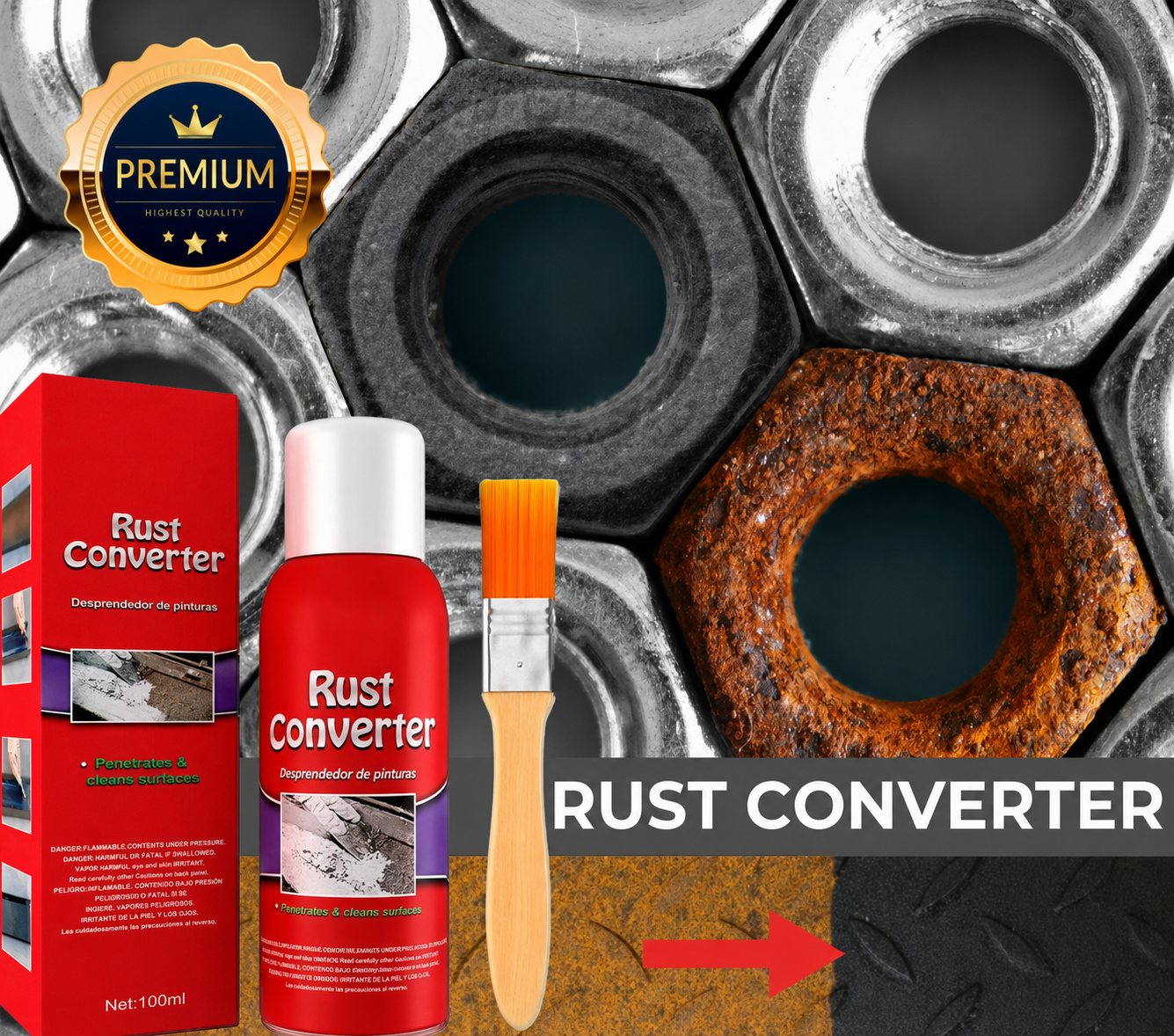
Rusted metal in, paint-ready surface out
Brush RustGuard™ over sound rust, let it cure, then paint. Images are illustrative — results depend on surface condition and preparation.
The short answer
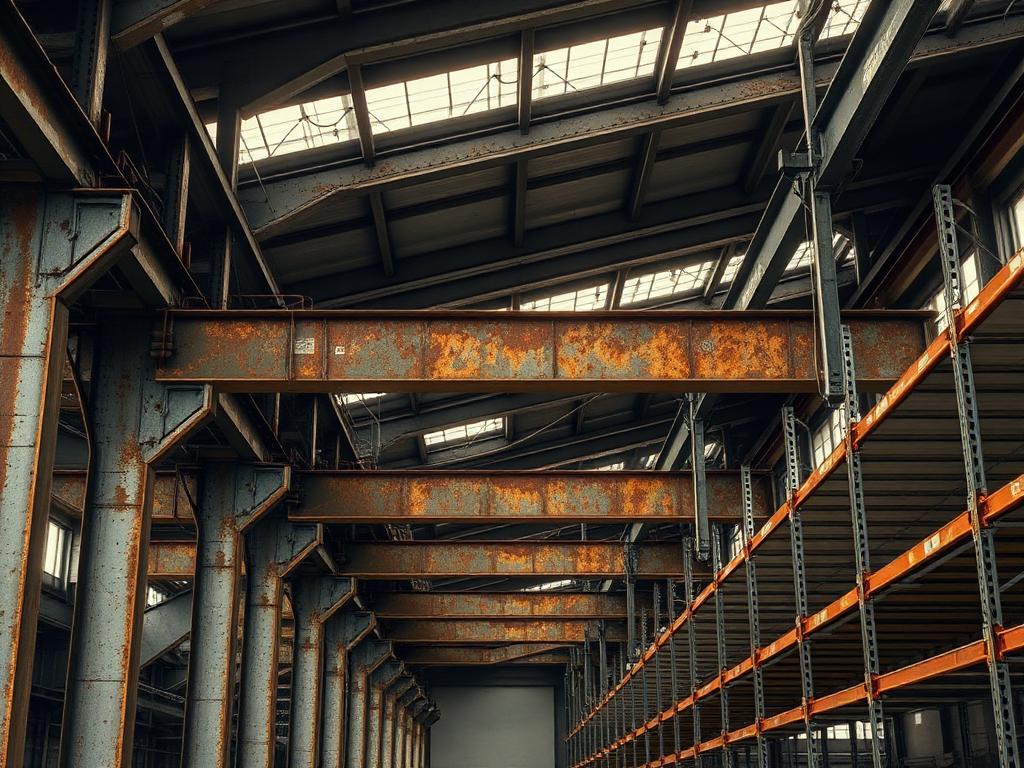
For maintenance work on structural steel — mezzanine frames, plant frameworks, racking, walkways, columns, hoppers and cladding rails — a converter is the practical option because you can treat steel in place, in an occupied building, with no blasting, no containment and no rinse water to collect. Prep, two coats, 24-hour cure, then an industrial topcoat. Budget one bottle per 55 sq ft.
- No dust, no grit, no containment: treat steel in a live building
- Water-based and low odour, so adjacent work can usually continue
- 8-pack covers about 440 sq ft in two coats at $9 a bottle
- For certified new-build systems, follow the specification instead
Where rust shows up first
The areas worth checking before you order.
- Structural columns, beams, bracing and base plates
- Walkways, stair stringers, treads and handrails
- External tank shells, bunds and pipe supports
- Plant frames, skids and machinery bases
- Fabricated ductwork and external cladding rails
- Loading bay steelwork, dock levellers and bollards
Step-by-step on this job
- 01
Survey and record
Photograph and log corrosion by area so you can plan quantities and prove the work later.
- 02
Prepare to a practical standard
Hand or power tool cleaning to remove loose rust and defective coating. Feather the sound coating edges.
- 03
Degrease and dry
Industrial surfaces carry oil mist and process residues. Degrease and confirm the surface is dry before application.
- 04
Apply the converter by area
Work in bays with a roller on flat webs and a brush on edges, bolts and connections.
- 05
Apply the specified topcoat
After a 24-hour cure, apply the site-approved topcoat system to the required film thickness.
What not to do
The cautions that save a re-do.
- Follow the site coating specification where one exists — it takes precedence
- Hot surfaces, live plant and confined spaces need a permit and proper controls
- Assess section loss on load-bearing members before coating anything
- Not for aluminium, stainless or galvanising that is still sound
Typical quantities
A starting point based on the jobs customers order for most often.
| Job | Bottles |
|---|---|
| Handrail run, 30 m / 100 ft | 2 bottles |
| Stair flight and stringers | 2 bottles |
| Single column and base plate | 1 bottle |
| Plant skid frame | 3 bottles |
| Tank shell section, 400 sq ft | 8 bottles |
Work out your exact quantity
Area
100 sq ft
Bottles needed
3
Recommended bundle
×3 — $42
Based on up to 55 sq ft per bottle on smooth steel, adjusted for surface condition. Estimates only — measure generously.
Why converters win
RustGuard™ vs the old ways
| Method | RustGuard™ | Grinding / sanding | Naval jelly | Paint straight over rust |
|---|---|---|---|---|
| Works on pitted rust you cannot reach | Partly | |||
| No power tools required | ||||
| Leaves a paint-ready surface | After priming | |||
| Stops the treated rust spreading | ||||
| Low dust, low mess | ||||
| Cost for a 100 sq ft panel | From $24 | Discs + hours | $$ | Repaint yearly |
Read the detail: rust converter vs naval jelly · converter vs remover · how to choose one
What buyers say
Rated by people who hate sanding
Saved my truck bed
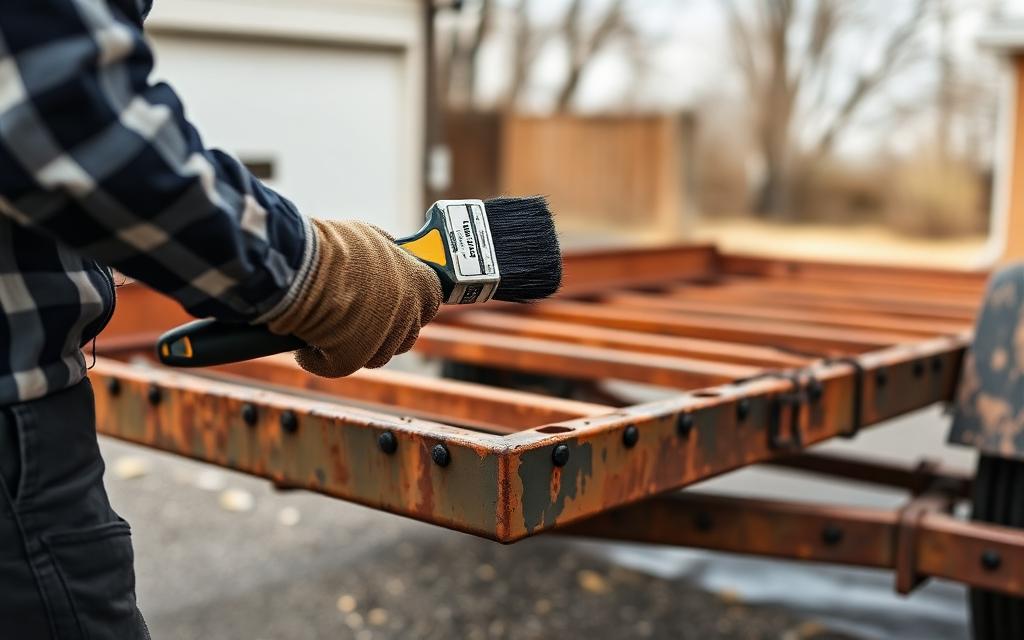
Wire-brushed the loose scale, brushed a coat on and left it overnight. Next morning it was a flat black surface that took primer without fighting me.
Dale R. · Tucson, AZ
No more grinding for hours
I restore gates and railings. This cut my prep time in half on pitted sections where the grinder just polishes the rust around.
Marcus H. · Leeds, UK
Held up through the wet season
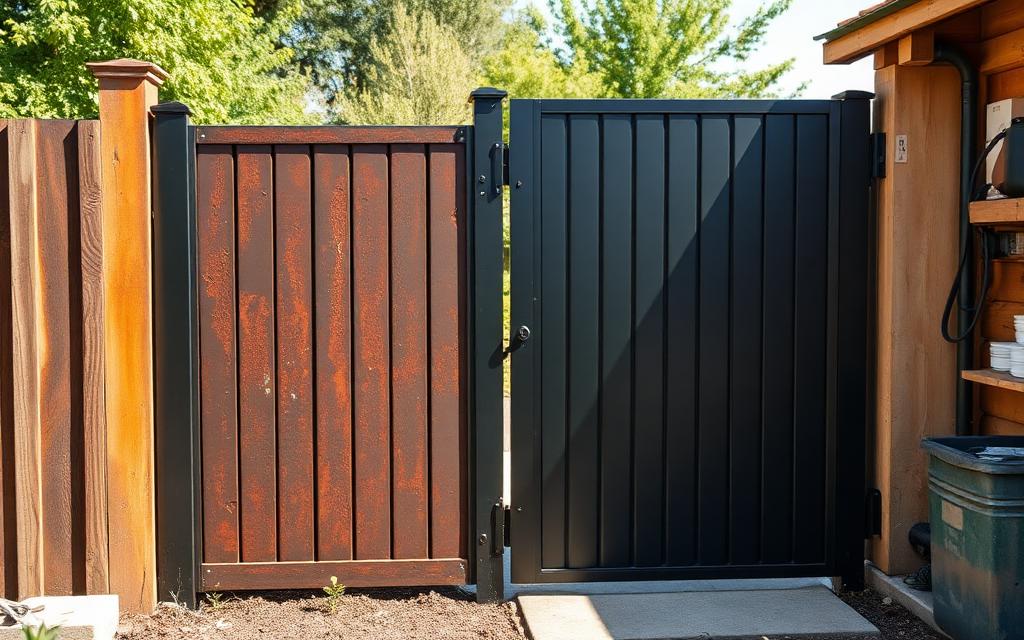
Treated the shed roof sheets and topcoated them. Two seasons of rain later the treated panels still look the way I left them.
Janine K. · Brisbane, AU
Trailer frame looks new
Frame rails were surface-rusted everywhere. Two bottles covered the whole thing with enough left over for the tongue and jack.
Tom V. · Hamilton, ON
Simple to use
Shake, brush, wait. No mixing, no strong acid smell like the jelly products I used before.
Ricardo M. · Houston, TX
Bought the 5-pack, no regrets
Fence posts, patio furniture and a mower deck off one bundle. Ordering the workshop pack was cheaper than buying singles twice.
Ellen S. · Portland, OR
Reviews shown are illustrative sample copy while we collect verified customer feedback.
Buy with confidence
Nothing to lose but the rust
Worldwide shipping
Tracked delivery to the US, UK, Canada, Australia, EU and more. Free on 3-bottle bundles and above.
Encrypted payment
Card details are captured on a secure, encrypted checkout page. We never see or store your card number.
30-day guarantee
If RustGuard™ is not right for your project, contact support within 30 days for a refund of the product price.
No grinder needed
Brush-on chemistry designed for pitted, hard-to-reach rust where abrasives cannot get a bite.
Secure checkout
Order your RustGuard™ bundle
Pick a bundle, tap checkout — that's it. No account, no forms to fight. Your delivery address and payment are collected on the secure checkout page.
Step 1 — Choose your bundle
One bottle covers about 55 sq ft. Treating a whole vehicle, trailer or roof section? Most people need 3 or more.
Free tracked shipping unlocked
Most projects use more than they expect — the ×8 pack drops you to $9.00/bottle (you pay $11.00 now).
Step 2 — Checkout securely
Apple Pay, Google Pay and all major cards are accepted on the secure Shopify checkout — address, payment and confirmation, all in one place.
- 1Tap checkoutYour bundle is reserved in a secure cart.
- 2Pay your wayCard, Apple Pay or Google Pay — under a minute.
- 3Tracked dispatchConfirmation email instantly, packed in 1 business day.
“Ordered the 5-pack, treated the whole trailer frame and still had a bottle spare.”
Tom V. · Hamilton, ON
“Arrived tracked in five days and the brush kit saved me a trip to the store.”
Dale R. · Tucson, AZ
Reviews are illustrative while verified feedback is collected.
Why maintenance steel is different from new steel
New structural steel is coated to a specification: surface prepared to a defined standard, a specified primer at a specified dry film thickness, and a topcoat system with a design life. That is the right approach when the steel is in a shop, accessible, and the programme allows for it.
Maintenance is a different problem. The steel is installed, often above running plant or stock, frequently painted several times already, and blasting it means containment, extraction, downtime and a permit. Very often the choice is not between blasting and converting — it is between converting and doing nothing for another two years.
That is where a brush-applied converter earns its place. It is applied to steel in situ, it produces no airborne grit, it needs no rinse water collection, and the surface it leaves is primed and ready for whatever topcoat the site standard calls for.
Typical maintenance quantities
Based on roughly 55 sq ft per bottle in two coats. Measure the corroded surface you will actually treat, not the total steel present.
| Element | Approximate treatable area | Pack |
|---|---|---|
| Single mezzanine bay frame | ≈120 sq ft | 3-pack |
| Racking run, 30 ft, uprights and beams | ≈150 sq ft | 3-pack |
| Walkway and handrail, 40 ft | ≈180 sq ft | 5-pack |
| Plant framework or skid base | ≈200 sq ft | 5-pack |
| Column bases across a unit, 20 columns | ≈250 sq ft | 5-pack |
| Cladding rails and purlins in a bay | ≈400 sq ft | 8-pack |
| Hopper, chute or silo exterior | ≈300–500 sq ft | 8-pack |
A controlled maintenance application
- 01
Survey and grade the corrosion
Photograph and record. Light surface bloom, heavy scale and section loss are three different jobs with three different answers.
- 02
Check section thickness where it looks thin
Ultrasonic thickness testing on anything load-bearing that has visibly lost material. Coating thinned steel does not restore capacity.
- 03
Prep: scrape, wire-brush, degrease
Remove all loose scale and any oil or process contamination. Hand and power tool cleaning is sufficient; blasting is not required.
- 04
Mask services and moving equipment
Cable trays, conduit, sensors, bearings, drive components and anything with a friction surface.
- 05
First coat, working systematically bay by bay
Define sections so nothing is left half-treated at the end of a shift.
- 06
Second coat after 3–4 hours
Standard on pitted or heavily weathered steel, which is most maintenance work.
- 07
Cure 24 hours, then site-standard topcoat
The cured film is a primer. Apply the topcoat your site or client specification calls for over it.
Working in occupied buildings
The practical advantages are what make this approach viable on live sites. There is no grit to contain and clean up, no dust cloud drifting into production areas, no rinse water to collect and dispose of, and the product is water-based and low odour, so adjacent operations usually continue.
Ventilate normally, wear gloves and eye protection, and cover product and equipment underneath the work area — not because of hazard so much as because drips of black liquid are unwelcome on anything below. Standard site rules for working at height apply and are, in practice, the bigger risk on this kind of job by a wide margin.
For records, photograph before and after, note the batch, the areas treated and the dates, and keep the coverage figures. Maintenance regimes get audited, and a treated-and-topcoated area with a date against it is far easier to defend than an undated repaint.
Where this approach fits, and where it does not
Be honest about which category your job is in before you specify anything.
- Fits: in-situ maintenance of corroded steel where blasting is impractical
- Fits: interim protection while a larger remediation is planned and funded
- Fits: hard-to-access steel — behind services, above plant, inside frameworks
- Does not fit: new-build steel with a specified coating system and warranty
- Does not fit: steel with measurable section loss affecting capacity
- Does not fit: immersion service, chemical containment or high-temperature duty
Work out your exact quantity
Area
100 sq ft
Bottles needed
3
Recommended bundle
×3 — $42
Based on up to 55 sq ft per bottle on smooth steel, adjusted for surface condition. Estimates only — measure generously.
Where a converter is the wrong specification
- Load-bearing steel that has lost measurable section — a structural engineer's decision
- Certified coating systems with specified DFT and third-party inspection
- Permanently immersed steel, tank interiors and chemical containment
- Surfaces operating above roughly 400°F
- Aluminium, stainless and non-ferrous plant equipment
- Anywhere a client specification names a particular two-pack system
Frequently asked questions
Can you supply larger volumes?
Beyond the 8-pack, email support@getrustguard.com with your area and specification and we will quote.
Does it meet a specific standard?
Treat it as a maintenance converter-primer. Where a project demands a certified coating system to a named standard, follow that specification.
Can it be applied by airless spray?
It can be applied through low-pressure spray equipment for water-based coatings. Strain it, apply thin passes, and flush the equipment with water immediately.
How long before recoating in a wet climate?
Still 24 hours, but only if the film has stayed dry. Rain on an uncured film means re-treating that area.
Can rust converter be used on structural steel?
For maintenance of corroded steel in place, yes: prep, two coats, 24-hour cure, then a site-standard topcoat. It is not a substitute for a specified new-build coating system, and it does not restore lost section.
How much do I need for a mezzanine or racking run?
About 55 sq ft per bottle in two coats. A single mezzanine bay is roughly 120 sq ft (3-pack); a bay of cladding rails and purlins is nearer 400 sq ft (8-pack).
Do we need to shut the area down?
Usually not. There is no grit, no dust cloud and no rinse water, and the product is water-based and low odour. Working-at-height controls are normally the governing constraint.
What topcoat should we specify over it?
Whatever your site standard calls for. The cured film behaves as a primer for oil-based, acrylic and most industrial topcoats; patch-test high-build epoxies first.
Is it suitable for a coating warranty?
Not as a certified system. For warranted new-build work, follow the specified preparation and coating system.
How do we handle steel with section loss?
Ultrasonic thickness testing and a structural assessment. Coating thinned steel keeps it tidy but does not restore capacity.
Is there a bulk price?
The 8-pack is $9 a bottle, the standard trade tier. For repeat volume, email support@getrustguard.com for a quote.
Keep reading
- Rust converter for exposed rebar and concrete repairTreat exposed reinforcement bar during concrete repair. How converters fit into a spalling repair, and when to call a structural engineer.
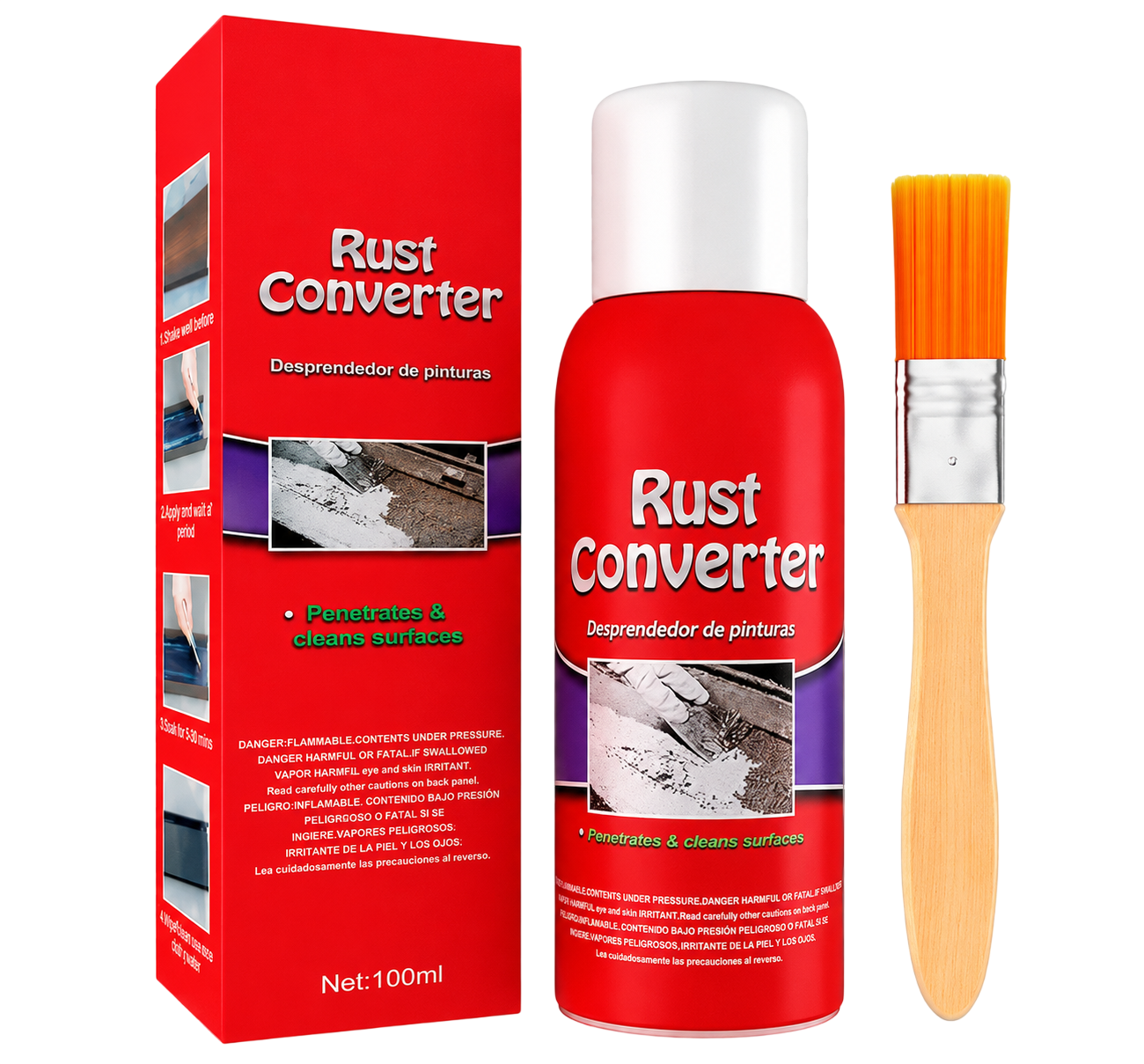
- Rust converter for metal roofsTreat rusting corrugated roofing, gutters and flashing with RustGuard™. Coverage figures, safe access and topcoat guidance.
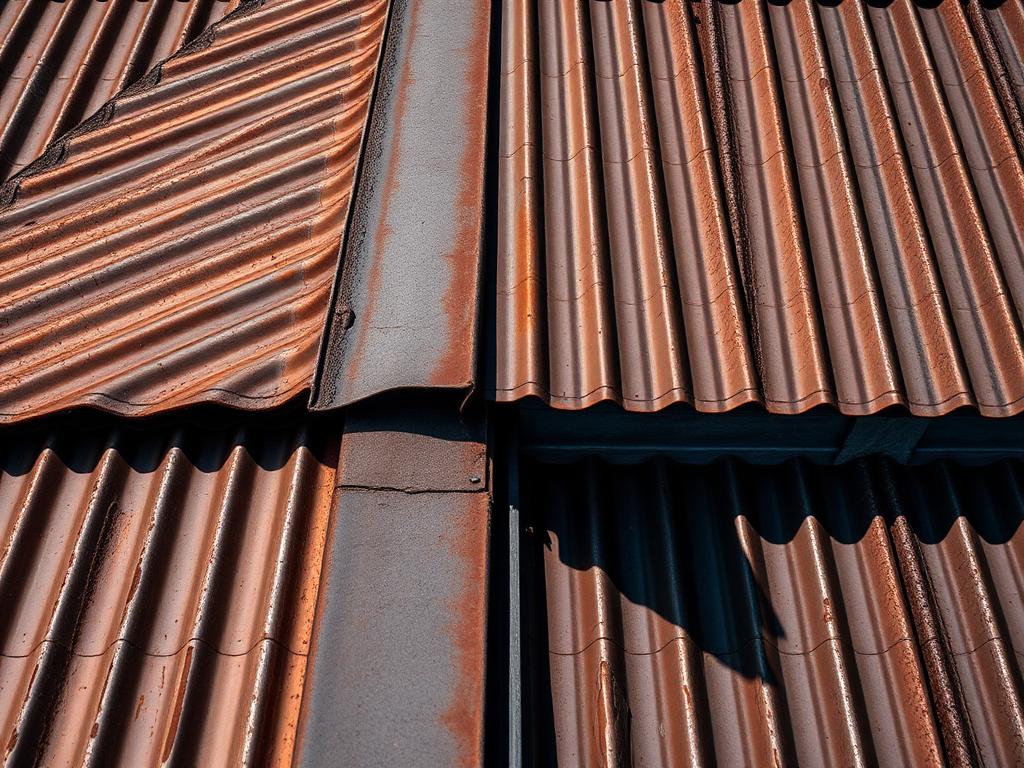
- Rust converter for iron and steel that leaves a paint-ready surfaceBrush RustGuard™ onto rusted iron or steel, convert the corrosion and topcoat in 24 hours. Bundles from $24, free shipping on 3+.
- Rust prevention guideA practical prevention programme for vehicles, tools and outdoor steel — coatings, drainage, storage, salt management and an inspection schedule.
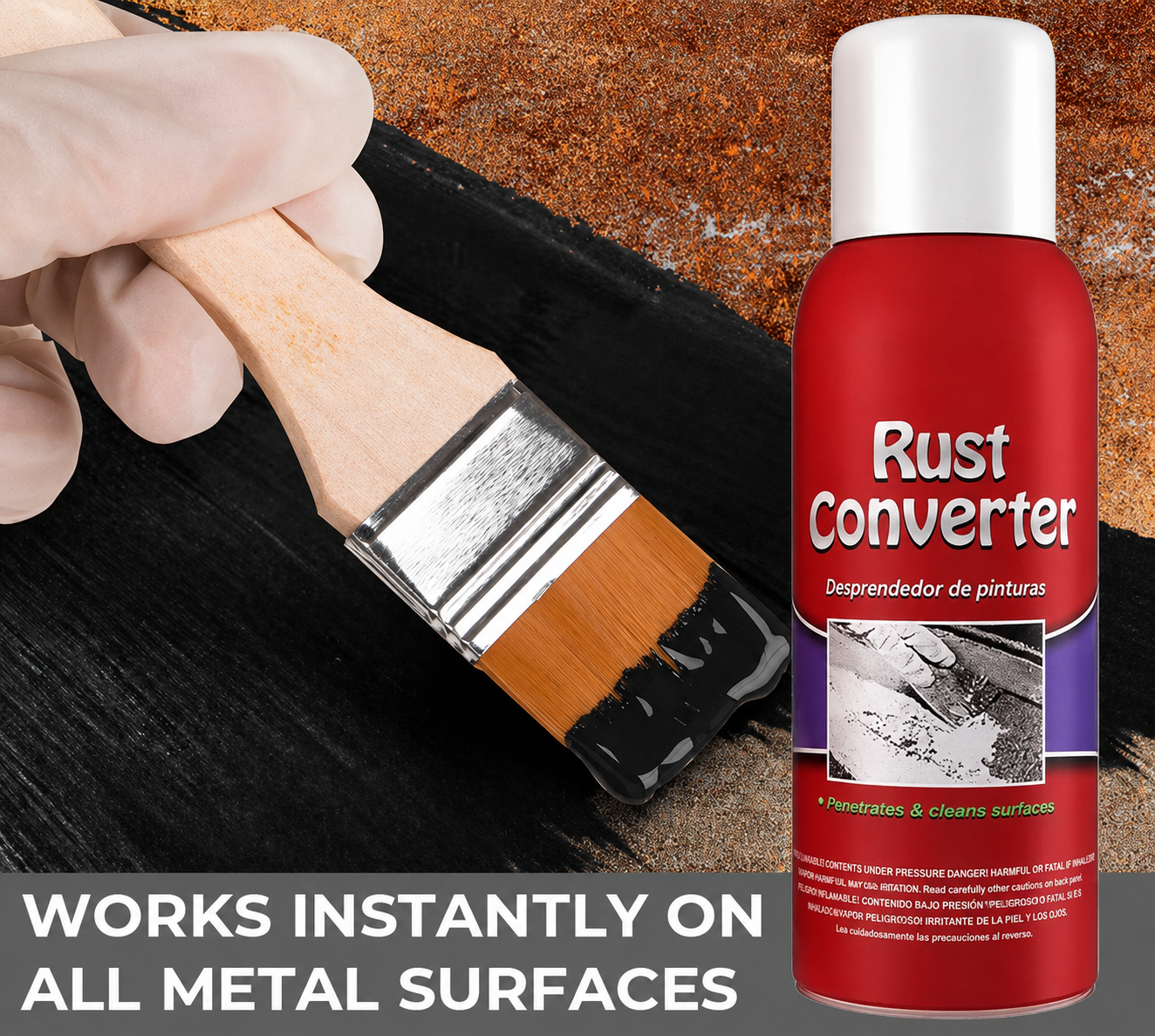
- Rust vs corrosion: what's the difference?Rust is one type of corrosion — the iron kind. Why that distinction decides whether a rust converter will work on your metal at all.
Last step
Ready to stop the rust?
Ships from our US fulfilment partner, typically 3–7 business days. 30-day money-back guarantee.