- Encrypted paymentSecure, encrypted checkout
- Tracked worldwideFree on 3+ bottle bundles
- 30-day guaranteeMoney-back if it is not for you
- Clear labellingCoverage and results stated honestly
Stock up & save
Choose your RustGuard™ bundle
Listed in USD and billed in USD; your bank converts to CAD at checkout.
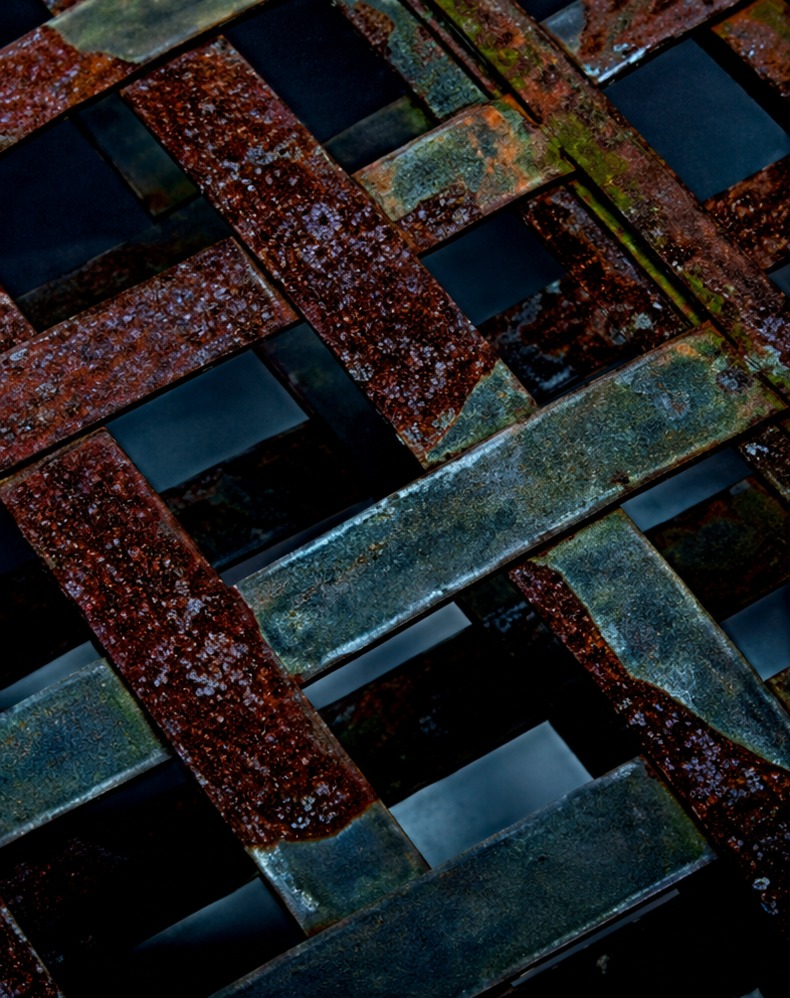
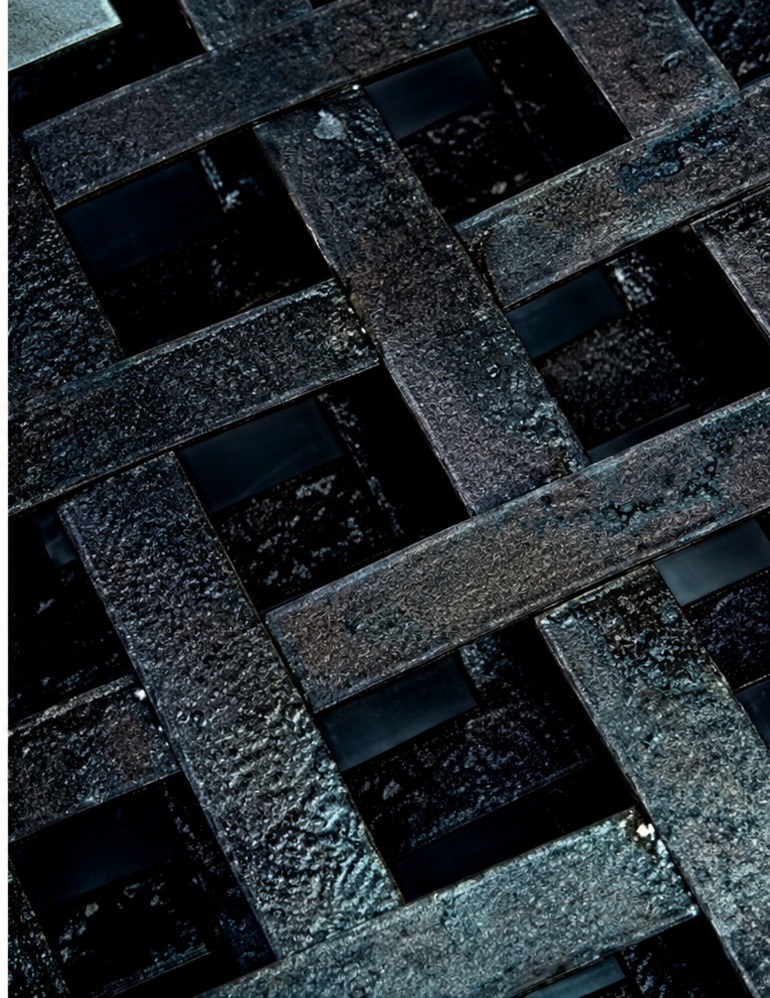
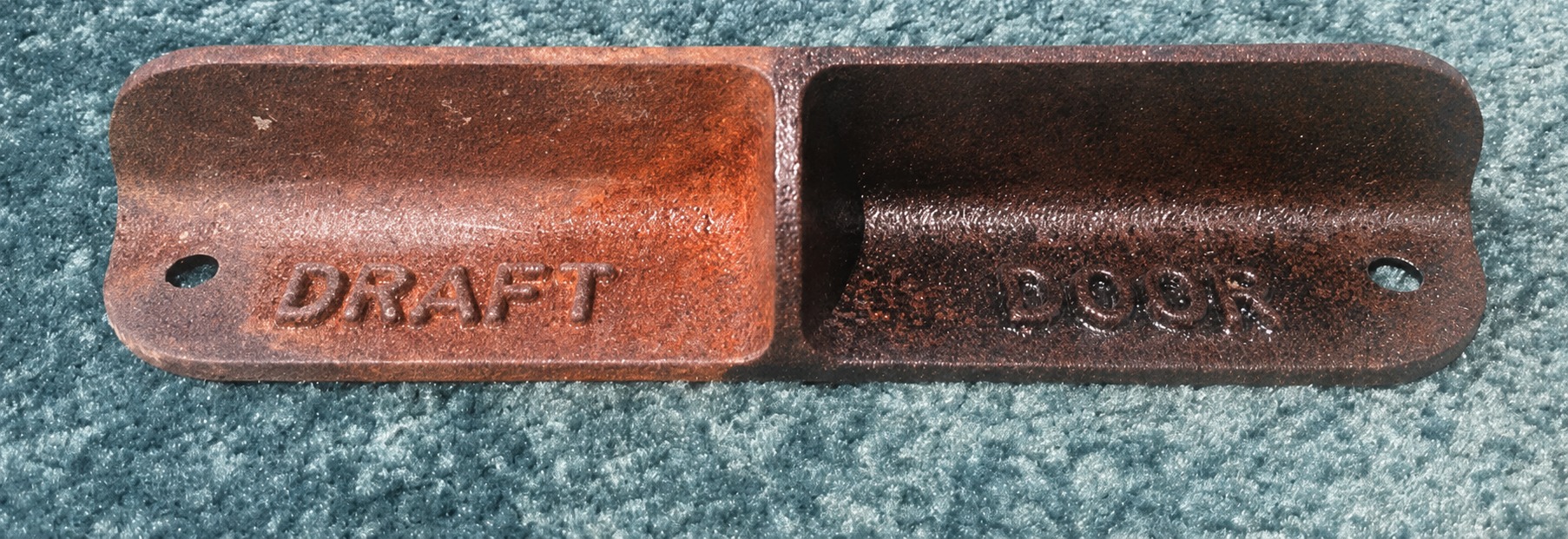
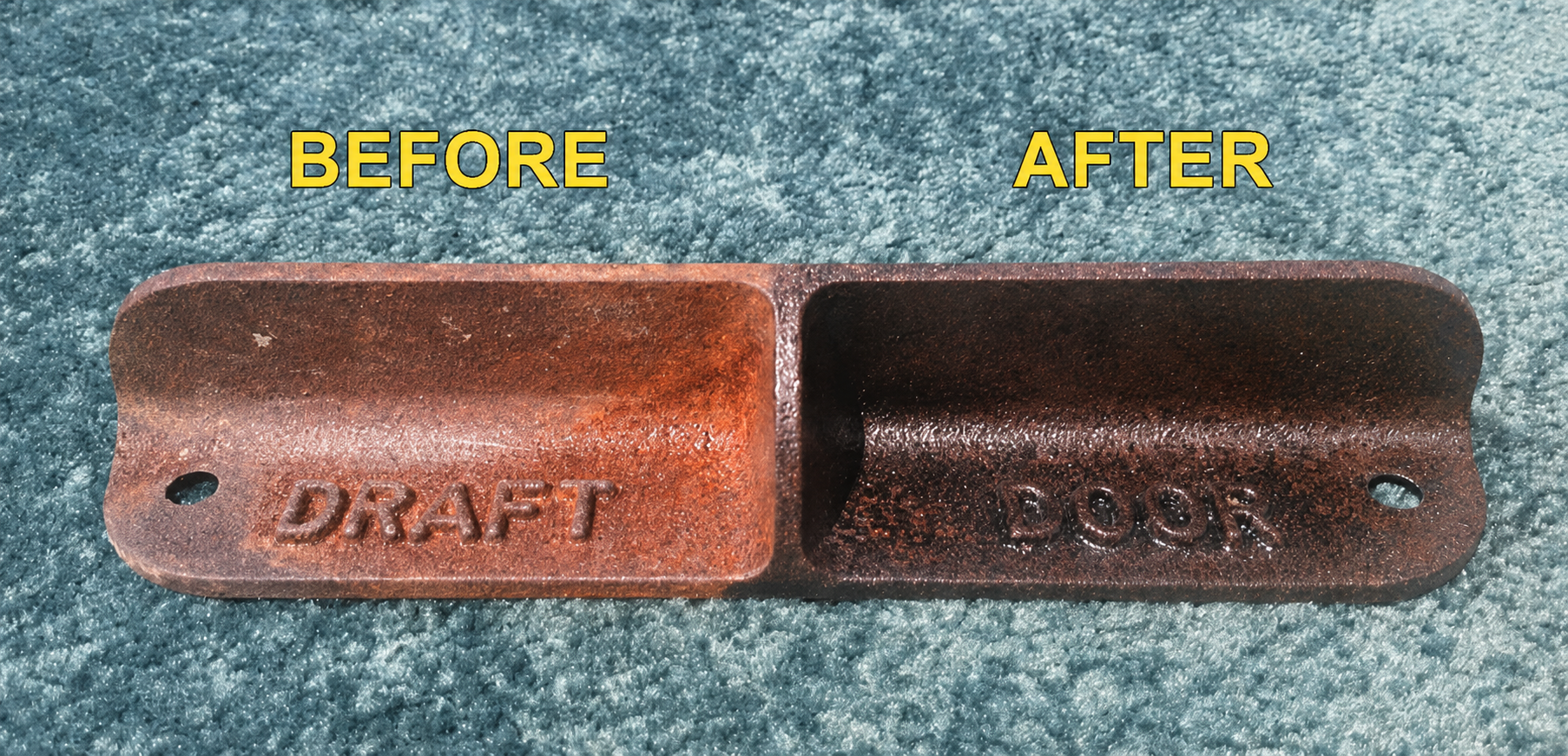
Rusted metal in, paint-ready surface out
Brush RustGuard™ over sound rust, let it cure, then paint. Images are illustrative — results depend on surface condition and preparation.
The short answer
Yes, on the surfaces it is designed for: tightly adhered rust on clean, dry iron or steel, brushed on thin, cured for 24 hours and then topcoated. It does not work on grease, on flaking scale, on aluminium or stainless, or on metal that has already thinned. Most reported failures are prep failures or topcoating-too-early failures, not chemistry failures.
- Works: surface rust and pitting on steel, cast and wrought iron, and red rust on failed galvanising
- Does not work: bare bright metal, aluminium, stainless, copper, perforated steel
- Durability comes from the topcoat over the converted film, not from the film alone
- Expect the colour change within two hours — that is your proof it reacted
What actually happens on the surface
The active chemistry reacts with hydrated iron oxide and converts it into a stable iron complex, bound in a polymer film as the coating dries. The visible sign is the rust turning from orange to dark grey or black.
That converted layer is inert and no longer porous in the way rust is, so it does not pull moisture down to the steel. It also keys well, which is why it functions as a primer.
It is a genuine chemical change, not a paint that hides the colour. If a treated area still looks orange after curing, the reaction did not happen there — usually because of contamination or because the film was too thin.
Where it works and where it does not
| Situation | Verdict |
|---|---|
| Surface rust on steel heading for paint | Works well |
| Pitted, scaled rust after loose material removed | Works well, often two coats |
| Large fixed items you cannot sand | Best available option |
| Perforated or paper-thin metal | Will not help — needs new metal |
| Greasy or waxy surfaces | Will fail until degreased |
| Aluminium, stainless, copper | Wrong chemistry entirely |
| Show-standard bare-metal finish | Blasting and priming still wins |
The four reasons people say it did not work
- The surface was not degreased, so the film never bonded
- It was topcoated before the 24-hour cure, and the paint blistered
- The metal was already perforated, so there was nothing left to save
- The wrong metal — aluminium or stainless — was treated
Try it on your job
Area
100 sq ft
Bottles needed
3
Recommended bundle
×3 — $42
Based on up to 55 sq ft per bottle on smooth steel, adjusted for surface condition. Estimates only — measure generously.
What the chemistry actually does, and what it does not claim
A converter carries an acid — commonly tannic or phosphoric — plus a polymer binder. The acid reacts with hydrated iron oxide to form a stable compound that no longer draws in moisture the way rust does, and the polymer coalesces into a continuous film that seals the reacted layer from air and water.
That is a real and well-established reaction, but it has boundaries. It needs iron oxide to react with, it needs to physically touch that oxide, and it needs time and moderate temperature to complete. Remove any of those three conditions and you get a film sitting on a surface rather than a conversion.
What it never claims is restoration. The steel that has already corroded away is gone; conversion stabilises what remains. Anyone promising a converter will repair perforation or rebuild a thinned rail is selling something the chemistry cannot do.
Where it works, where it does not
| Surface | Verdict | Why |
|---|---|---|
| Surface rust on steel or cast iron | Works well | Plenty of oxide, easy access, thin film reacts fully |
| Pitted, salt-eaten steel | Works, two coats | Liquid wicks into pit floors abrasives cannot reach |
| Red rust on failed galvanising | Works | The red areas are iron oxide once the zinc has gone |
| Bright, sound galvanising | No | No iron oxide present to convert |
| Aluminium, stainless, copper, brass | No | Corrode without forming iron oxide |
| Greasy or waxed steel | No | Product cannot reach the metal; film peels |
| Flaking heavy scale | Not until prepped | Converts the flake, which then falls off with the film |
| Perforated or paper-thin steel | No | Structural loss — welding or replacement |
The four failure modes, and how to tell which one you had
Contamination failure looks like a film that wipes off, or rust that stayed orange while everything around it turned dark. The cause is oil, wax or silicone, and the fix is a proper degrease and a splash test before re-treating.
Thickness failure looks like a skin that is dry on top and tacky underneath, sometimes with wrinkles. One heavy coat instead of two thin ones traps moisture; give it longer to cure, then even it out with a thin second coat.
Cure failure looks like blistered topcoat days or weeks after painting. That is moisture escaping from a film that was painted before it had its 24 hours. Sand the blisters, re-treat the exposed rust and respect the cure window. Exposure failure is the fourth: a converted film left unpainted outdoors chalks and breaks down under UV within a season or two — which is not the converter failing, it is a primer being used as a topcoat.
Prove it works on your metal in one afternoon
- 01
Pick a representative test patch
Somewhere with the same rust and the same contamination as the main job, ideally hidden — behind a bracket or under a lip.
- 02
Prep it exactly as you would the whole job
Scrape, degrease, splash test, dry. Testing on unusually clean metal proves nothing about the real surface.
- 03
Brush one thin coat and time it
Note when the colour starts to turn. Anything up to two hours is normal depending on temperature.
- 04
Check at 24 hours
The film should be uniformly dark, dry, and firmly attached — a fingernail should not lift it.
- 05
Topcoat the patch and wait a week
Use the exact paint you intend to use. Look for blistering, lifting, wrinkling or orange bleed.
- 06
Then scale up with confidence
If the patch is sound after a week, the method is right for your metal and you can order the pack size your area needs.
Realistic expectations for durability
What a converted and topcoated surface should do, based on how the film and paint behave together.
- Indoors or in a dry shed, converted and painted steel is effectively a permanent repair until something damages the coating
- Outdoors under a maintained topcoat, expect years rather than months, with touch-ups where chips occur
- In road salt or salt spray, inspect annually and touch up early — chloride finds every breach
- On abrasion surfaces such as trailer decks and implement floors, plan on annual maintenance
- Bare, unpainted converted film outdoors will chalk within a season or two — always topcoat
- Any repair fails early if the water trap that caused the rust is left in place
Where it genuinely does not work
- Metal that has thinned or perforated — no coating restores section
- Aluminium, stainless, copper, brass and other non-ferrous corrosion
- Bright, unrusted galvanising or clean bare steel with no oxide to convert
- Any surface you cannot degrease properly or physically wet
- Applied below about 45°F, where the reaction stalls
- Left bare outdoors, where UV breaks the film down within a season or two
What buyers say
Rated by people who hate sanding
Saved my truck bed
Wire-brushed the loose scale, brushed a coat on and left it overnight. Next morning it was a flat black surface that took primer without fighting me.
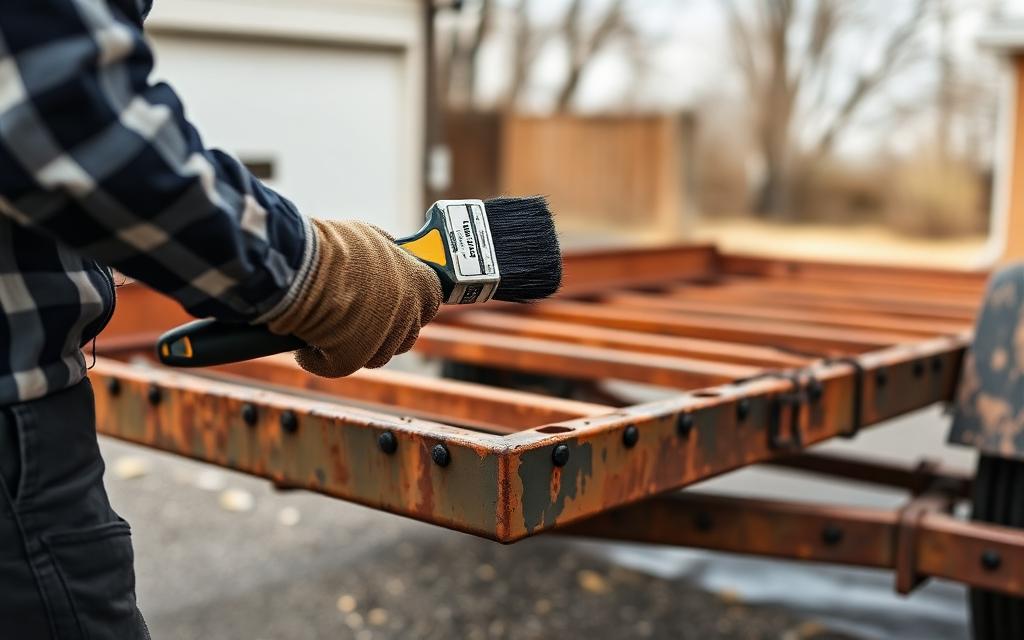
Dale R. · Tucson, AZ
No more grinding for hours
I restore gates and railings. This cut my prep time in half on pitted sections where the grinder just polishes the rust around.
Marcus H. · Leeds, UK
Held up through the wet season
Treated the shed roof sheets and topcoated them. Two seasons of rain later the treated panels still look the way I left them.
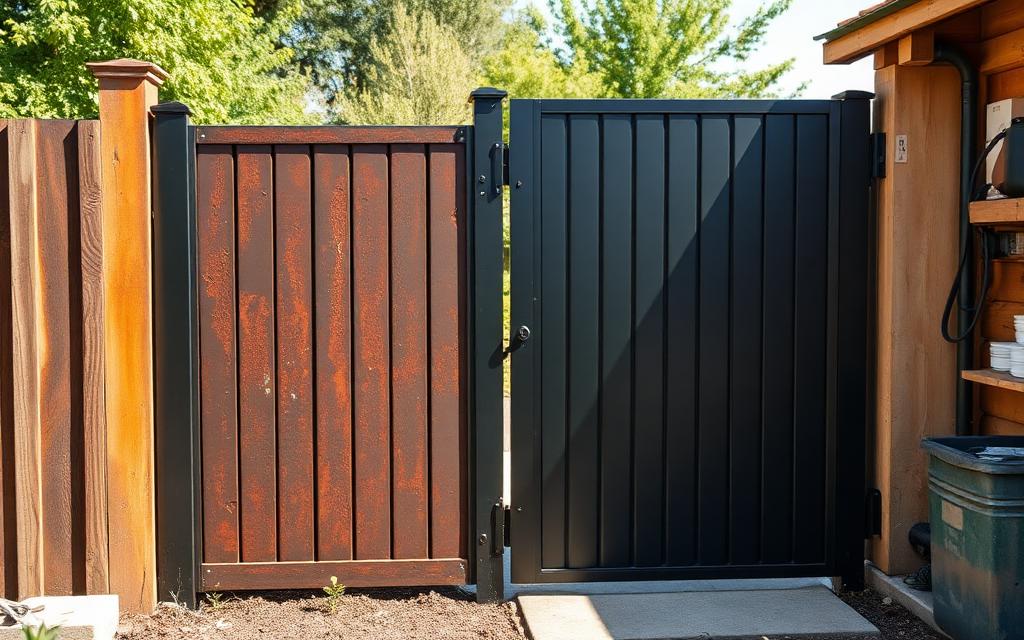
Janine K. · Brisbane, AU
Trailer frame looks new
Frame rails were surface-rusted everywhere. Two bottles covered the whole thing with enough left over for the tongue and jack.
Tom V. · Hamilton, ON
Simple to use
Shake, brush, wait. No mixing, no strong acid smell like the jelly products I used before.
Ricardo M. · Houston, TX
Bought the 5-pack, no regrets
Fence posts, patio furniture and a mower deck off one bundle. Ordering the workshop pack was cheaper than buying singles twice.
Ellen S. · Portland, OR
Reviews shown are illustrative sample copy while we collect verified customer feedback.
Buy with confidence
Nothing to lose but the rust
Worldwide shipping
Tracked delivery to the US, UK, Canada, Australia, EU and more. Free on 3-bottle bundles and above.
Encrypted payment
Card details are captured on a secure, encrypted checkout page. We never see or store your card number.
30-day guarantee
If RustGuard™ is not right for your project, contact support within 30 days for a refund of the product price.
No grinder needed
Brush-on chemistry designed for pitted, hard-to-reach rust where abrasives cannot get a bite.
Secure checkout
Order your RustGuard™ bundle
Pick a bundle, tap checkout — that's it. No account, no forms to fight. Your delivery address and payment are collected on the secure checkout page.
Step 1 — Choose your bundle
One bottle covers about 55 sq ft. Treating a whole vehicle, trailer or roof section? Most people need 3 or more.
Free tracked shipping unlocked
Most projects use more than they expect — the ×8 pack drops you to $9.00/bottle (you pay $11.00 now).
Step 2 — Checkout securely
Apple Pay, Google Pay and all major cards are accepted on the secure Shopify checkout — address, payment and confirmation, all in one place.
- 1Tap checkoutYour bundle is reserved in a secure cart.
- 2Pay your wayCard, Apple Pay or Google Pay — under a minute.
- 3Tracked dispatchConfirmation email instantly, packed in 1 business day.
“Ordered the 5-pack, treated the whole trailer frame and still had a bottle spare.”
Tom V. · Hamilton, ON
“Arrived tracked in five days and the brush kit saved me a trip to the store.”
Dale R. · Tucson, AZ
Reviews are illustrative while verified feedback is collected.
Shipping to Canada
- Tracked delivery coast to coast, typically 5–12 business days.
- Listed in USD and billed in USD; your bank converts to CAD at checkout.
- Free tracked shipping on bundles of 3 bottles and above.
- 30-day money-back guarantee from the date of delivery.
Frequently asked questions
How long does the treatment last?
Topcoated and maintained, years. Left bare in an exposed location, considerably less — the topcoat is part of the system.
Is it as good as sandblasting?
For a bare-metal show finish, no. For stabilising rust on something you cannot dismantle, it is far more practical and gets a better real-world result than a half-done sanding job.
Will it work over old paint?
It reacts with rust, not paint. Feather the paint back to expose the rust you want treated.
What if the colour does not change?
There is either no reachable rust there or the surface is contaminated. Degrease, wire brush and re-apply.
Does rust converter really work, or is it a gimmick?
The reaction is real and well-established. It works on tightly adhered rust on clean, dry ferrous metal, applied thin and topcoated after 24 hours. Outside those conditions it does not, which is where most bad experiences come from.
How do I know it worked?
The rust darkens from orange to blue-black, the film is uniform and cannot be lifted with a fingernail at 24 hours, and your topcoat goes on without crawling or blistering.
How long does a converted surface last?
Indoors, effectively as long as the coating is undamaged. Outdoors under a maintained topcoat, years — with touch-ups where chips or salt breach the film.
Can rust come back through it?
Only where rust was never converted: a missed seam, a greasy patch, or a pit that never got wetted. That shows as local orange bleed, and it is a spot repair.
Does it work on heavy, thick rust?
After you knock off everything loose, yes — and deep pitting wants a second thin coat. What it cannot do is convert flaking scale that is not attached to the metal.
Why did mine peel off?
Almost always contamination. Oil, wax or silicone on the surface prevents any bond. Degrease, splash-test until water sheets, and re-treat.
Is it better than sanding and priming?
On pitted steel you cannot dismantle, generally yes, because it reaches the pit floors an abrasive skips. On clean flat metal, a conventional primer is the right product.
Keep reading
- Rust converter for iron and steel that leaves a paint-ready surface — CanadaCanada: Brush RustGuard™ onto rusted iron or steel, convert the corrosion and topcoat in 24 hours. Bundles from $24, free shipping on 3+.
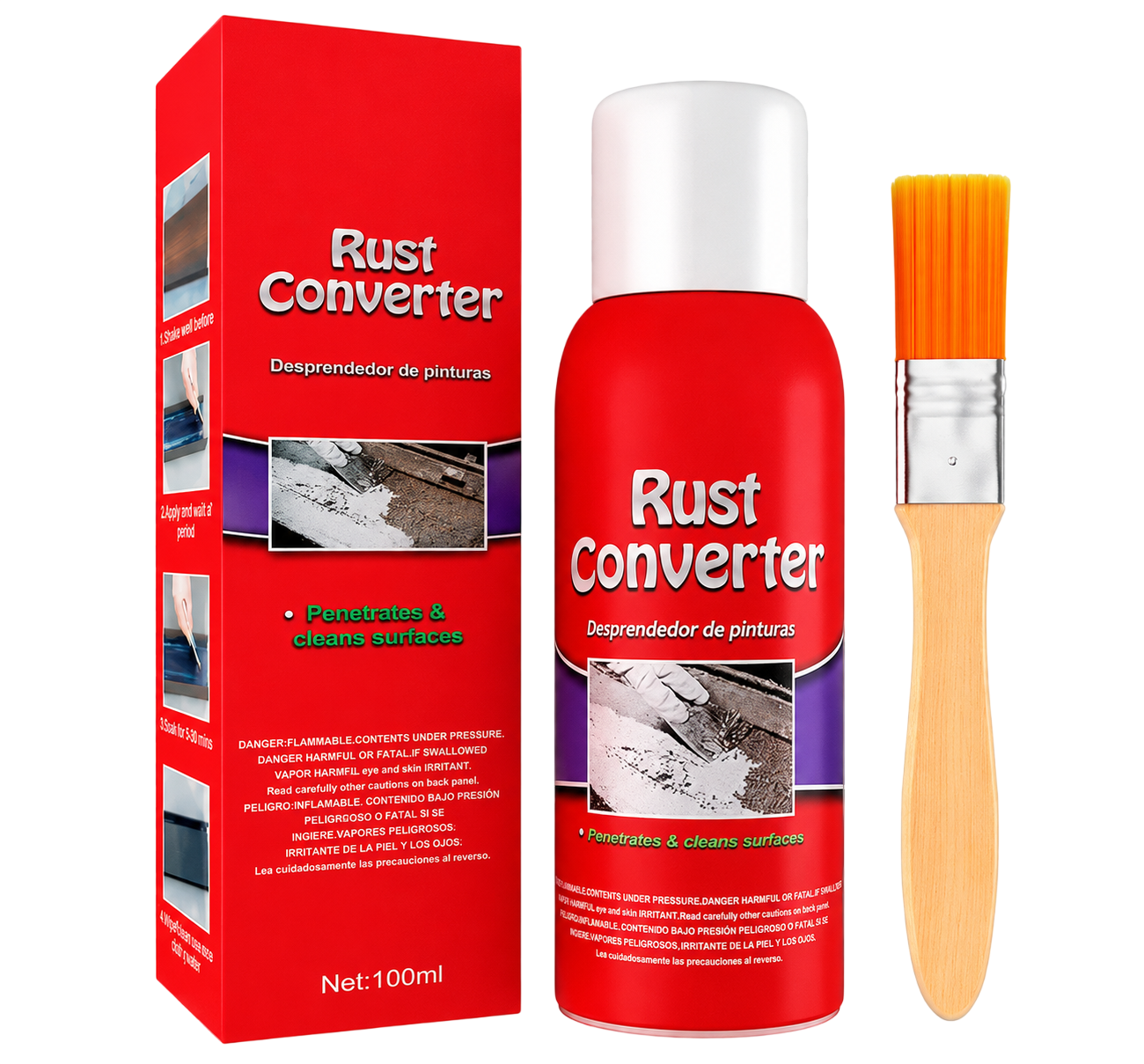
- How to use rust converter, step by step — CanadaCanada: The full method for applying a rust converter: preparation, degreasing, coats, cure time and topcoating. Written for RustGuard™ but valid for any conv
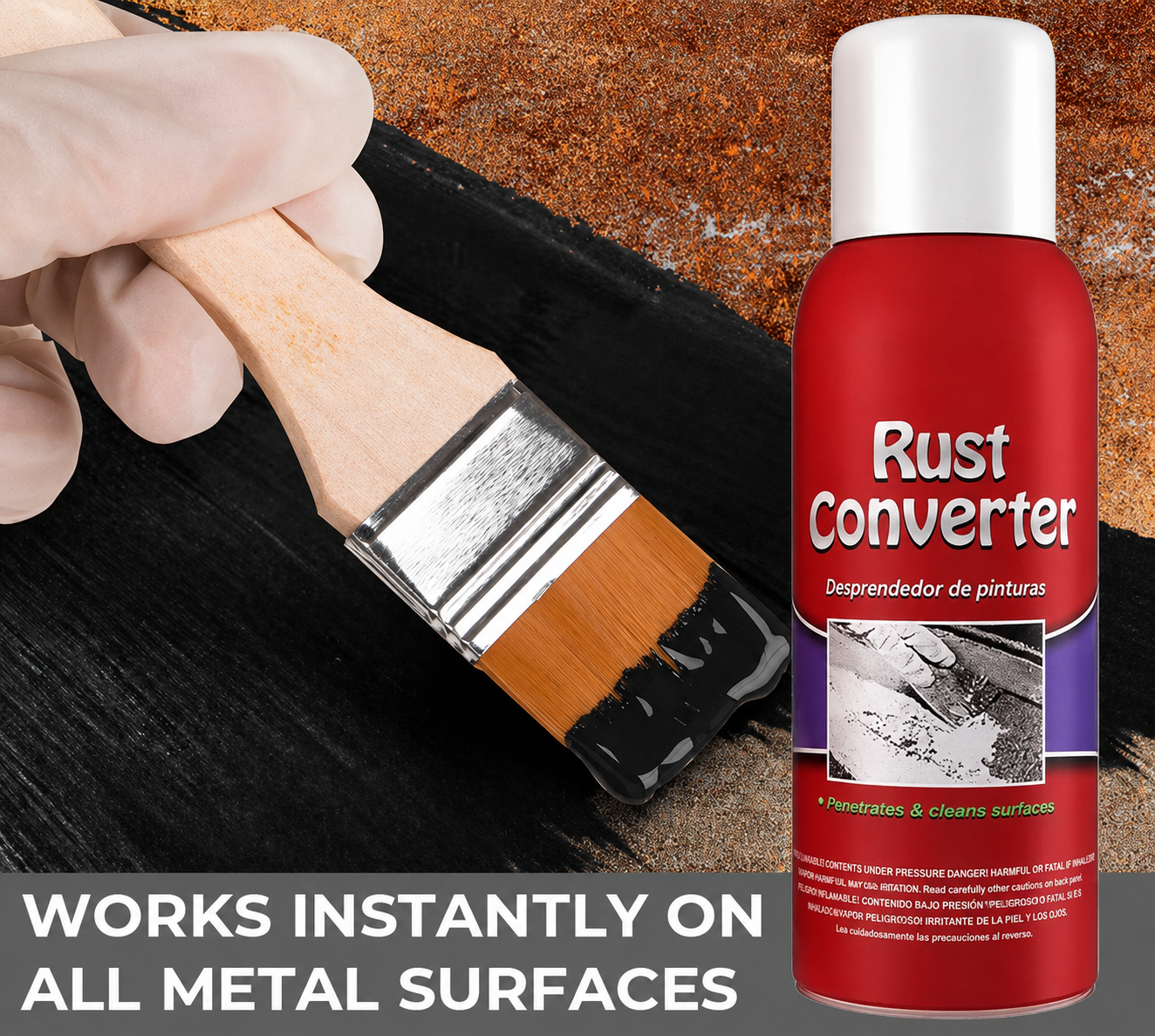
- How to choose the best rust converter for your project — CanadaCanada: How to judge a rust converter on coverage, cure time, topcoat compatibility and honest limits — plus where RustGuard™ wins and where it does not.
- Rust converter vs rust remover: which one your job needs — CanadaCanada: Side-by-side comparison of rust converters and rust removers: chemistry, effort, cost, flash rust risk, and which to use on your job.
- How to remove rust from metal — CanadaCanada: Abrasives, acids, electrolysis, chelation and conversion — what each rust removal method costs in time and effort, and when each one is the right call
Last step
Ready to stop the rust?
Tracked delivery coast to coast, typically 5–12 business days. 30-day money-back guarantee.