- Encrypted paymentSecure, encrypted checkout
- Tracked worldwideFree on 3+ bottle bundles
- 30-day guaranteeMoney-back if it is not for you
- Clear labellingCoverage and results stated honestly
Stock up & save
Choose your RustGuard™ bundle
Listed in USD and billed in USD; your bank converts to CAD at checkout.
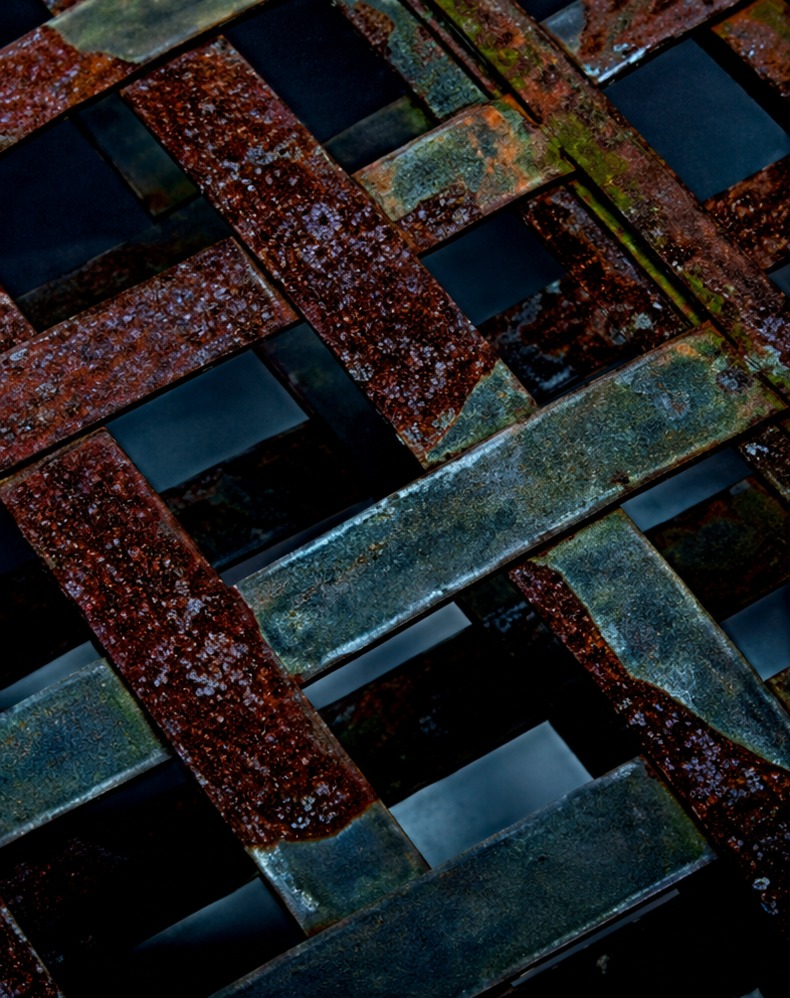
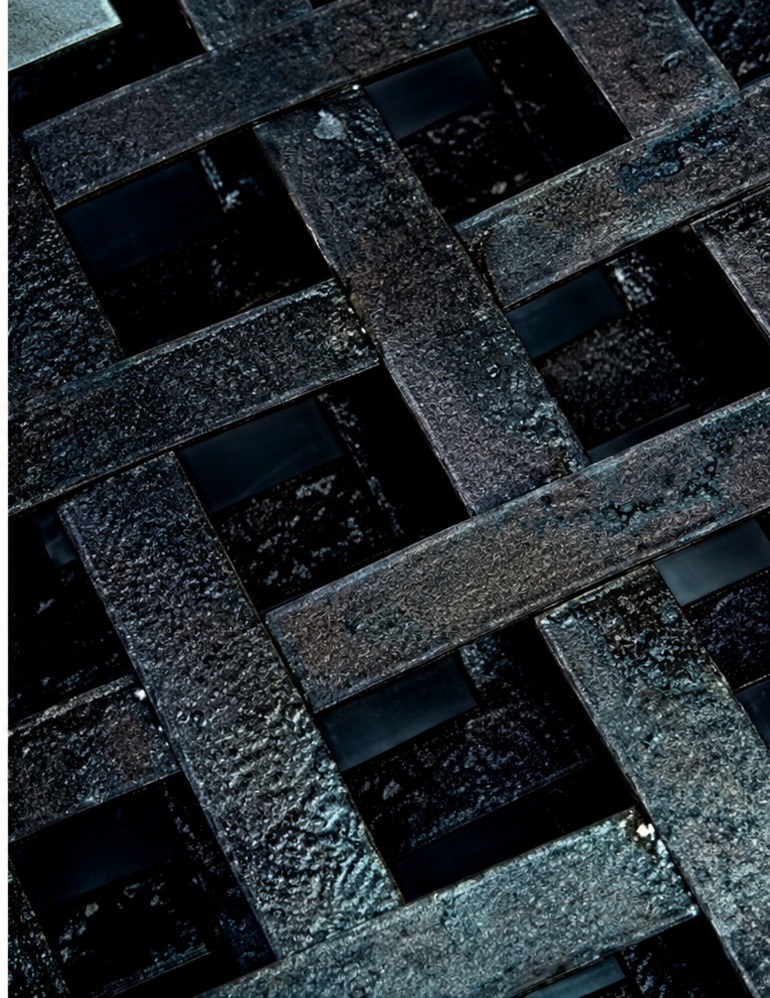
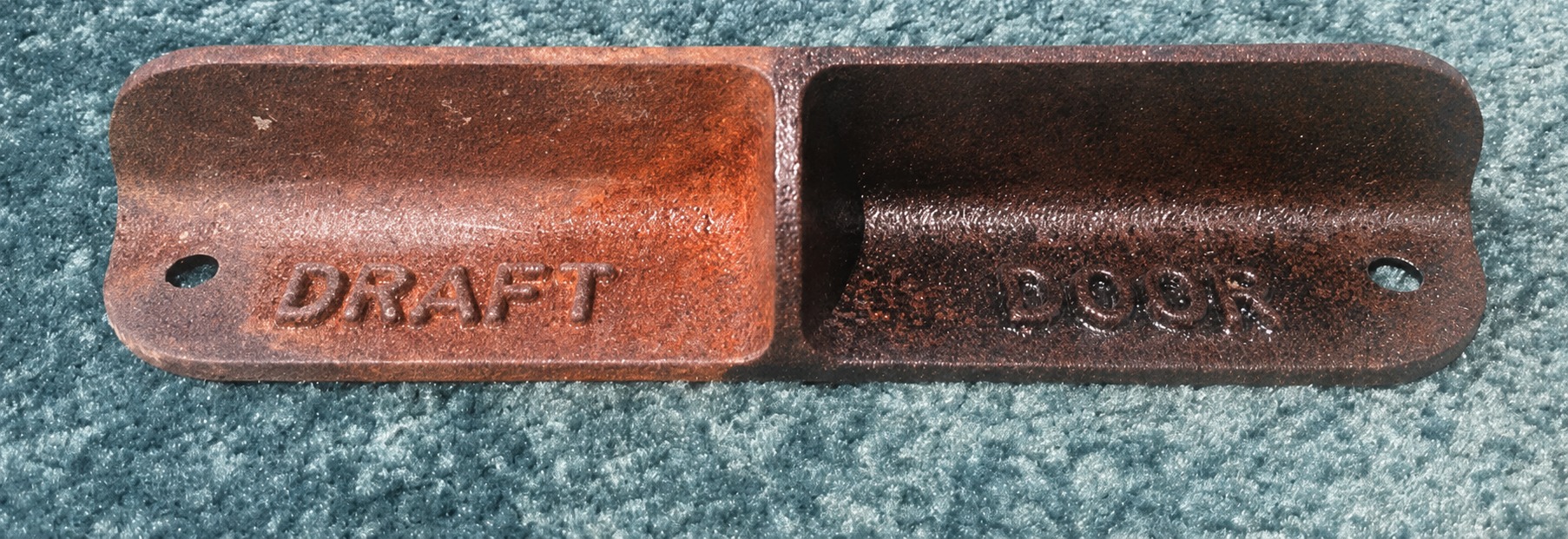
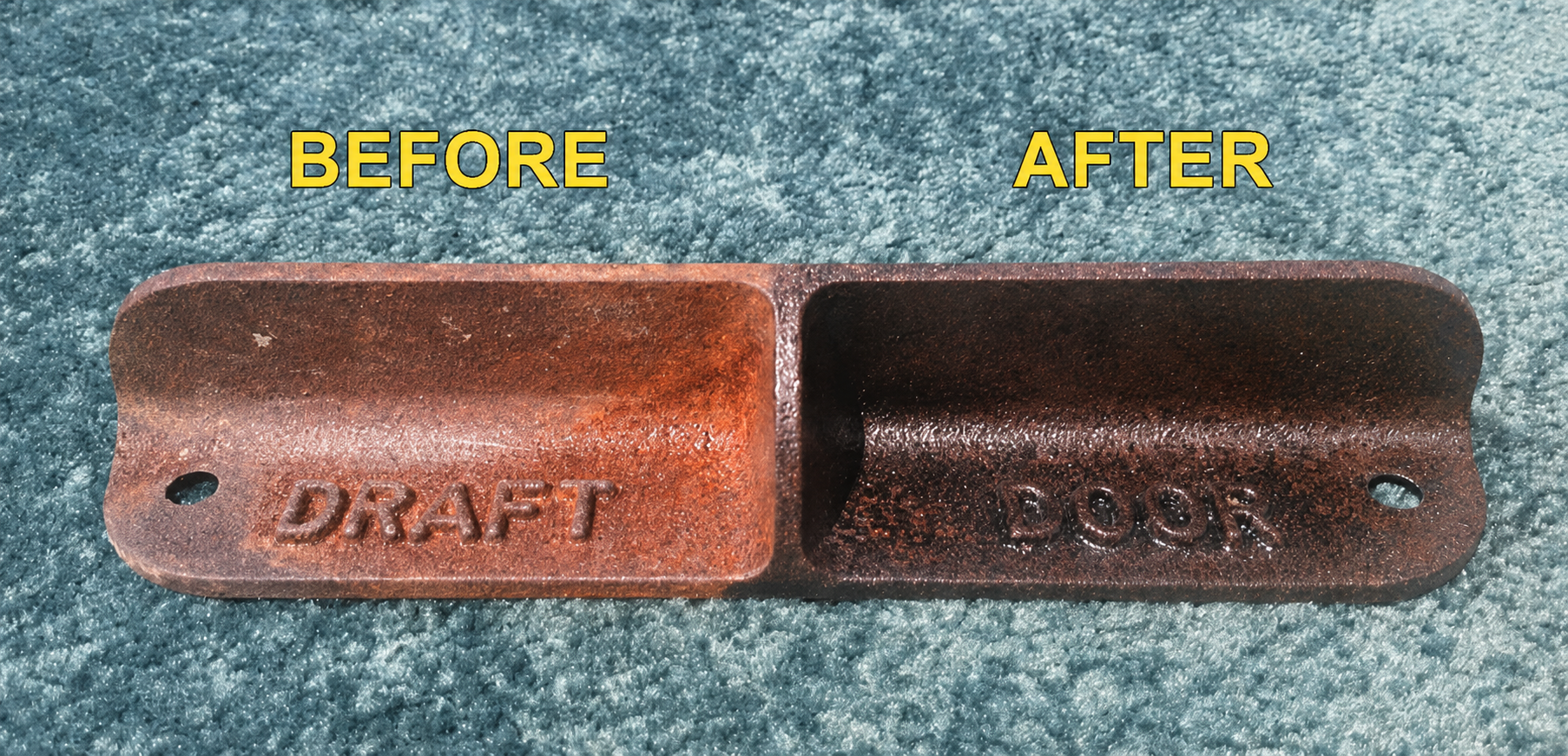
Rusted metal in, paint-ready surface out
Brush RustGuard™ over sound rust, let it cure, then paint. Images are illustrative — results depend on surface condition and preparation.
The short answer
Choose by whether the part can move. If you can carry it to a bucket and prime it the same day, a remover gives you clean bare metal. If it is welded, bolted or built into something — a chassis, a gate, a roof, a frame — a converter is faster, cheaper and more durable, because it seals the pitting instead of exposing it.
- Remover leaves bare reactive metal on a same-day clock
- Converter leaves a primed film with no deadline at all
- Only the converter reaches into pit floors on a surface you cannot submerge
- On badly weathered metal, use both: remover on the worst spots, converter over everything
The core differences
| Rust converter | Rust remover | |
|---|---|---|
| What it does to rust | Chemically converts it in place | Dissolves and washes it away |
| Surface left behind | Stable dark film, primer-ready | Bare reactive metal |
| Flash rust risk | None — the film seals it | High, within hours |
| Reaches pitting | Yes | Only if fully submerged |
| Dust and abrasives | None | Often required for scale first |
| Needs neutralising rinse | No | Usually yes for acids |
| Best on | Structures, chassis, frames, roofing | Small parts, tools, fasteners |
| Immediate next step | Wait 24h, topcoat | Prime immediately |
The decision in one sentence
If you can lift the part into a bucket, a remover is often simplest. If the rust is attached to something you cannot dismantle, a converter is almost always the faster and more durable answer.
There is also a hybrid path that works well on badly weathered metal: mechanically knock off scale, use a remover on the worst localised patches, then convert the entire area so the pitting and staining are sealed under one continuous film.
Mistakes we see most
- Using a remover on a chassis, then running out of daylight before priming — flash rust by morning
- Applying a converter to greasy metal, so the reaction never starts and the film peels
- Expecting either product to rebuild perforated steel
- Topcoating a converter the same day and getting blisters
- Using a converter on aluminium, where there is no iron oxide to react with
If you go the converter route
Area
100 sq ft
Bottles needed
3
Recommended bundle
×3 — $42
Based on up to 55 sq ft per bottle on smooth steel, adjusted for surface condition. Estimates only — measure generously.
Why converters win
RustGuard™ vs the old ways
| Method | RustGuard™ | Grinding / sanding | Naval jelly | Paint straight over rust |
|---|---|---|---|---|
| Works on pitted rust you cannot reach | Partly | |||
| No power tools required | ||||
| Leaves a paint-ready surface | After priming | |||
| Stops the treated rust spreading | ||||
| Low dust, low mess | ||||
| Cost for a 100 sq ft panel | From $24 | Discs + hours | $$ | Repaint yearly |
Read the detail: rust converter vs naval jelly · converter vs remover · how to choose one
What buyers say
Rated by people who hate sanding
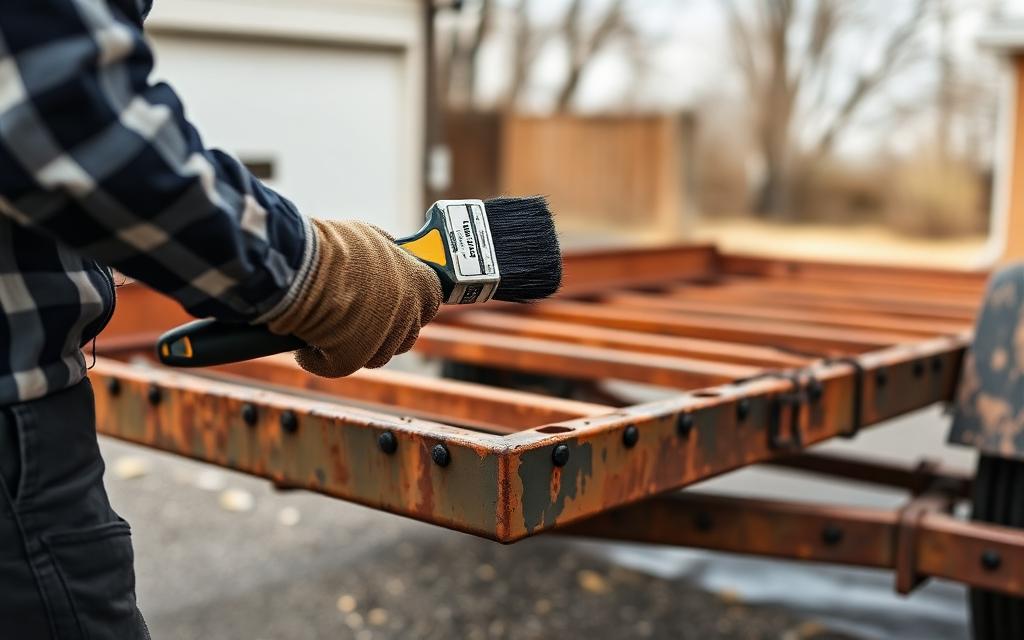
Saved my truck bed
Wire-brushed the loose scale, brushed a coat on and left it overnight. Next morning it was a flat black surface that took primer without fighting me.
Dale R. · Tucson, AZ
No more grinding for hours
I restore gates and railings. This cut my prep time in half on pitted sections where the grinder just polishes the rust around.
Marcus H. · Leeds, UK
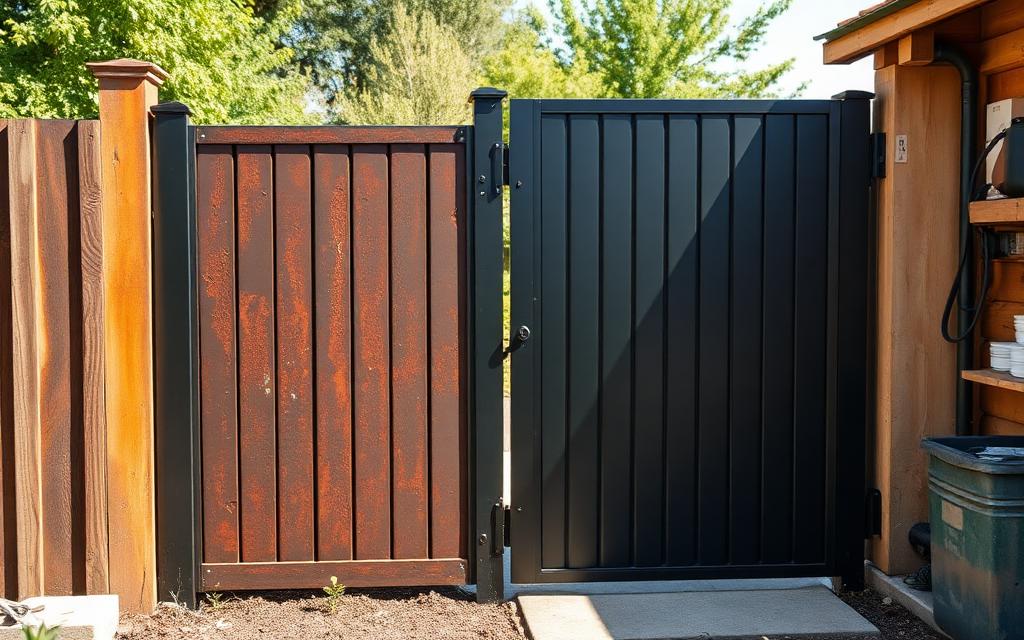
Held up through the wet season
Treated the shed roof sheets and topcoated them. Two seasons of rain later the treated panels still look the way I left them.
Janine K. · Brisbane, AU
Trailer frame looks new
Frame rails were surface-rusted everywhere. Two bottles covered the whole thing with enough left over for the tongue and jack.
Tom V. · Hamilton, ON
Simple to use
Shake, brush, wait. No mixing, no strong acid smell like the jelly products I used before.
Ricardo M. · Houston, TX
Bought the 5-pack, no regrets
Fence posts, patio furniture and a mower deck off one bundle. Ordering the workshop pack was cheaper than buying singles twice.
Ellen S. · Portland, OR
Reviews shown are illustrative sample copy while we collect verified customer feedback.
Buy with confidence
Nothing to lose but the rust
Worldwide shipping
Tracked delivery to the US, UK, Canada, Australia, EU and more. Free on 3-bottle bundles and above.
Encrypted payment
Card details are captured on a secure, encrypted checkout page. We never see or store your card number.
30-day guarantee
If RustGuard™ is not right for your project, contact support within 30 days for a refund of the product price.
No grinder needed
Brush-on chemistry designed for pitted, hard-to-reach rust where abrasives cannot get a bite.
Secure checkout
Order your RustGuard™ bundle
Pick a bundle, tap checkout — that's it. No account, no forms to fight. Your delivery address and payment are collected on the secure checkout page.
Step 1 — Choose your bundle
One bottle covers about 55 sq ft. Treating a whole vehicle, trailer or roof section? Most people need 3 or more.
Free tracked shipping unlocked
Most projects use more than they expect — the ×8 pack drops you to $9.00/bottle (you pay $11.00 now).
Step 2 — Checkout securely
Apple Pay, Google Pay and all major cards are accepted on the secure Shopify checkout — address, payment and confirmation, all in one place.
- 1Tap checkoutYour bundle is reserved in a secure cart.
- 2Pay your wayCard, Apple Pay or Google Pay — under a minute.
- 3Tracked dispatchConfirmation email instantly, packed in 1 business day.
“Ordered the 5-pack, treated the whole trailer frame and still had a bottle spare.”
Tom V. · Hamilton, ON
“Arrived tracked in five days and the brush kit saved me a trip to the store.”
Dale R. · Tucson, AZ
Reviews are illustrative while verified feedback is collected.
The decision tree, in the order it actually matters
Start with mobility. Can the rusted item be detached and carried? If yes, and it is small enough to submerge, a chelating soak or electrolysis is often the cleanest possible result and worth the wait. If it cannot be detached, the remover route immediately becomes messier: you are working with liquids on a vertical or overhead surface, and every drop of rinse water has to go somewhere.
Second, look at the rust itself. Flat surface rust responds to almost anything. Deep pitting is where the two routes separate sharply — abrasives and sprays skate over pit floors, whereas a brushed liquid converter wicks in and cures into the pocket. If you can feel roughness with a fingernail, that is pitting, and conversion is the more reliable answer.
Third, look at your finish. If the part must end up as bare polished metal — a tool face, a machined surface, a cast-iron pan — conversion is off the table entirely, because it leaves a dark film by design. If the part is going to be painted, the converter has already done the primer's job for you.
Cost and time on a real job: one trailer frame, 120 sq ft
Illustrative comparison of the two routes on the same moderately rusted frame, using typical retail pricing and DIY labour.
| Converter route | Remover route | |
|---|---|---|
| Preparation | Scrape and degrease, 2 hours | Grind and wire-wheel scale, 5–6 hours |
| Product needed | 3 bottles ($42, ships free) | Gel or soak plus abrasives, typically $60–110 |
| Application | Brush 2 thin coats, 2 hours | Apply, dwell, scrub, rinse, dry, 4 hours |
| Dust and containment | None | Grinding dust, rinse runoff to manage |
| Deadline pressure | None — film is sealed | Prime the same day or flash rust |
| Priming | Not needed, film is the primer | Separate primer required |
| Realistic total time | One afternoon plus a cure day | A full weekend |
What each route looks like a year later
A converted and topcoated frame usually fails, if it fails at all, at the edges — a bolt head that never got fully wetted, a seam where water still collects, a spot that was greasy on the day. Those failures are local, visible and easy to touch up: scuff, re-treat, re-paint the patch.
A stripped and primed frame usually fails under the paint, from rust that was left in pit floors and continued quietly. That failure shows up as blistering across an area rather than at a point, and the fix is stripping the paint again. This is the practical argument for conversion on pitted structural steel, regardless of how satisfying bare metal looks on the day.
Neither route survives a water trap. If a design flaw is holding moisture against the metal — a blocked drain hole, a plugged gutter, a flat surface with no fall — fix that at the same time, or you are just buying another year.
Signals that point straight at a converter
- You cannot detach the rusted part from the vehicle or structure
- The surface is pitted rather than evenly filmed with rust
- Rinse water would run into cavities, seams, soil or a drain
- The job will be interrupted — weather, daylight, weekend project
- Dust control is impossible: a driveway, an occupied building, a workshop with tools out
- The finish is going to be painted anyway
Signals that point straight at a remover
- The part fits in a bucket, tank or bag
- The finished surface must be bare metal, not coated
- Threads, mating faces or moving fits must stay dimensionally correct
- The rust is thick and localised rather than spread over a large area
- You can prime or oil the part the same day it comes out
- It is a precision or collectable item where a dark film would be wrong
What neither product can do
- Rebuild steel that has already thinned or holed — that is welding or replacement
- Treat corrosion inside a sealed cavity you cannot wet or submerge
- Do anything useful on aluminium, stainless, copper or brass
- Bond through grease, wax, silicone or flaking scale
- Survive being applied outside its temperature range and then painted
- Stop rust returning if the underlying water trap is left in place
Shipping to Canada
- Tracked delivery coast to coast, typically 5–12 business days.
- Listed in USD and billed in USD; your bank converts to CAD at checkout.
- Free tracked shipping on bundles of 3 bottles and above.
- 30-day money-back guarantee from the date of delivery.
Frequently asked questions
Can I use both on the same project?
Yes. Remover for the parts you can dip, converter for everything bolted to the structure. Just make sure removed areas are rinsed, dried and primed.
Which lasts longer?
Whichever ends up under a properly cured topcoat. The converter route is more forgiving because there is no window where bare metal sits exposed.
Does converter work under a remover?
No, and there is no reason to. Apply the remover first if you are using both.
Is one safer to use?
Water-based converters like RustGuard™ are generally milder than concentrated stripping acids, but wear gloves and eye protection either way.
Which should I buy if I only buy one?
For most home, vehicle and property jobs, the converter — because the rust you actually need to fix is usually attached to something you cannot dismantle.
Can I convert over metal a remover already stripped?
Yes. On bare metal the film acts as a primer rather than a converter, which is exactly what stripped steel needs immediately.
Do removers work on pitting?
Only if the part is fully submerged long enough for the liquid to reach the pit floors. Brushed or sprayed on a vertical surface, they mostly do not.
Is a converter slower because of the cure?
The cure is passive time, not work time. Total hands-on hours are usually half the remover route, because there is no grinding, rinsing or separate priming.
Can I use both on the same panel in one day?
Yes, if the removed area is rinsed, neutralised and genuinely dry before you convert. Trapped rinse water is the one thing that ruins the sequence.
Which is safer around a house?
A water-based converter, generally — no concentrated stripping acids, no grinding dust and no runoff to contain.
Keep reading
- Rust converter for iron and steel that leaves a paint-ready surface — CanadaCanada: Brush RustGuard™ onto rusted iron or steel, convert the corrosion and topcoat in 24 hours. Bundles from $24, free shipping on 3+.
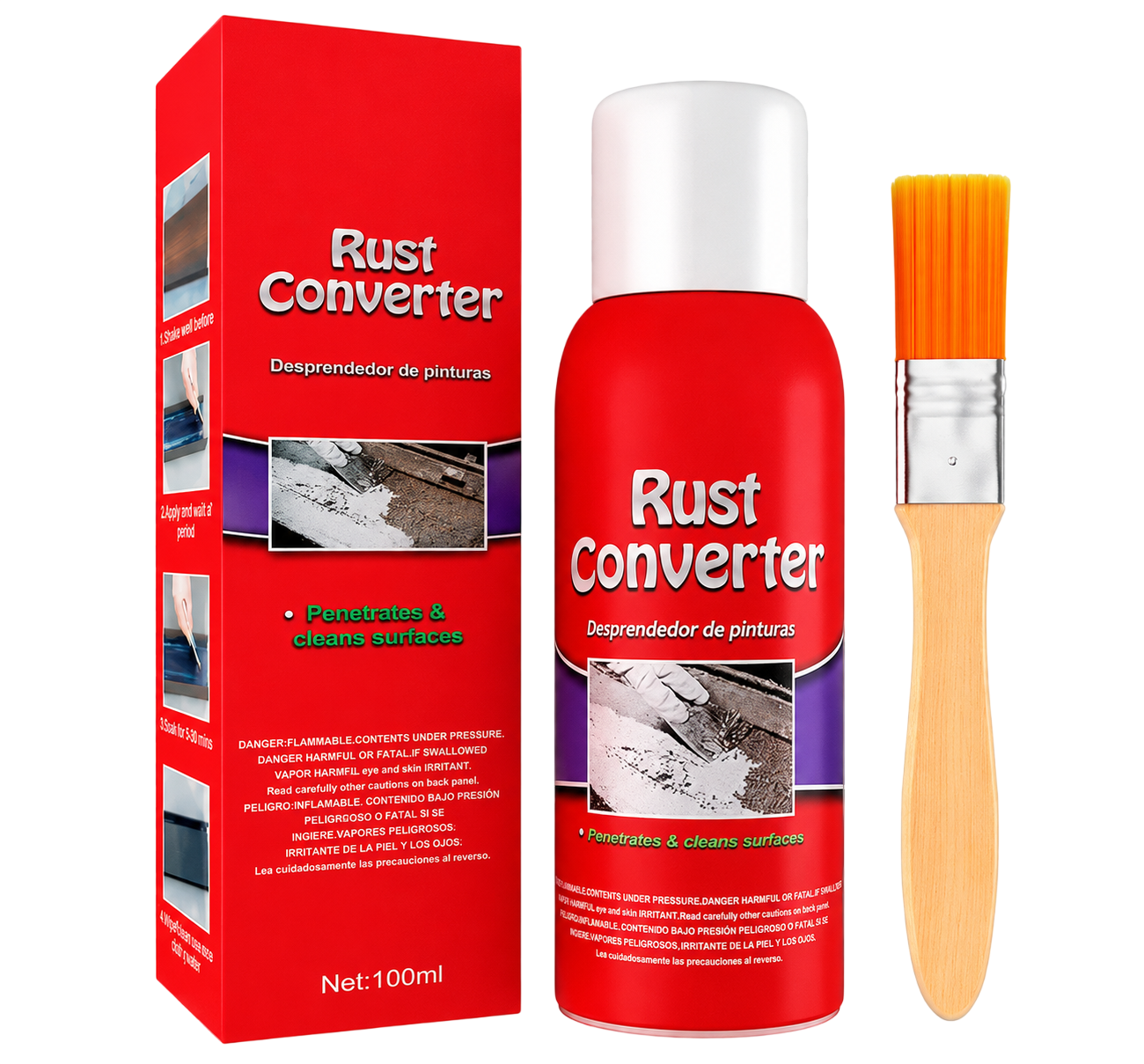
- Rust remover, or something that stops rust for good? — CanadaCanada: Looking for a rust remover? Learn when stripping rust is right, when converting it is smarter, and how RustGuard™ saves hours of sanding.
- How to remove rust from metal — CanadaCanada: Abrasives, acids, electrolysis, chelation and conversion — what each rust removal method costs in time and effort, and when each one is the right call
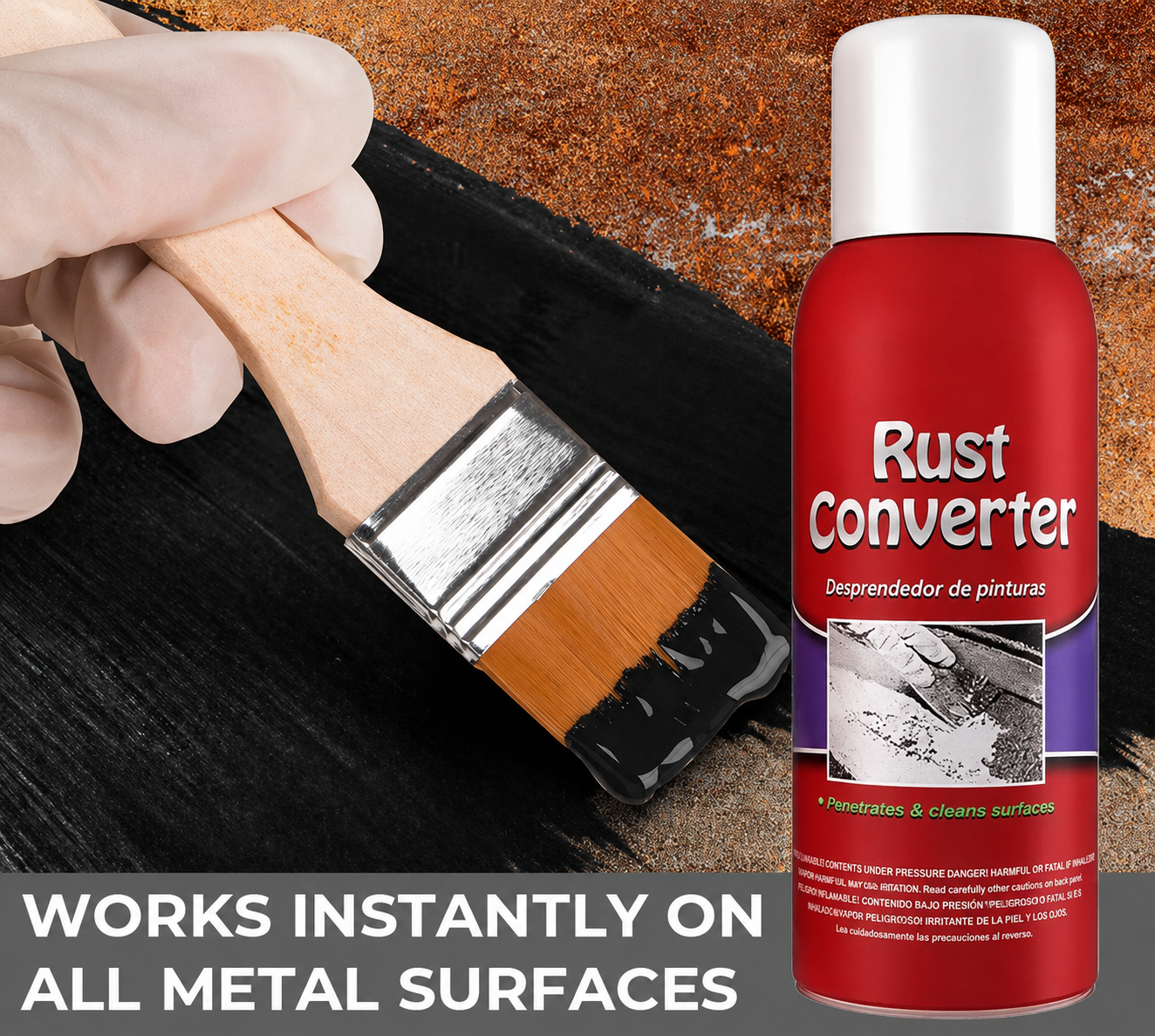
- How to choose the best rust converter for your project — CanadaCanada: How to judge a rust converter on coverage, cure time, topcoat compatibility and honest limits — plus where RustGuard™ wins and where it does not.
- Rust converter vs naval jelly — CanadaCanada: Naval jelly strips rust with phosphoric acid; a rust converter seals it under a primer. Compare cleanup, flash rust and best use cases.
Last step
Ready to stop the rust?
Tracked delivery coast to coast, typically 5–12 business days. 30-day money-back guarantee.