- Encrypted paymentSecure, encrypted checkout
- Tracked worldwideFree on 3+ bottle bundles
- 30-day guaranteeMoney-back if it is not for you
- Clear labellingCoverage and results stated honestly
Stock up & save
Choose your RustGuard™ bundle
Prices in USD. Free tracked shipping on 3-bottle bundles and above.
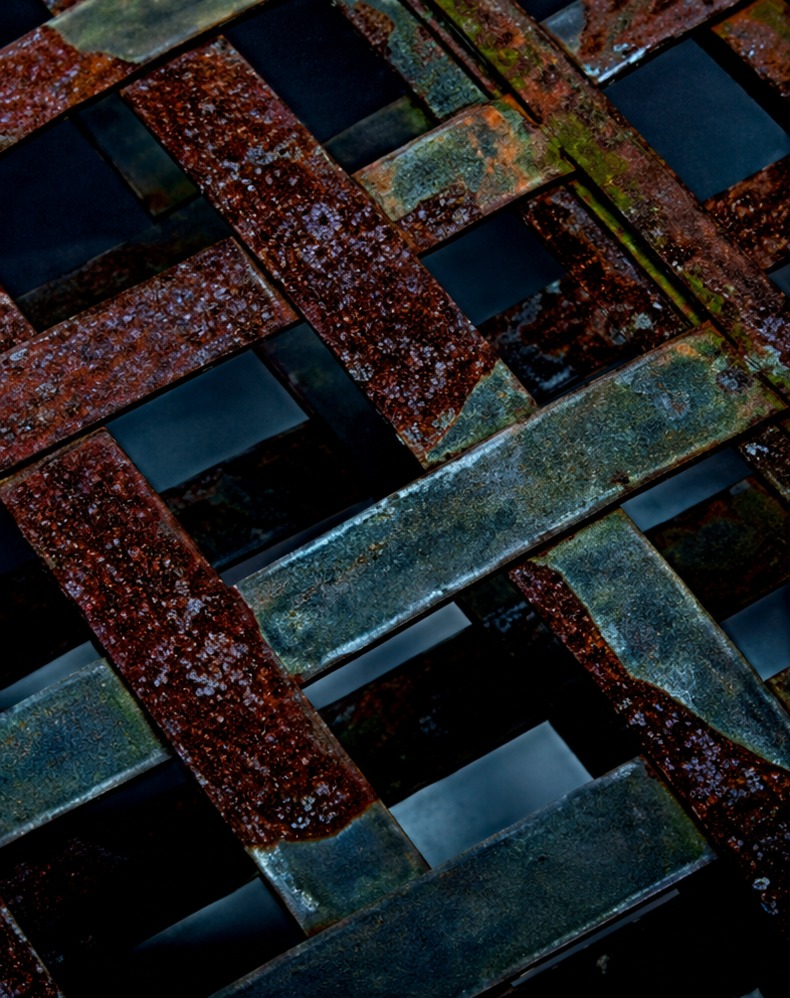
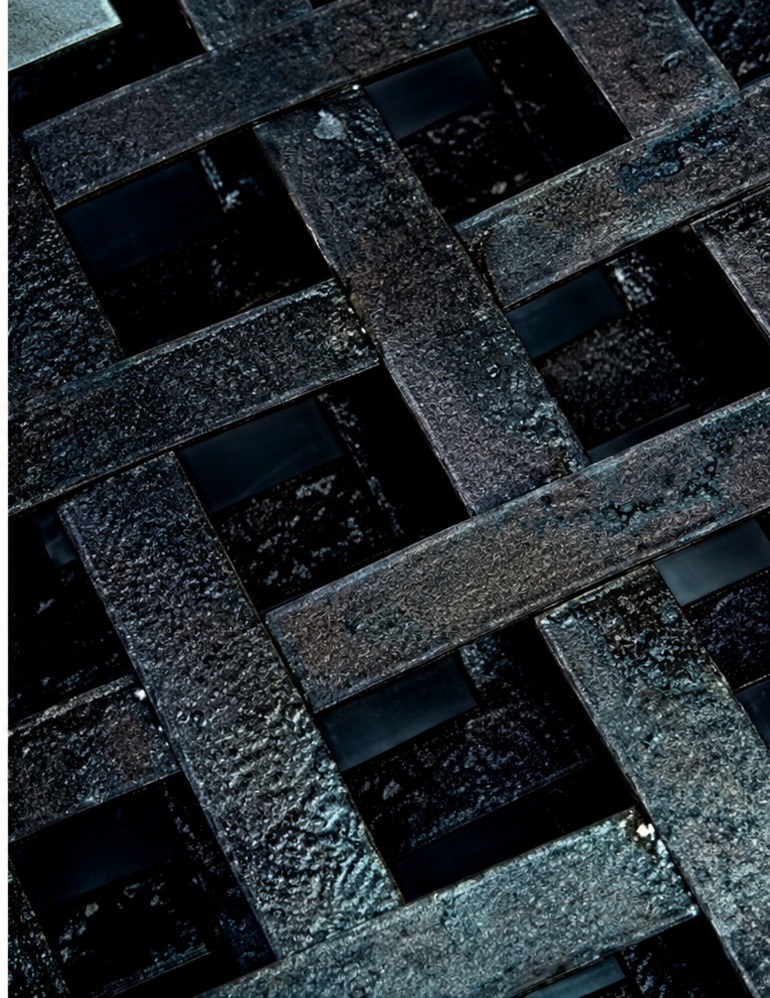
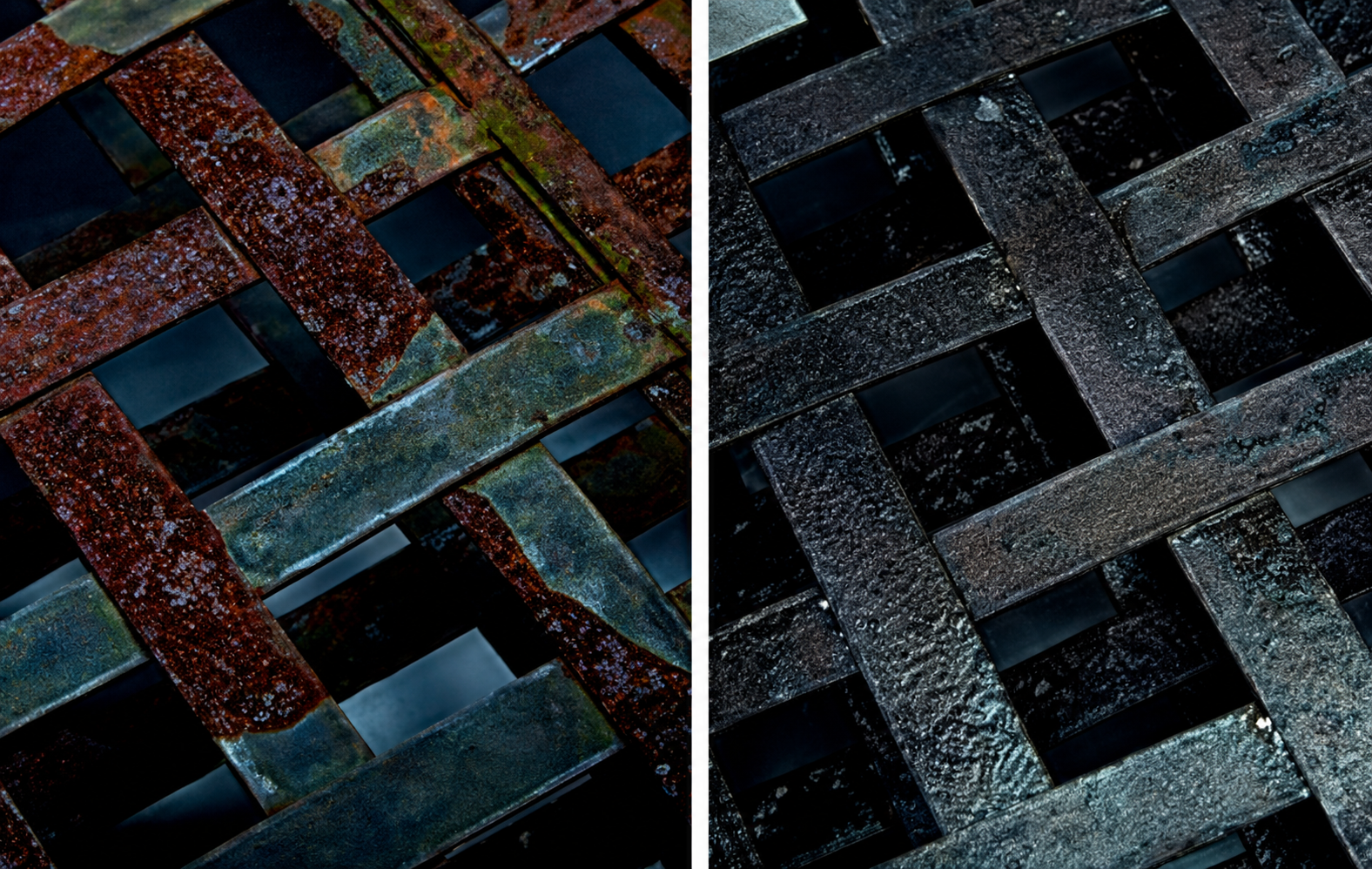
Rusted metal in, paint-ready surface out
Brush RustGuard™ over sound rust, let it cure, then paint. Images are illustrative — results depend on surface condition and preparation.
The short answer
Use it on the outside of the barbecue — the cart, lid exterior, legs, shelves, hood and trolley — and on fire pit exteriors. Never on grates, burners, the inside of a firebox, or anything that touches food or gets red hot. Then finish with high-temperature paint, not ordinary enamel.
- Outside only: cart, legs, shelves, hood exterior, fire pit body
- Never on grill grates, burners, heat plates or firebox interiors
- Topcoat with high-temperature paint rated for the surface in question
- One bottle covers a typical barbecue and a fire pit with room to spare
Where rust shows up first
The areas worth checking before you order.
- Trolley frames, legs, wheels and side shelves
- Cabinet doors and outer body panels away from the firebox
- Fire pit outer bowls and stands, once cool
- Gas bottle cages and storage shelves
- Smoker cabinet exteriors and handles
- Table frames and outdoor kitchen steel carcasses
Step-by-step on this job
- 01
Strip the grill down
Remove grates, burners, heat plates and the drip tray. Set aside everything that touches food or flame.
- 02
Degrease properly
Barbecue grease is stubborn. Use a strong degreaser and rinse until water sheets rather than beads.
- 03
Convert the cool metal only
Frame, trolley, outer panels. Keep well clear of vents and firebox openings.
- 04
Cure a full 24 hours
Do not rush this one — an under-cured film under heat-exposed paint will fail early.
- 05
Match the paint to the heat
Standard exterior enamel on the trolley and shelves, high-heat stove paint on anything near the firebox.
What not to do
The cautions that save a re-do.
- Never coat grates, griddles, burner tubes or anything food touches
- Not for the inside of a firebox or any surface that exceeds the topcoat's rating
- Use a dedicated high-heat stove paint for hot exterior panels
- Let the appliance cool completely and disconnect gas before working on it
Typical quantities
A starting point based on the jobs customers order for most often.
| Job | Bottles |
|---|---|
| Kettle grill stand and legs | 1 bottle covers several |
| Gas grill trolley and shelves | 1 bottle |
| Fire pit outer bowl and stand | 1 bottle |
| Smoker cabinet exterior | 1–2 bottles |
| Outdoor kitchen steel frame | 2 bottles |
Work out your exact quantity
Area
100 sq ft
Bottles needed
3
Recommended bundle
×3 — $42
Based on up to 55 sq ft per bottle on smooth steel, adjusted for surface condition. Estimates only — measure generously.
Why converters win
RustGuard™ vs the old ways
| Method | RustGuard™ | Grinding / sanding | Naval jelly | Paint straight over rust |
|---|---|---|---|---|
| Works on pitted rust you cannot reach | Partly | |||
| No power tools required | ||||
| Leaves a paint-ready surface | After priming | |||
| Stops the treated rust spreading | ||||
| Low dust, low mess | ||||
| Cost for a 100 sq ft panel | From $24 | Discs + hours | $$ | Repaint yearly |
Read the detail: rust converter vs naval jelly · converter vs remover · how to choose one
What buyers say
Rated by people who hate sanding
Saved my truck bed
Wire-brushed the loose scale, brushed a coat on and left it overnight. Next morning it was a flat black surface that took primer without fighting me.
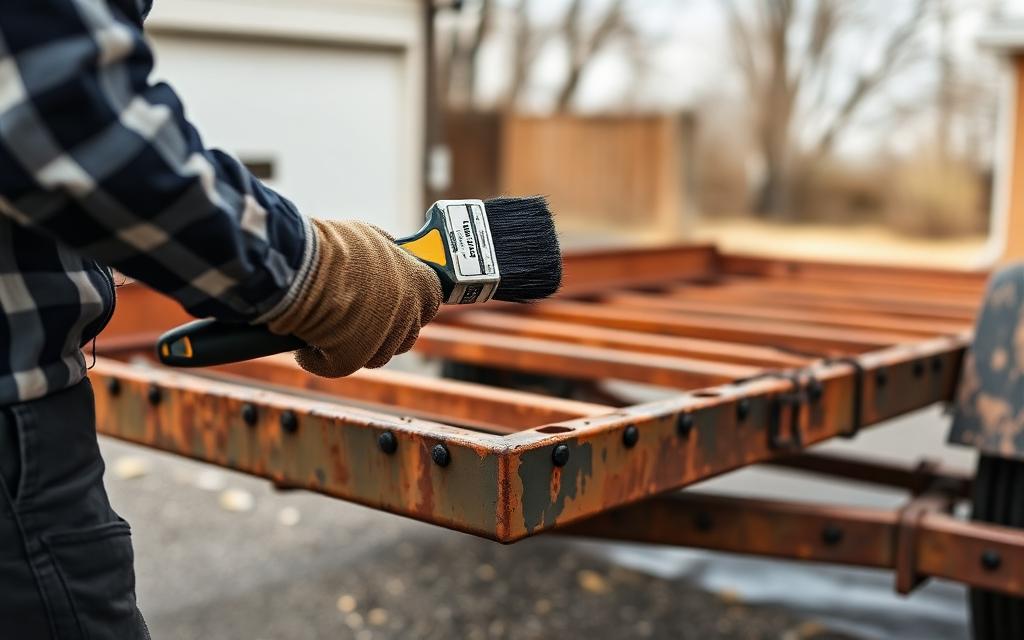
Dale R. · Tucson, AZ
No more grinding for hours
I restore gates and railings. This cut my prep time in half on pitted sections where the grinder just polishes the rust around.
Marcus H. · Leeds, UK
Held up through the wet season
Treated the shed roof sheets and topcoated them. Two seasons of rain later the treated panels still look the way I left them.
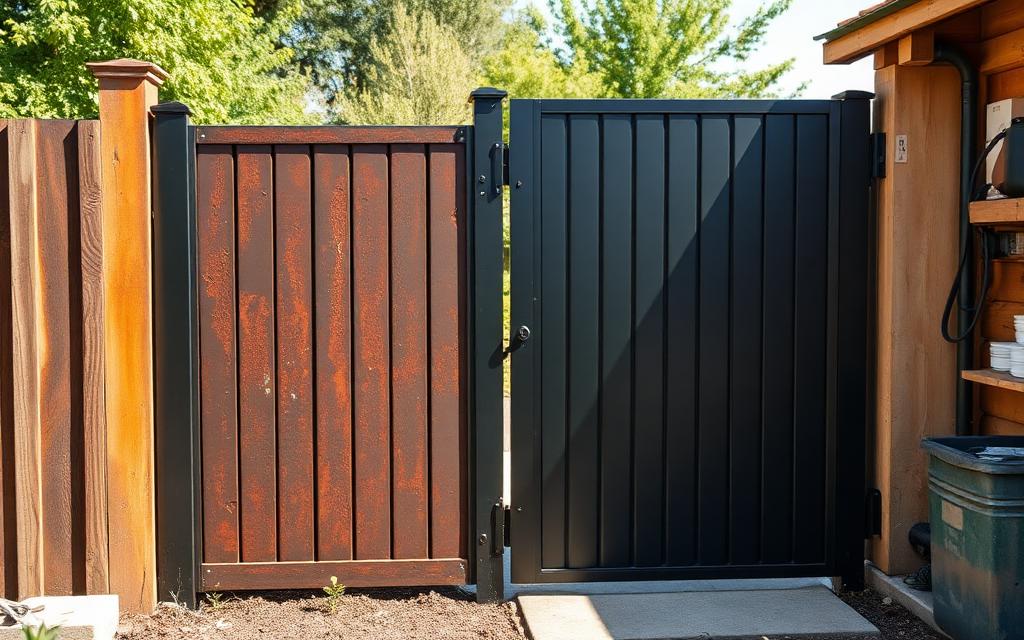
Janine K. · Brisbane, AU
Trailer frame looks new
Frame rails were surface-rusted everywhere. Two bottles covered the whole thing with enough left over for the tongue and jack.
Tom V. · Hamilton, ON
Simple to use
Shake, brush, wait. No mixing, no strong acid smell like the jelly products I used before.
Ricardo M. · Houston, TX
Bought the 5-pack, no regrets
Fence posts, patio furniture and a mower deck off one bundle. Ordering the workshop pack was cheaper than buying singles twice.
Ellen S. · Portland, OR
Reviews shown are illustrative sample copy while we collect verified customer feedback.
Buy with confidence
Nothing to lose but the rust
Worldwide shipping
Tracked delivery to the US, UK, Canada, Australia, EU and more. Free on 3-bottle bundles and above.
Encrypted payment
Card details are captured on a secure, encrypted checkout page. We never see or store your card number.
30-day guarantee
If RustGuard™ is not right for your project, contact support within 30 days for a refund of the product price.
No grinder needed
Brush-on chemistry designed for pitted, hard-to-reach rust where abrasives cannot get a bite.
Secure checkout
Order your RustGuard™ bundle
Pick a bundle, tap checkout — that's it. No account, no forms to fight. Your delivery address and payment are collected on the secure checkout page.
Step 1 — Choose your bundle
One bottle covers about 55 sq ft. Treating a whole vehicle, trailer or roof section? Most people need 3 or more.
Free tracked shipping unlocked
Most projects use more than they expect — the ×8 pack drops you to $9.00/bottle (you pay $11.00 now).
Step 2 — Checkout securely
Apple Pay, Google Pay and all major cards are accepted on the secure Shopify checkout — address, payment and confirmation, all in one place.
- 1Tap checkoutYour bundle is reserved in a secure cart.
- 2Pay your wayCard, Apple Pay or Google Pay — under a minute.
- 3Tracked dispatchConfirmation email instantly, packed in 1 business day.
“Ordered the 5-pack, treated the whole trailer frame and still had a bottle spare.”
Tom V. · Hamilton, ON
“Arrived tracked in five days and the brush kit saved me a trip to the store.”
Dale R. · Tucson, AZ
Reviews are illustrative while verified feedback is collected.
Where the heat line is, and why it matters
The cured film is stable to roughly 400°F. A barbecue lid exterior on a gas grill sits well below that; the inside of a charcoal firebox does not, and neither does a fire pit bowl with a live fire in it. Above the limit the film degrades, discolours and loses adhesion, taking your topcoat with it.
Draw the line physically before you start. Anything that will be in direct contact with flame or embers, or that glows even faintly, is off limits. Anything that stays merely warm to hot — the cart, the legs, the side shelves, the hood skin, the outside of a fire pit bowl — is fair game and converts normally.
The second boundary is food. Nothing that touches food gets treated, full stop. Grates, warming racks, rotisserie parts and skewers are cleaned mechanically and, in the case of cast iron grates, re-seasoned with cooking oil.
Part by part on a typical barbecue
| Part | Treat? | Finish |
|---|---|---|
| Cart, frame and legs | Yes | High-temp or exterior enamel |
| Lid and hood exterior | Yes | High-temp paint, 600°F rated |
| Side shelves and doors | Yes | Exterior enamel |
| Wheels, axles and brackets | Yes | Exterior enamel |
| Fire pit bowl exterior | Yes | High-temp paint only |
| Firebox interior | No | Brush clean, leave bare or use stove paint |
| Grates and warming racks | No | Clean and season with cooking oil |
| Burners and heat tents | No | Clean or replace |
| Flavour bars and drip trays | No | Clean or replace |
Restoring a rusty barbecue or fire pit
- 01
Strip it down completely
Grates, burners, heat plates and drip tray out. You want the shell, the cart and nothing else.
- 02
Degrease hard, then again
Barbecues are coated in cooked-on grease, which is the single biggest reason a coating fails here. Hot detergent, scrub, rinse, splash test.
- 03
Wire-brush the loose scale
Cart legs, the underside of shelves and the seams where the hood meets the body.
- 04
Mask the heat zone and any food contact area
If in doubt, leave it out. It is easier to clean an untreated part than to strip a film off the wrong surface.
- 05
Brush one to two thin coats on the exterior
Two on pitted legs and cart tubing, one on light surface rust on panels.
- 06
Cure 24 hours, then high-temperature topcoat
600°F-rated aerosol on the hood and body, exterior enamel on the cart if it stays cool.
- 07
Reassemble and burn it off before cooking
Run the grill empty for 20–30 minutes so any topcoat solvent finishes curing before food goes near it.
Fire pits, chimineas and outdoor stoves
A steel fire pit bowl gets very hot on the inside and merely warm on the outside base and stand, so treat the stand and the outer face of the bowl, and leave the inside alone. Most fire pits fail from the inside anyway, where ash holds moisture between uses — the fix for that is a drain hole and a cover, not a coating.
Chimineas and outdoor stoves have a proper hot zone that needs stove paint rather than a converter, but their legs, stands and surrounds convert and paint normally. Treat the two zones as two separate jobs on the same object.
Whatever you restore, store it dry. A cover that traps condensation is worse than no cover; a cover with airflow, or a spell in the shed over winter, is what actually keeps a barbecue alive.
What not to do
- Treating grates or anything else food touches
- Coating the inside of a firebox or a fire pit bowl
- Using ordinary enamel on the hood — it will discolour and peel
- Painting over cooked-on grease, which nothing adheres to
- Cooking before the topcoat has been burned off empty
- Storing under a sealed cover that traps condensation
Work out your exact quantity
Area
100 sq ft
Bottles needed
3
Recommended bundle
×3 — $42
Based on up to 55 sq ft per bottle on smooth steel, adjusted for surface condition. Estimates only — measure generously.
Where this is the wrong product entirely
- Any surface that touches food, including grates and rotisserie parts
- Firebox interiors, burner assemblies and anything that glows
- Surfaces exceeding roughly 400°F in service
- Stainless steel hoods and shelves, which need a stainless cleaner
- Ceramic and enamelled surfaces such as kamado bodies
- A firebox that has burned through — that is a replacement, not a repair
Frequently asked questions
Can I treat the cooking grates?
No. Nothing that contacts food should be coated. Clean grates mechanically and season cast iron with cooking oil.
What about the inside of the lid?
No. That is a hot, food-adjacent zone. Clean it, do not coat it.
How hot is too hot?
Follow your topcoat's temperature rating. Firebox surfaces need dedicated high-heat paint, not standard enamel over a converter.
Is a rusty fire pit still safe?
If the bowl is thin or holed, replace it. Chemistry does not restore burnt-through steel.
Can I use rust converter on a BBQ?
On the exterior parts only — cart, legs, shelves and hood skin — and never on grates, burners, firebox interiors or anything that contacts food.
Is it food safe?
It is not intended for food contact. Keep it entirely off cooking surfaces; clean and season those the traditional way.
What temperature can the film handle?
Up to roughly 400°F. Above that, use a dedicated stove or high-temperature paint system on bare, cleaned metal.
What paint goes over it on a grill?
A 600°F-rated high-temperature aerosol on the hood and body. Ordinary exterior enamel is fine on a cart or stand that stays cool.
My grates are rusty — what do I do?
Scrub them with a grill brush, wash, dry thoroughly and season with cooking oil. If they are pitted through, replace them; they are inexpensive.
Can I treat a rusty fire pit?
The outside of the bowl and the stand, yes, with high-temp paint over it. Leave the inside bare and drill a drain hole so ash does not hold water.
How much do I need?
One bottle covers a typical barbecue cart and hood exterior plus a fire pit stand, with product left over.
Keep reading
- Rust converter for tools and workshop equipmentBring rusted hand tools, vices, clamps and cast-iron surfaces back into service. When to convert and when to strip and oil instead.
- Rust converter for iron and steel that leaves a paint-ready surfaceBrush RustGuard™ onto rusted iron or steel, convert the corrosion and topcoat in 24 hours. Bundles from $24, free shipping on 3+.
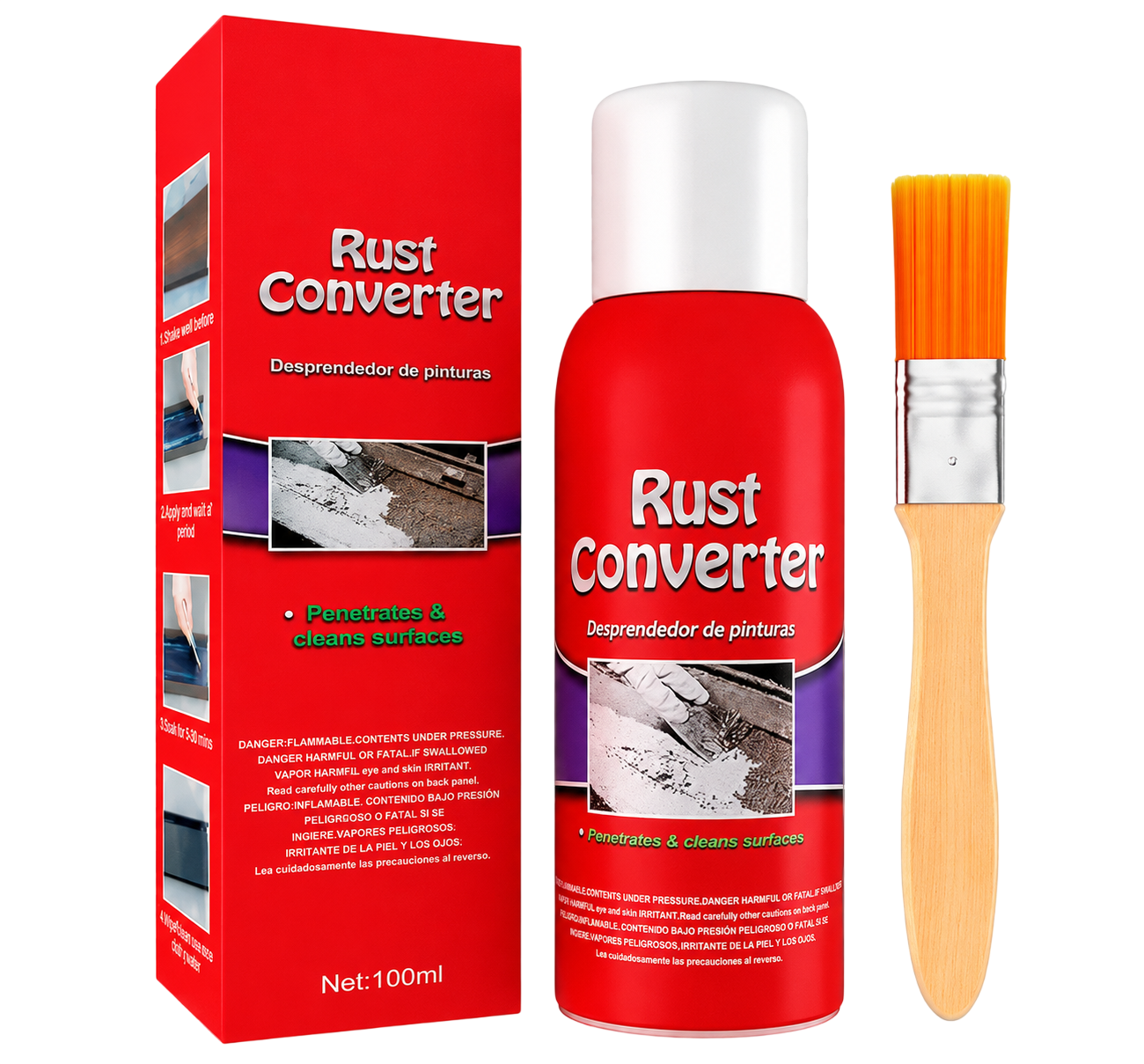
- Rust converter safety, storage and disposalPPE, ventilation, storage temperatures, spill handling and correct disposal for water-based rust converter. Practical safety guidance.
- How to paint over rust properlyPainting straight over rust always fails. Here's the correct sequence — prep, convert, cure, prime, topcoat — and the paints that work over a converted surface.
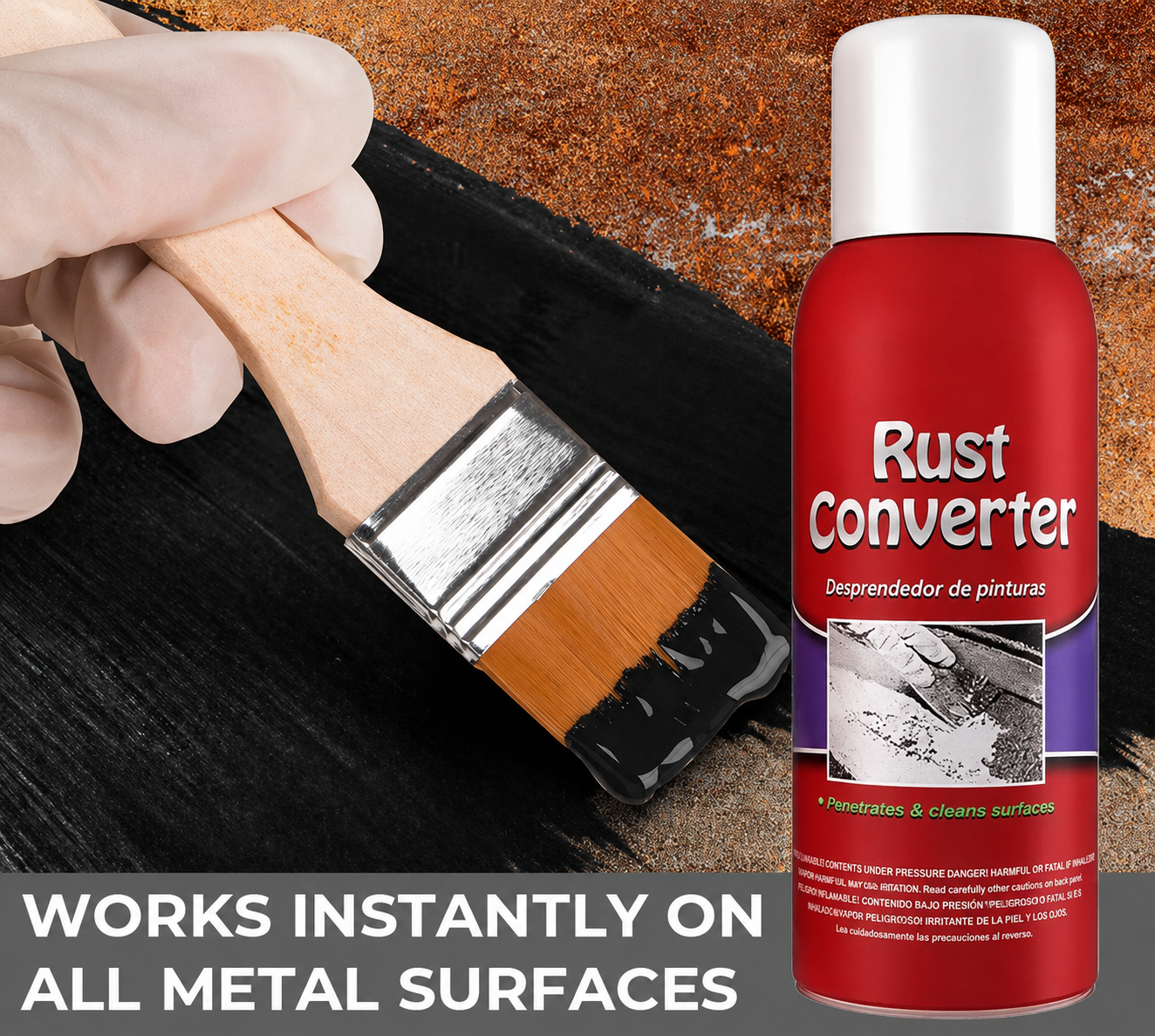
- Rust prevention guideA practical prevention programme for vehicles, tools and outdoor steel — coatings, drainage, storage, salt management and an inspection schedule.
Last step
Ready to stop the rust?
Ships from our US fulfilment partner, typically 3–7 business days. 30-day money-back guarantee.