- Encrypted paymentSecure, encrypted checkout
- Tracked worldwideFree on 3+ bottle bundles
- 30-day guaranteeMoney-back if it is not for you
- Clear labellingCoverage and results stated honestly
Stock up & save
Choose your RustGuard™ bundle
Prices in USD. Free tracked shipping on 3-bottle bundles and above.
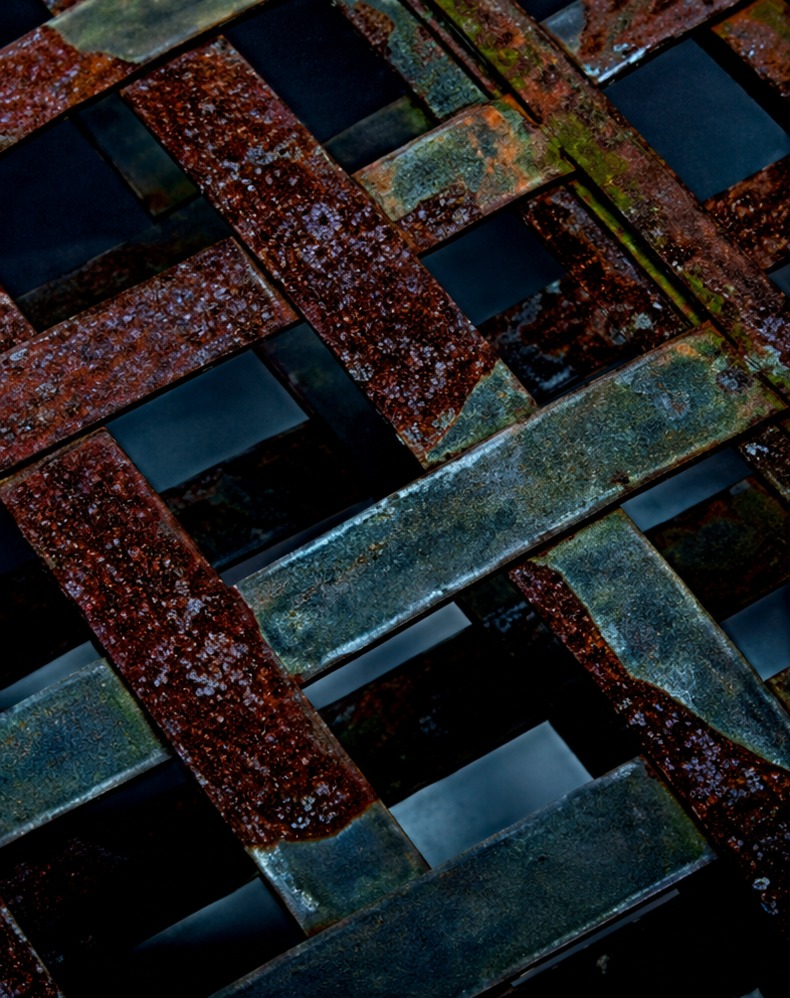
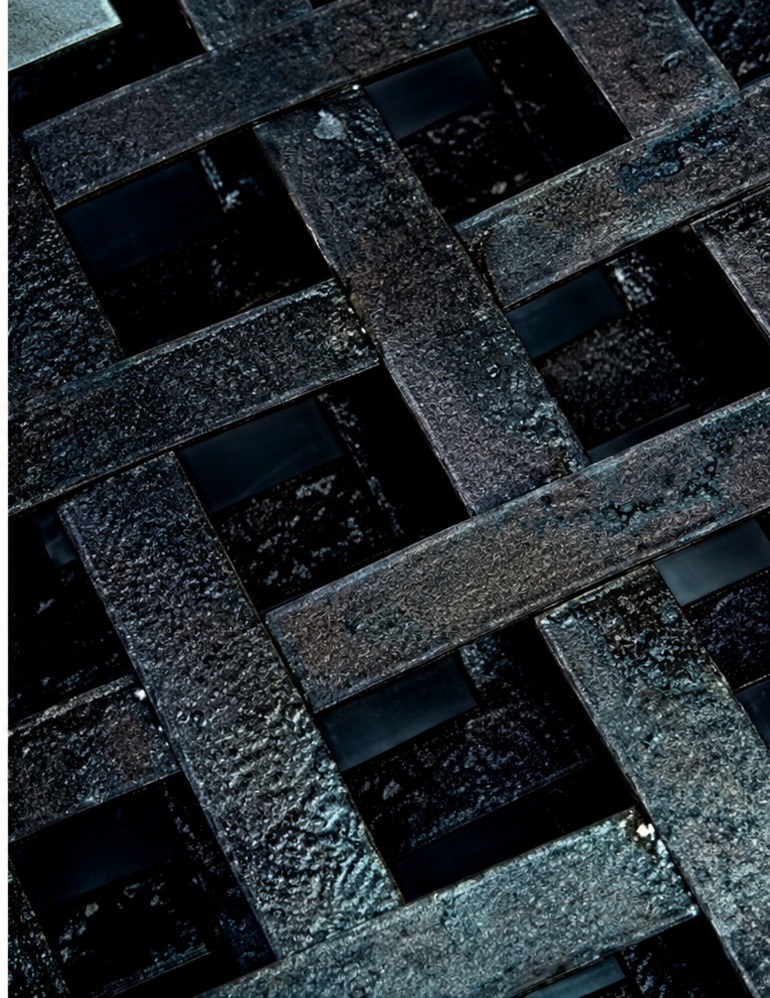
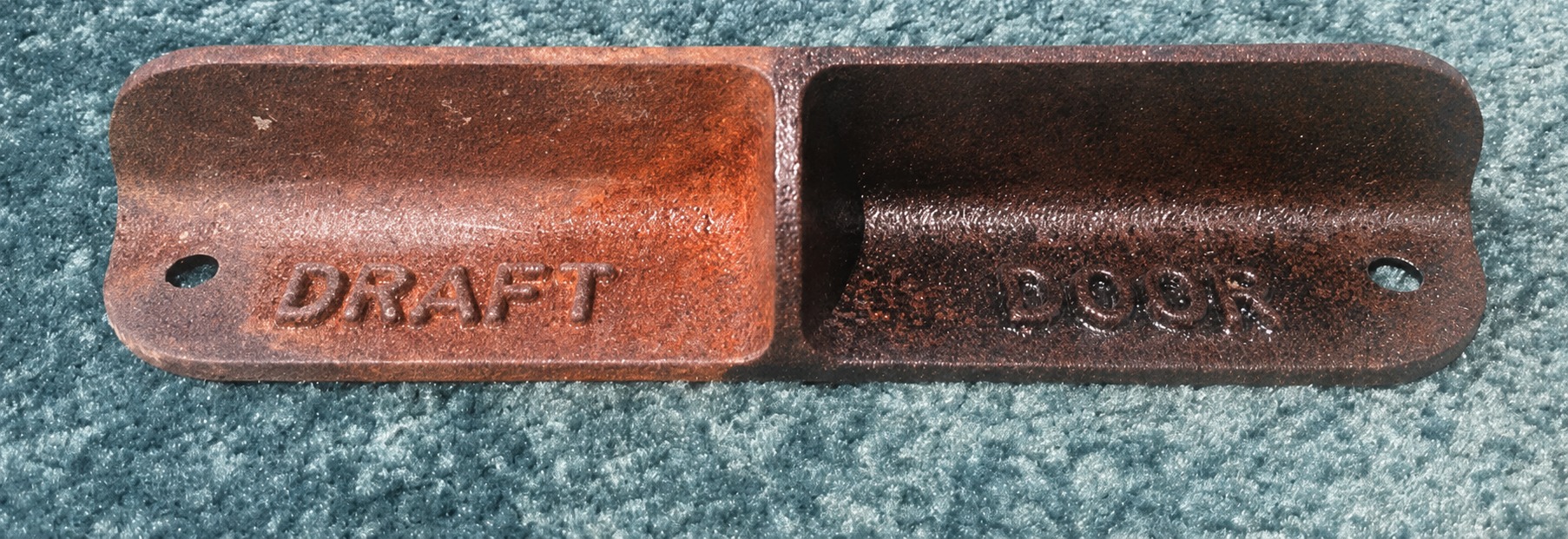
Rusted metal in, paint-ready surface out
Brush RustGuard™ over sound rust, let it cure, then paint. Images are illustrative — results depend on surface condition and preparation.
The short answer
Converter belongs on the parts of a tool you paint, not the parts that cut, slide or measure. Vice bodies, machine bases, table saw frames, toolbox shells, clamp frames and garden tool heads convert and paint beautifully. Blades, cutting edges, ways, lead screws, chucks and precision surfaces should be cleaned mechanically and oiled instead.
- Paintable castings and frames: convert, cure, paint
- Cutting edges, machined ways and measuring faces: abrasive plus oil, never converter
- A one-bottle purchase usually covers a whole workshop round
- Degreasing matters more here than anywhere — old tools are covered in oil
Where rust shows up first
The areas worth checking before you order.
- Vice bodies, bench legs and workbench frames
- Clamp frames and G-clamp bodies
- Cast-iron machine bases and stands
- Garden tool heads, spades, forks and shears frames
- Toolbox shells, roller cabinets and shelving
- Wheelbarrow trays and hand truck frames
Step-by-step on this job
- 01
Split the job
Decide which surfaces must stay bare metal. Mask or dismantle those before anything else.
- 02
Wire brush the castings
A cup brush on a drill makes short work of a vice body or bench frame.
- 03
Degrease thoroughly
Workshop tools carry decades of oil. Degrease twice if the first pass beads water.
- 04
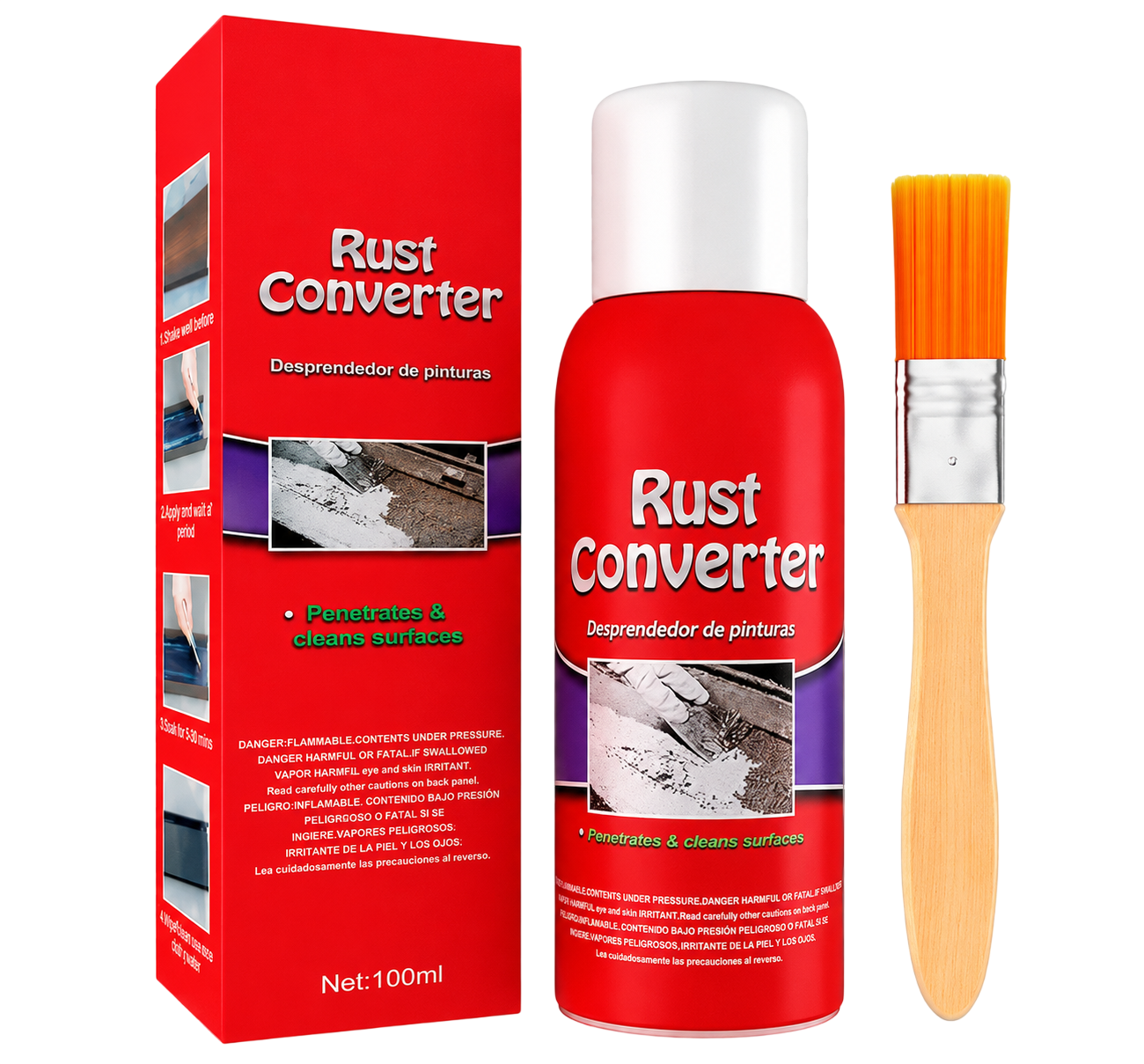
Convert the non-working surfaces
Brush into the casting texture. Cast iron is porous and drinks more than smooth steel.
- 05
Enamel after 24 hours
Machine enamel or hard-wearing gloss gives a finish that shrugs off knocks and solvent splashes.
What not to do
The cautions that save a re-do.
- Do not coat cutting edges, machined tables, slideways or threads
- Keep it off vice jaw faces and clamp screws
- Bearing surfaces and bright shafts should be stripped and oiled instead
- Tools that will be re-sharpened need bare metal at the edge
Typical quantities
A starting point based on the jobs customers order for most often.
| Job | Bottles |
|---|---|
| Bench vice body | 1 bottle covers several |
| Workbench steel frame | 1 bottle |
| Set of garden tools | 1 bottle |
| Roller cabinet and toolbox shells | 1–2 bottles |
| Cast-iron machine base and stand | 2 bottles |
Work out your exact quantity
Area
100 sq ft
Bottles needed
3
Recommended bundle
×3 — $42
Based on up to 55 sq ft per bottle on smooth steel, adjusted for surface condition. Estimates only — measure generously.
Why converters win
RustGuard™ vs the old ways
| Method | RustGuard™ | Grinding / sanding | Naval jelly | Paint straight over rust |
|---|---|---|---|---|
| Works on pitted rust you cannot reach | Partly | |||
| No power tools required | ||||
| Leaves a paint-ready surface | After priming | |||
| Stops the treated rust spreading | ||||
| Low dust, low mess | ||||
| Cost for a 100 sq ft panel | From $24 | Discs + hours | $$ | Repaint yearly |
Read the detail: rust converter vs naval jelly · converter vs remover · how to choose one
What buyers say
Rated by people who hate sanding
Saved my truck bed
Wire-brushed the loose scale, brushed a coat on and left it overnight. Next morning it was a flat black surface that took primer without fighting me.
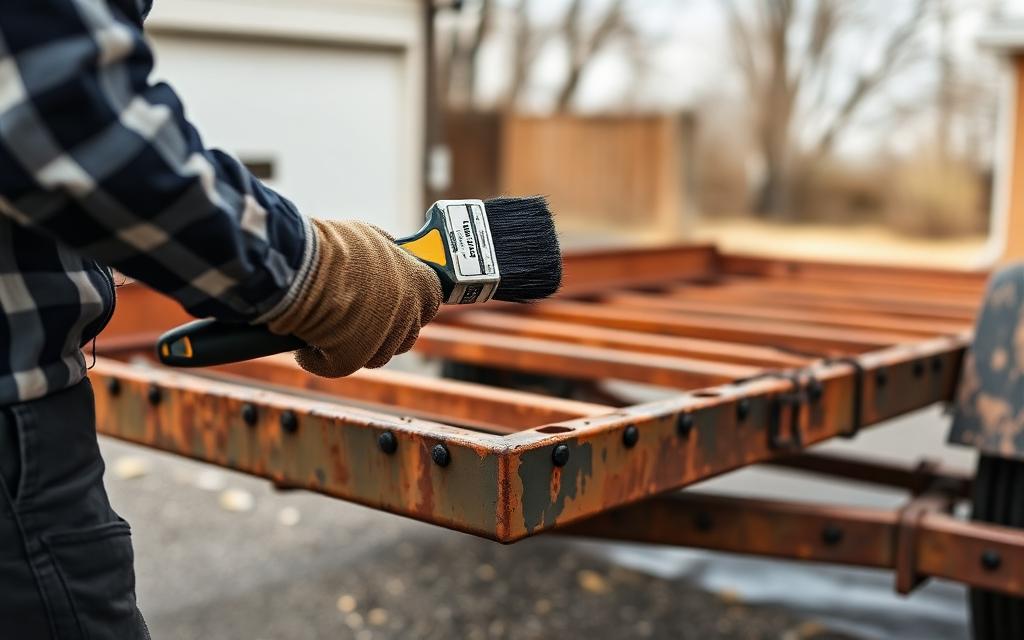
Dale R. · Tucson, AZ
No more grinding for hours
I restore gates and railings. This cut my prep time in half on pitted sections where the grinder just polishes the rust around.
Marcus H. · Leeds, UK
Held up through the wet season
Treated the shed roof sheets and topcoated them. Two seasons of rain later the treated panels still look the way I left them.
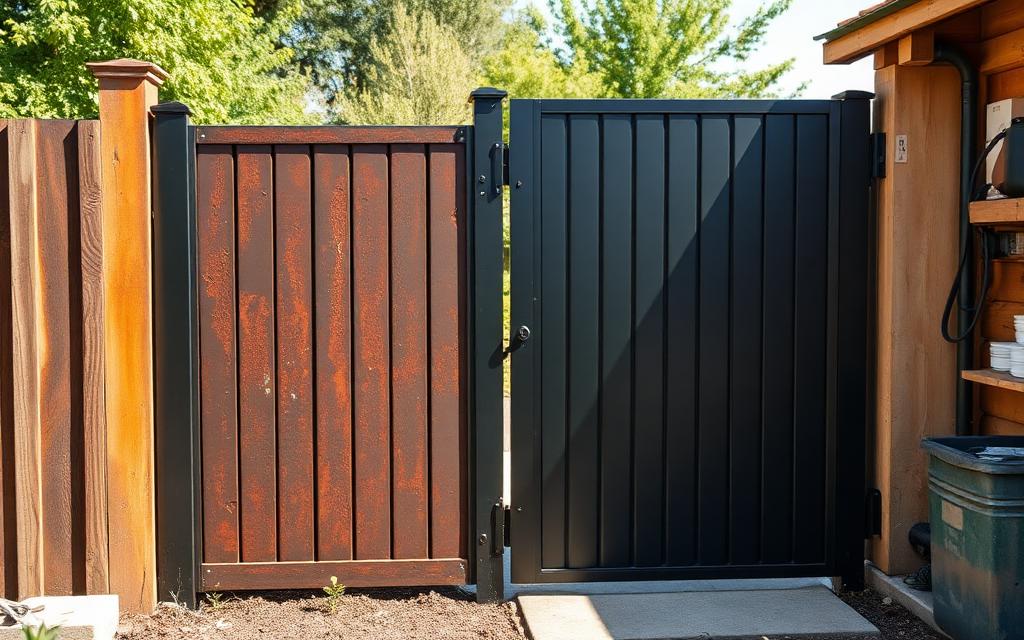
Janine K. · Brisbane, AU
Trailer frame looks new
Frame rails were surface-rusted everywhere. Two bottles covered the whole thing with enough left over for the tongue and jack.
Tom V. · Hamilton, ON
Simple to use
Shake, brush, wait. No mixing, no strong acid smell like the jelly products I used before.
Ricardo M. · Houston, TX
Bought the 5-pack, no regrets
Fence posts, patio furniture and a mower deck off one bundle. Ordering the workshop pack was cheaper than buying singles twice.
Ellen S. · Portland, OR
Reviews shown are illustrative sample copy while we collect verified customer feedback.
Buy with confidence
Nothing to lose but the rust
Worldwide shipping
Tracked delivery to the US, UK, Canada, Australia, EU and more. Free on 3-bottle bundles and above.
Encrypted payment
Card details are captured on a secure, encrypted checkout page. We never see or store your card number.
30-day guarantee
If RustGuard™ is not right for your project, contact support within 30 days for a refund of the product price.
No grinder needed
Brush-on chemistry designed for pitted, hard-to-reach rust where abrasives cannot get a bite.
Secure checkout
Order your RustGuard™ bundle
Pick a bundle, tap checkout — that's it. No account, no forms to fight. Your delivery address and payment are collected on the secure checkout page.
Step 1 — Choose your bundle
One bottle covers about 55 sq ft. Treating a whole vehicle, trailer or roof section? Most people need 3 or more.
Free tracked shipping unlocked
Most projects use more than they expect — the ×8 pack drops you to $9.00/bottle (you pay $11.00 now).
Step 2 — Checkout securely
Apple Pay, Google Pay and all major cards are accepted on the secure Shopify checkout — address, payment and confirmation, all in one place.
- 1Tap checkoutYour bundle is reserved in a secure cart.
- 2Pay your wayCard, Apple Pay or Google Pay — under a minute.
- 3Tracked dispatchConfirmation email instantly, packed in 1 business day.
“Ordered the 5-pack, treated the whole trailer frame and still had a bottle spare.”
Tom V. · Hamilton, ON
“Arrived tracked in five days and the brush kit saved me a trip to the store.”
Dale R. · Tucson, AZ
Reviews are illustrative while verified feedback is collected.
Split every tool into two zones before you start
The single decision that determines whether a tool restoration goes well is dividing the tool into painted surfaces and working surfaces. A bench vice is a painted casting plus hardened jaws and a machined slide. A table saw is a painted frame plus a ground cast-iron table. A plane is a painted body plus a sole and an iron. Treat the first zone chemically and the second zone mechanically.
The reason is not that the converter damages steel — it is that any conversion film changes dimensions and friction. A few tenths of a thousandth on a machined way is enough to make a slide sticky, and a black film on a measuring face is a black film on your reference surface. Neither is what you want.
So: convert and paint the castings, frames, bodies, shells and handles. Clean, deoxidise and oil the edges, ways, screws, chucks, spindles and reference faces. Done that way, an old vice or a rescued machine looks factory and still works exactly as it should.
Decide surface by surface
| Part | Treatment | Why |
|---|---|---|
| Vice body and base casting | Convert and paint | Painted surface, no fit tolerance |
| Vice jaws and slide | Abrasive plus oil | Hardened and machined, must stay dimensional |
| Table saw or bandsaw frame | Convert and paint | Painted structure |
| Cast iron machine table | Abrasive, then wax or oil | Reference surface; needs slip, not film |
| Toolbox and cabinet shells | Convert and paint | Ideal job, large flat areas |
| Hand tool heads (hammers, spades, forks) | Convert and paint the head, not the striking face | Painted metal, but keep coating off working faces |
| Chisel, plane and saw blades | Abrasive plus oil | Edges and reference soles |
| Lead screws, chucks, collets | Deoxidise and oil | Must remain to size and free-running |
| Wheelbarrow and mower decks | Convert and paint | Large painted panels, heavy rust, easy win |
A weekend workshop rescue
- 01
Dismantle as far as is sensible
Take the jaws off the vice, the fence off the saw, the head off the shaft. Twenty minutes here saves an hour of masking.
- 02
Degrease everything, twice
Old tools carry decades of oil. Detergent, then a solvent wipe, then a splash test — water must sheet, not bead.
- 03
Wire-brush the loose scale from the castings
A drill-mounted wheel on the flats, a small brush in the corners and around the bolt bosses.
- 04
Mask or remove every working surface
Jaws, ways, threads, bores, edges and any stamped markings you want to keep readable.
- 05
Brush one to two thin coats onto the castings
One coat on light surface rust, two on pitted or long-neglected iron.
- 06
Deoxidise and oil the working parts separately
Abrasive pad or a soak, dry thoroughly, then a light machine oil or paste wax while the paint cures.
- 07
Cure 24 hours, paint, reassemble
Machine enamel on castings, hammered finish on tool bodies. Refit with clean fasteners.
Garden tools, which are half the problem
Spades, forks, shears, mower decks and wheelbarrow bodies rust because they go away wet at the end of the season. The socket where the handle meets the head is the classic failure — water wicks into the joint, stays there all winter, and pushes the head loose the following spring.
Treat the head and the socket, keep the coating off the cutting edge of a spade or shears, and let it cure fully before you put a handle back in. On a mower deck, take the blade off, scrape the compacted grass out, degrease properly and convert the whole underside — grass acid plus moisture is remarkably aggressive.
Then change the habit that caused it: rinse, dry, and a wipe of oil before storage. A single bottle of converter and ten minutes at the end of each season keeps a shed of tools indefinitely.
Keeping them clean afterwards
- Wipe tools dry before they go away, every time — this beats every coating
- A light oil film on bare working surfaces after use
- Silica gel or a low-wattage heater in a damp shed or toolbox
- Paste wax on machine tables, refreshed a couple of times a year
- Store edge tools in a rack rather than a pile where they trap moisture
- Touch up paint chips on castings before they turn into rust spots
How much for a workshop round?
Area
100 sq ft
Bottles needed
3
Recommended bundle
×3 — $42
Based on up to 55 sq ft per bottle on smooth steel, adjusted for surface condition. Estimates only — measure generously.
Never put it on these
- Cutting edges: chisels, planes, saws, shears, mower blades
- Machined ways, slides, lead screws, spindles and chucks
- Measuring faces on squares, rules, straight edges and gauges
- Anything that must stay dimensionally exact or free-running
- Cast iron cookware and any food contact surface
- Tools running hot enough to exceed roughly 400°F
Frequently asked questions
Can I use it on a plane or chisel?
Not on the working faces. Strip those with a remover or abrasive and protect them with oil or wax.
What about a cast-iron table saw top?
No. Machined reference surfaces must stay bare and waxed. Treat the stand and cabinet instead.
Does it work on chrome-plated tools?
Where the plating has failed and the steel beneath is rusting, it will react with that steel. It will not restore the chrome.
How do I stop it coming back in a damp shed?
Topcoat everything, control humidity if you can, and keep bare surfaces waxed or oiled.
Can I use rust converter on tools?
On the painted parts — vice bodies, machine frames, toolbox shells, mower decks and garden tool heads. Keep it off cutting edges, machined ways, measuring faces and anything that must stay to size.
What about a rusty bench vice?
Ideal. Strip it, convert and paint the body and base, and clean and oil the jaws and slide separately. One bottle does a vice and plenty besides.
Will it hurt hardened steel?
It converts the surface oxide only, but on a hardened edge or a ground reference face you do not want any film at all. Use abrasive and oil there.
Can I use it inside a toolbox?
Yes, on the shell and drawers. Ventilate while it dries and let it cure fully before putting tools back in.
How do I stop it happening again?
Dry tools before storage, oil bare working faces, and control the humidity in the shed. Coatings help; habits matter more.
Does one bottle really cover a workshop?
About 55 sq ft in two coats, which is a vice, a mower deck, a barrow body and a handful of garden tools. Most workshop rounds need one bottle.
What paint should I use on machine castings?
A hard machine enamel or hammered finish. Both go over the cured film after 24 hours without a separate primer.
Keep reading
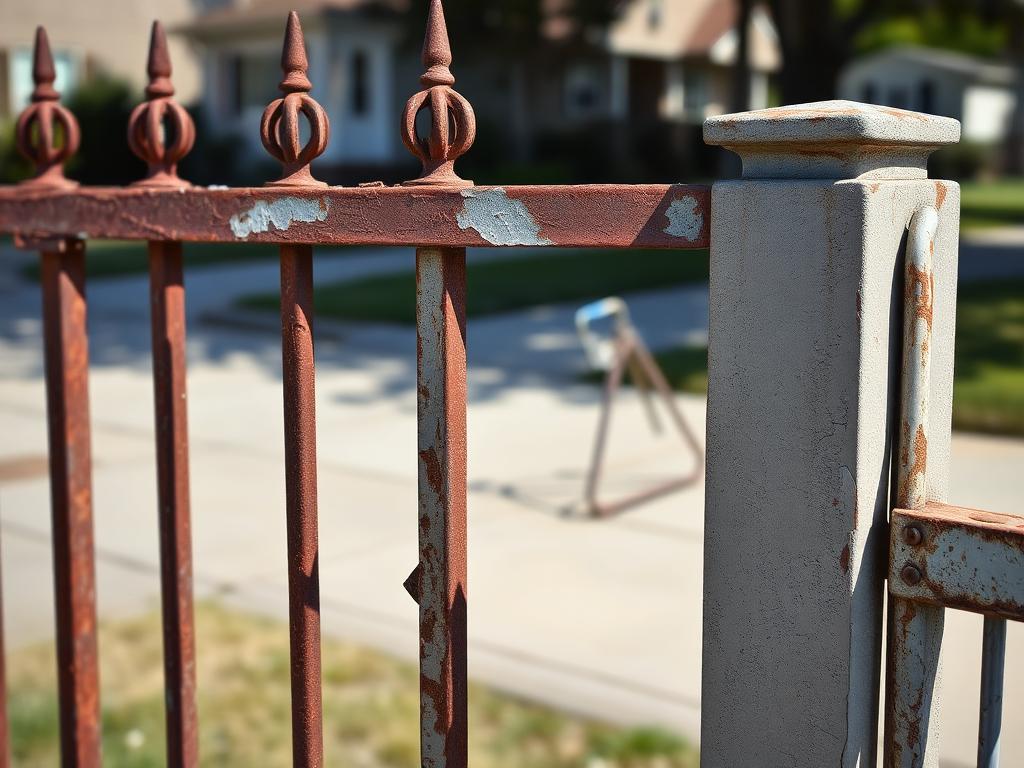
- Rust converter for fences, gates and railingsRestore rusted wrought iron gates, railings and fence panels. RustGuard™ converts rust in place and primes for your finish coat.
- How to remove rust from metalAbrasives, acids, electrolysis, chelation and conversion — what each rust removal method costs in time and effort, and when each one is the right call.
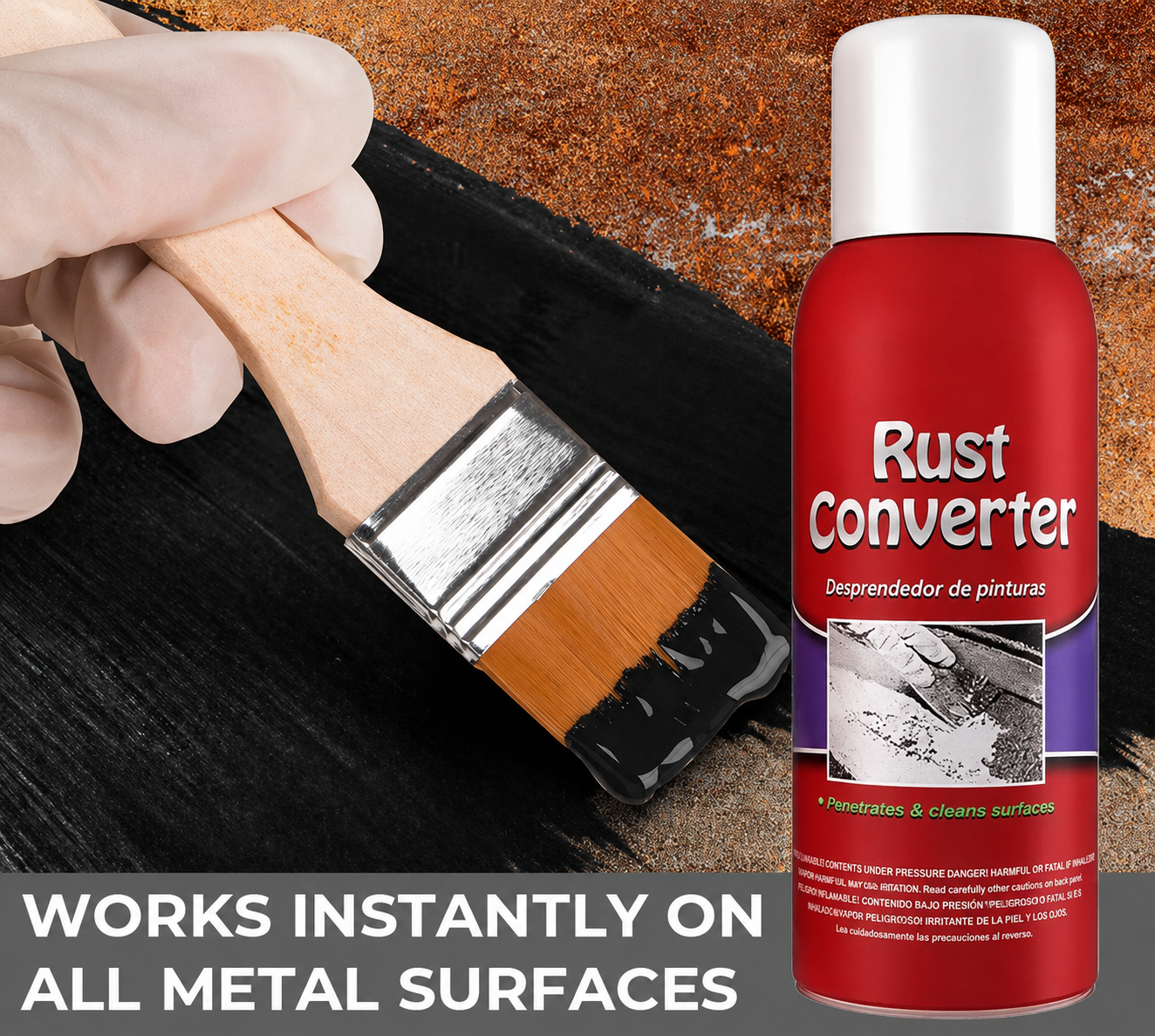
- Rust converter for iron and steel that leaves a paint-ready surfaceBrush RustGuard™ onto rusted iron or steel, convert the corrosion and topcoat in 24 hours. Bundles from $24, free shipping on 3+.
- Rust prevention guideA practical prevention programme for vehicles, tools and outdoor steel — coatings, drainage, storage, salt management and an inspection schedule.
- Rust converter for BBQ grills and fire pitsWhich grill parts you can treat with a rust converter, which need heat-resistant paint, and what must never be coated at all.
Last step
Ready to stop the rust?
Ships from our US fulfilment partner, typically 3–7 business days. 30-day money-back guarantee.