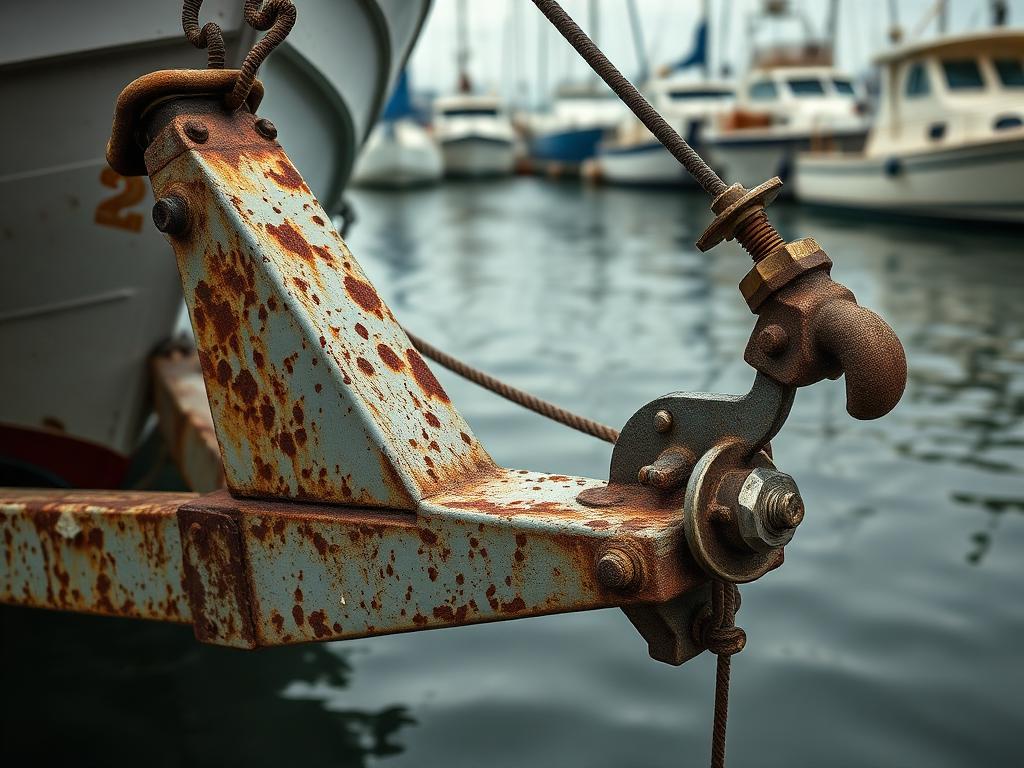
- Encrypted paymentSecure, encrypted checkout
- Tracked worldwideFree on 3+ bottle bundles
- 30-day guaranteeMoney-back if it is not for you
- Clear labellingCoverage and results stated honestly
Stock up & save
Choose your RustGuard™ bundle
Listed in USD and billed in USD; your bank converts to GBP at checkout.
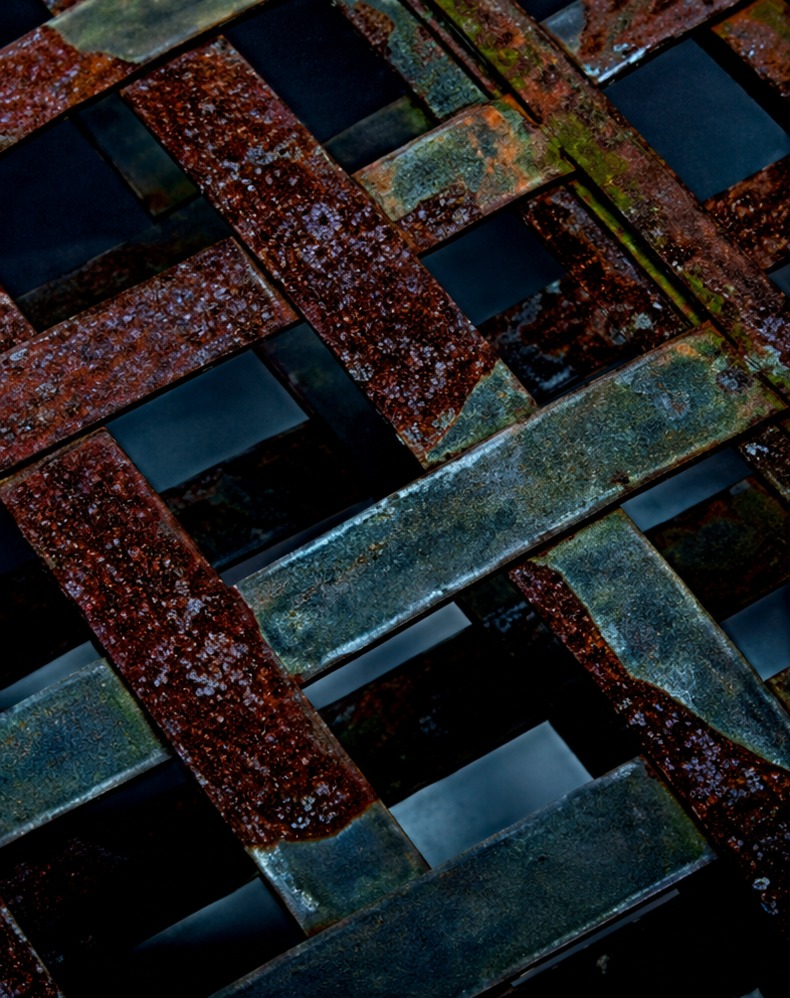
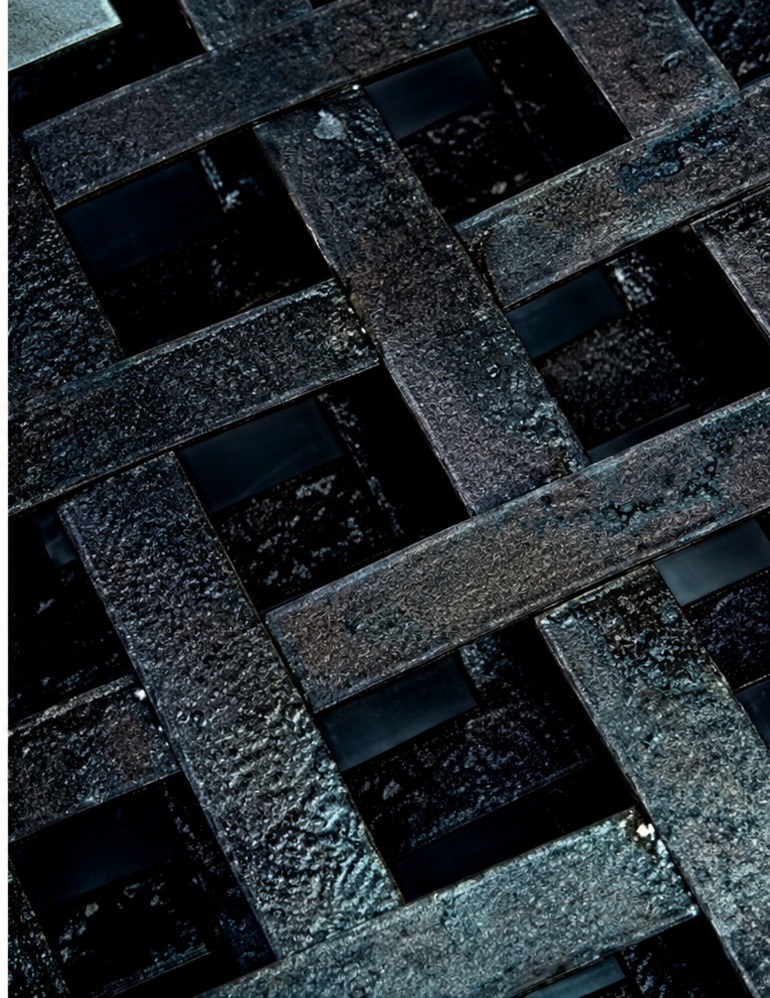
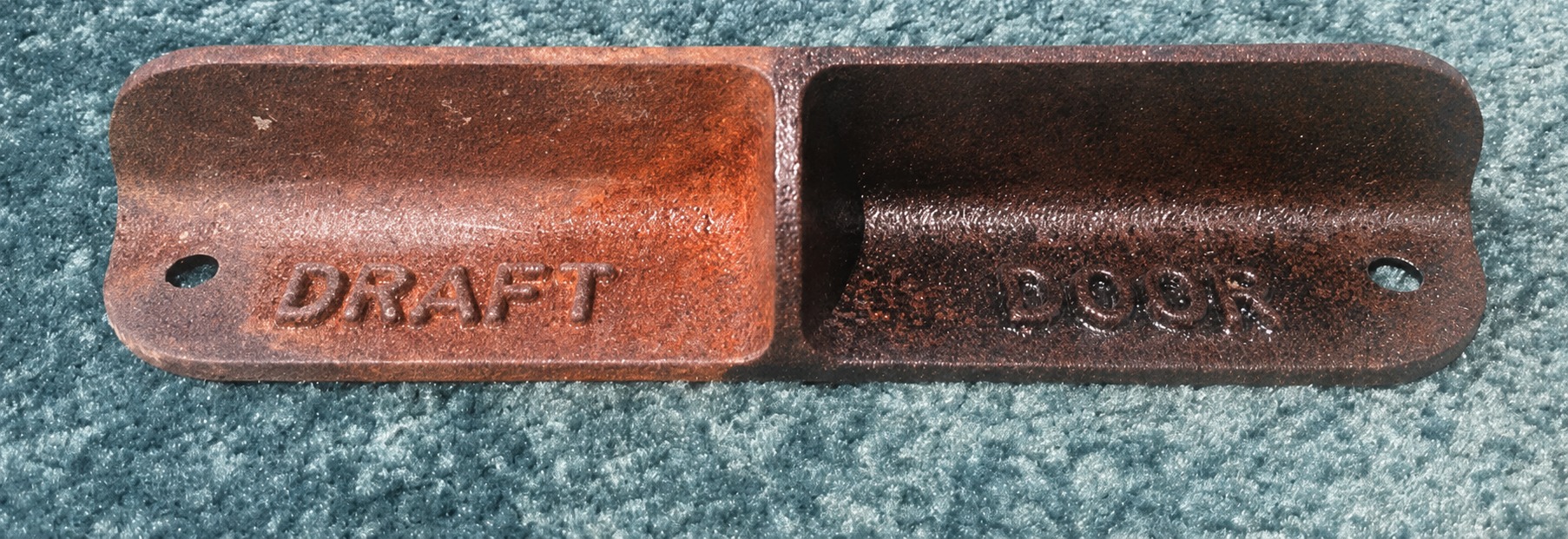
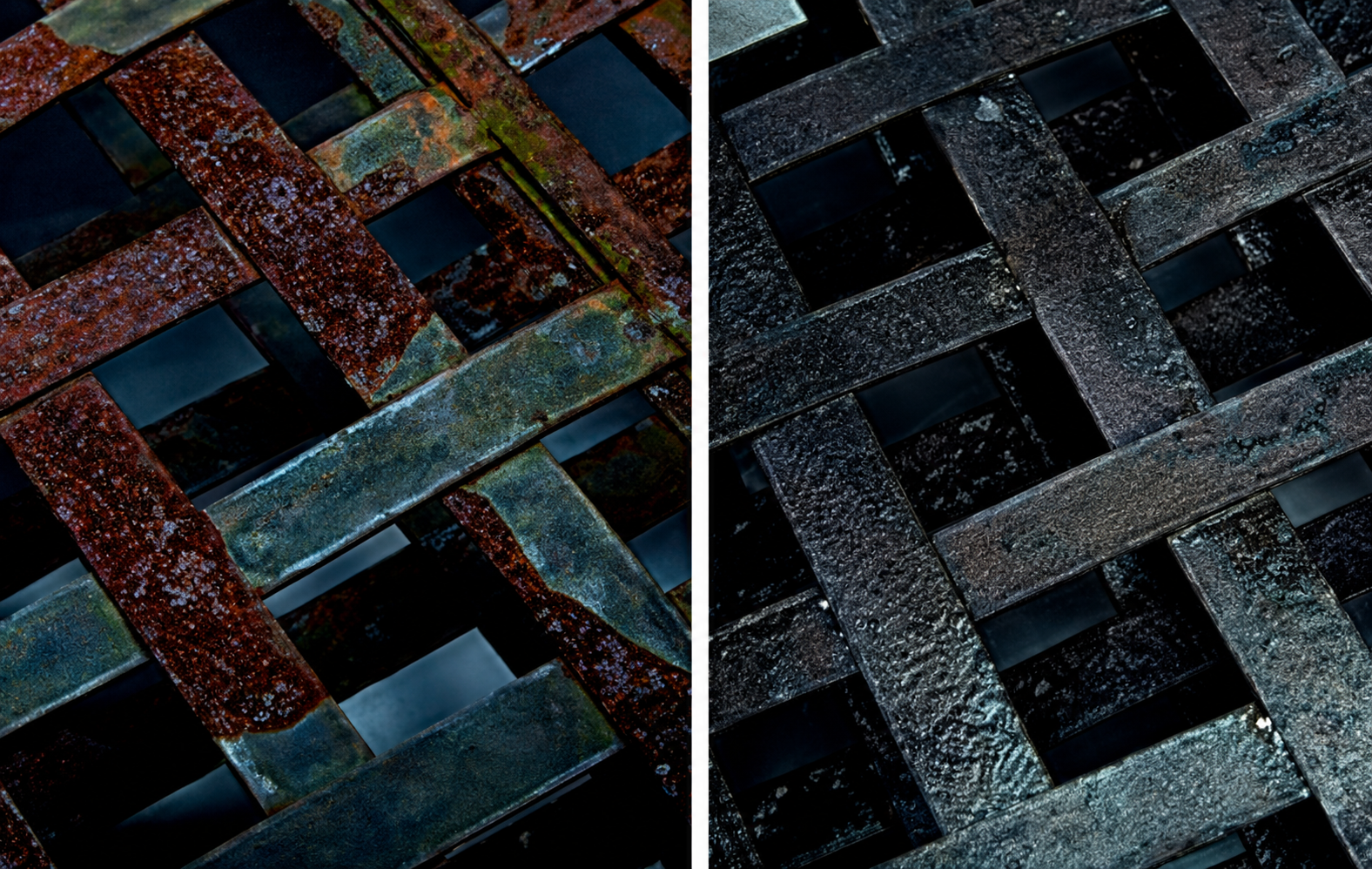
Rusted metal in, paint-ready surface out
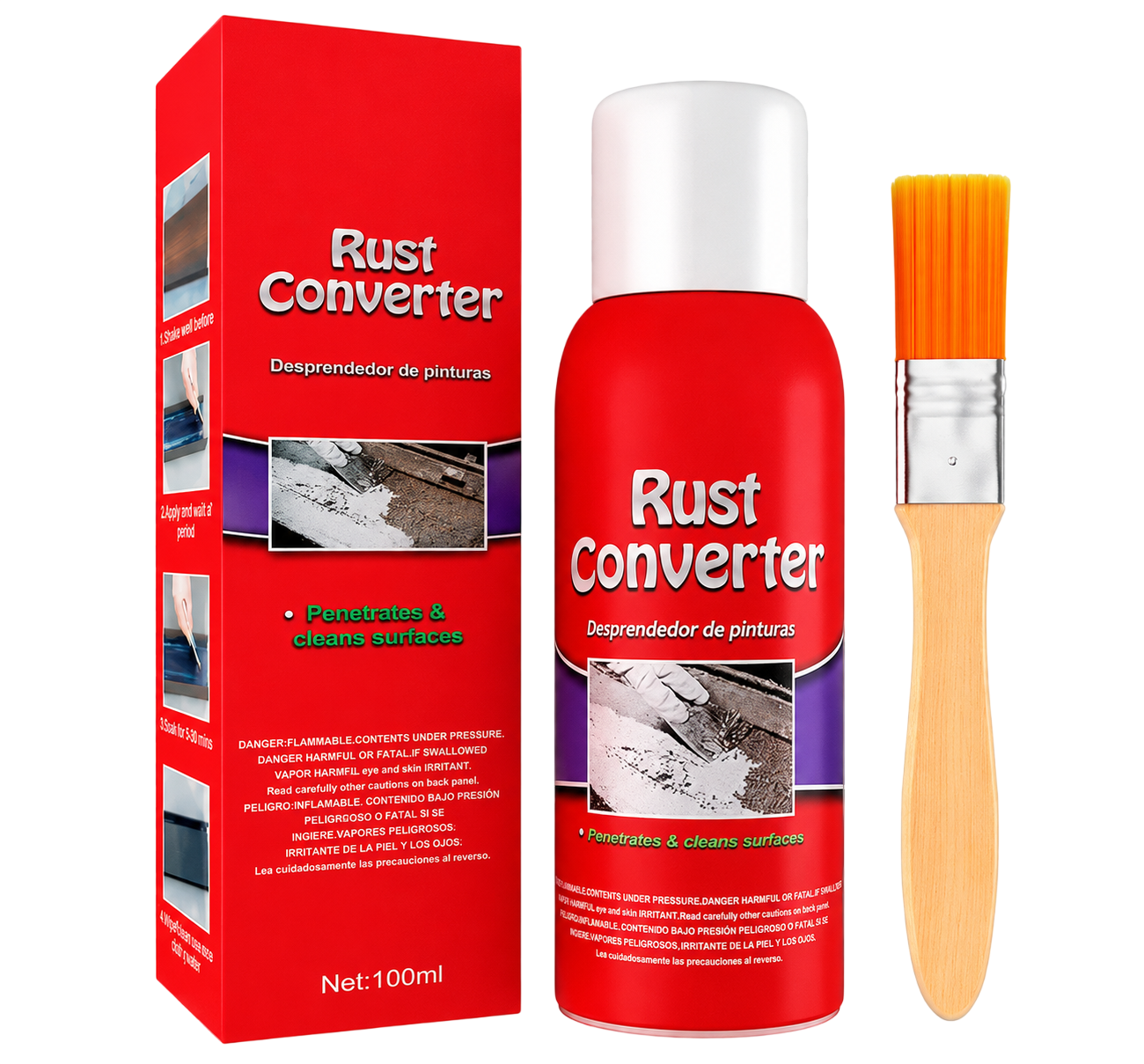
Brush RustGuard™ over sound rust, let it cure, then paint. Images are illustrative — results depend on surface condition and preparation.
The short answer
Around boats, a converter is for the ferrous steel — trailer frames, winch posts, brackets, engine mounts, davits and fasteners' host metal — not for aluminium hulls or stainless fittings, which corrode by a different mechanism. Salt makes everything faster, so rinse habits matter as much as the coating. One to three bottles covers most trailer and fitting work.
- Boat trailer frames and axles are the most common job: two to three bottles
- Rinse the trailer with fresh water after every launch — that single habit outlasts any coating
- Not for aluminium hulls, stainless rails or galvanic pitting between dissimilar metals
- Submersion is the harshest test there is; expect to inspect annually
Where rust shows up first
The areas worth checking before you order.
- Boat trailer frames, axles and spring hangers
- Winch posts, jockey wheels and coupling assemblies
- Steel bunk brackets, rollers and keel supports
- Steel engine mounts and transom brackets
- Davits, gantries and steel deck fittings
- Steel anchor lockers and chain plates
Step-by-step on this job
- 01
Fresh-water rinse and full dry
Salt crystals in the pitting will keep the corrosion going under any coating. Rinse thoroughly, then give it a dry day.
- 02
Remove scale from the worst areas
Salt rust flakes in layers. Scrape and wire-brush until the surface is solid.
- 03
Degrease the launch grime
Slipway film and grease need a detergent wash before the converter can touch the metal.
- 04
Convert, working into every seam
Trailer frames are full of laps and welds. Get the brush right into them — that is where salt sits.
- 05
Topcoat with a marine-grade enamel
After 24 hours, use a topcoat rated for marine exposure. Re-inspect at the end of each season.
What not to do
The cautions that save a re-do.
- Not for aluminium hulls, stainless rigging, bronze or brass fittings
- Keep it out of the water — treat parts on land and let them cure fully
- Rinse trailers with fresh water and dry completely before treating
- Wheel bearings, brake surfaces and wire rope should be masked or removed
Typical quantities
A starting point based on the jobs customers order for most often.
| Job | Bottles |
|---|---|
| Small single-axle trailer frame | 2 bottles |
| Twin-axle trailer, full frame | 3 bottles |
| Winch post and coupling assembly | 1 bottle |
| Bunk brackets and rollers, full set | 1 bottle |
| Trailer plus steel deck fittings | 5 bottles |
Work out your exact quantity
Area
100 sq ft
Bottles needed
3
Recommended bundle
×3 — $42
Based on up to 55 sq ft per bottle on smooth steel, adjusted for surface condition. Estimates only — measure generously.
Why converters win
RustGuard™ vs the old ways
| Method | RustGuard™ | Grinding / sanding | Naval jelly | Paint straight over rust |
|---|---|---|---|---|
| Works on pitted rust you cannot reach | Partly | |||
| No power tools required | ||||
| Leaves a paint-ready surface | After priming | |||
| Stops the treated rust spreading | ||||
| Low dust, low mess | ||||
| Cost for a 100 sq ft panel | From $24 | Discs + hours | $$ | Repaint yearly |
Read the detail: rust converter vs naval jelly · converter vs remover · how to choose one
What buyers say
Rated by people who hate sanding
Saved my truck bed
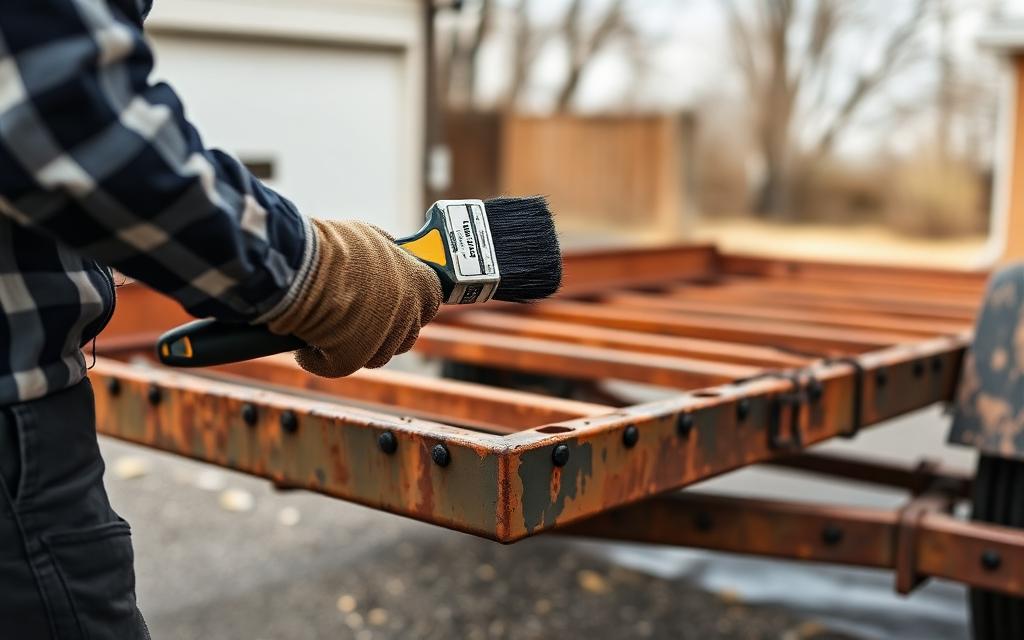
Wire-brushed the loose scale, brushed a coat on and left it overnight. Next morning it was a flat black surface that took primer without fighting me.
Dale R. · Tucson, AZ
No more grinding for hours
I restore gates and railings. This cut my prep time in half on pitted sections where the grinder just polishes the rust around.
Marcus H. · Leeds, UK
Held up through the wet season
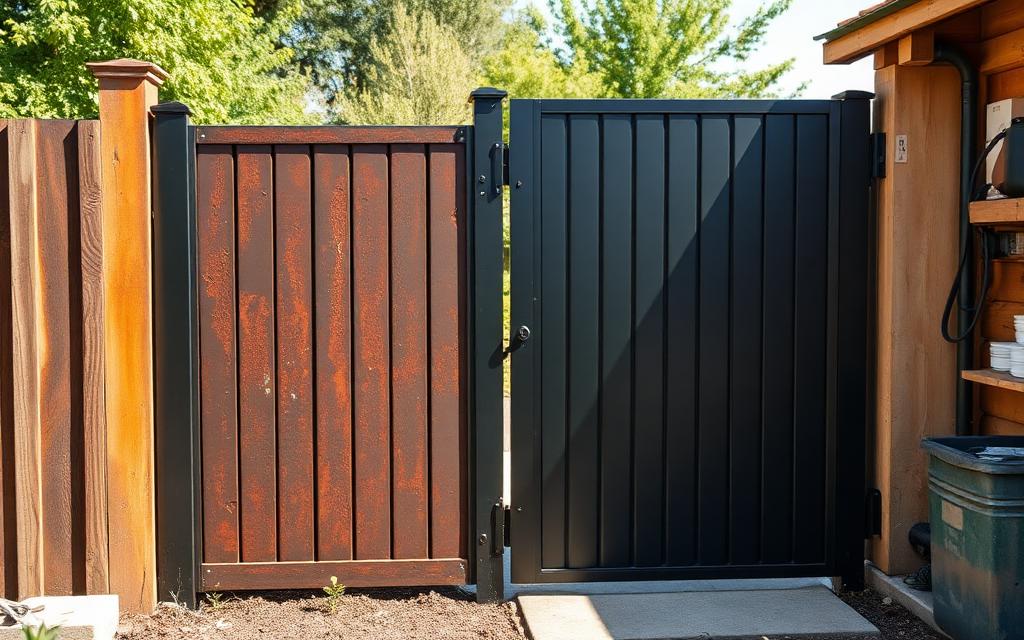
Treated the shed roof sheets and topcoated them. Two seasons of rain later the treated panels still look the way I left them.
Janine K. · Brisbane, AU
Trailer frame looks new
Frame rails were surface-rusted everywhere. Two bottles covered the whole thing with enough left over for the tongue and jack.
Tom V. · Hamilton, ON
Simple to use
Shake, brush, wait. No mixing, no strong acid smell like the jelly products I used before.
Ricardo M. · Houston, TX
Bought the 5-pack, no regrets
Fence posts, patio furniture and a mower deck off one bundle. Ordering the workshop pack was cheaper than buying singles twice.
Ellen S. · Portland, OR
Reviews shown are illustrative sample copy while we collect verified customer feedback.
Buy with confidence
Nothing to lose but the rust
Worldwide shipping
Tracked delivery to the US, UK, Canada, Australia, EU and more. Free on 3-bottle bundles and above.
Encrypted payment
Card details are captured on a secure, encrypted checkout page. We never see or store your card number.
30-day guarantee
If RustGuard™ is not right for your project, contact support within 30 days for a refund of the product price.
No grinder needed
Brush-on chemistry designed for pitted, hard-to-reach rust where abrasives cannot get a bite.
Secure checkout
Order your RustGuard™ bundle
Pick a bundle, tap checkout — that's it. No account, no forms to fight. Your delivery address and payment are collected on the secure checkout page.
Step 1 — Choose your bundle
One bottle covers about 55 sq ft. Treating a whole vehicle, trailer or roof section? Most people need 3 or more.
Free tracked shipping unlocked
Most projects use more than they expect — the ×8 pack drops you to $9.00/bottle (you pay $11.00 now).
Step 2 — Checkout securely
Apple Pay, Google Pay and all major cards are accepted on the secure Shopify checkout — address, payment and confirmation, all in one place.
- 1Tap checkoutYour bundle is reserved in a secure cart.
- 2Pay your wayCard, Apple Pay or Google Pay — under a minute.
- 3Tracked dispatchConfirmation email instantly, packed in 1 business day.
“Ordered the 5-pack, treated the whole trailer frame and still had a bottle spare.”
Tom V. · Hamilton, ON
“Arrived tracked in five days and the brush kit saved me a trip to the store.”
Dale R. · Tucson, AZ
Reviews are illustrative while verified feedback is collected.
Salt water changes the rules
Chloride does two things that make marine corrosion different. It conducts, which accelerates the electrochemical reaction, and it stays behind after the water evaporates, drawing moisture back to the metal from humid air. A trailer that is dunked in salt water and never rinsed is effectively wet all week.
It also concentrates in exactly the places you cannot see: inside box-section trailer frames, in the gap between a leaf spring and its hanger, under the bunk carpet, inside the axle tube, and behind every bracket bolted flat to the rail. Those are the places that fail, and no external coating reaches into them.
So the honest framing for marine work is this: conversion plus topcoat plus a rinse habit buys you years on the steel you can reach. Nothing you brush on the outside fixes salt sitting inside a sealed tube — that is what fresh water flushing and cavity wax are for.
Marine steel jobs and quantities
| Item | Approx. area | Bottles |
|---|---|---|
| Small boat trailer frame, 12–14 ft | 70 sq ft | 1–2 bottles |
| Large or tandem trailer frame | 150 sq ft | 3 bottles |
| Winch post, jockey wheel and coupling | 15 sq ft | 1 bottle |
| Bunk brackets and rollers frame | 25 sq ft | 1 bottle |
| Steel engine mounts and brackets | 10 sq ft | 1 bottle |
| Davits, gantry or A-frame | 40 sq ft | 1 bottle |
| Steel-hulled tender or workboat topsides | 200 sq ft | 4 bottles |
Trailer refresh over a weekend
- 01
Get the boat off and the trailer washed
Fresh water, thoroughly, including inside the frame through the existing holes. Then leave it a full day to dry.
- 02
Strip the bunk carpet and covers
The corrosion is always worse under carpet and rubber than on the open rail. Take them off so you can see it.
- 03
Scrape, wire-brush and inspect
Remove all the loose scale, then poke the suspect areas. Anything soft or perforated needs replacing before it is coated.
- 04
Degrease and mask
Degreaser on the greasy hubs and coupling area, then mask bearings, brake components on braked trailers, wiring and light units.
- 05
Brush two thin coats on the frame
Work into weld seams, bracket margins, spring hangers and the underside of the rails. Second coat once the first has turned dark.
- 06
Cure 24 hours, then marine topcoat
A marine or chassis enamel over the cured film. This is the layer that faces the salt, so do not skip it.
- 07
Wax the cavities and rebuild
Cavity wax inside the frame tubes through the existing holes, then refit bunks, carpet and lights.
Ferrous, non-ferrous and galvanic corrosion — tell them apart first
Red-brown rust that flakes and stains is iron oxide and a valid converter target. White or grey powdery corrosion, or pitting around a stainless fitting, is not: that is aluminium oxidising or galvanic action between dissimilar metals, and there is no iron oxide for the chemistry to convert.
Galvanic pitting deserves particular caution because it is a symptom, not just damage. If a stainless bolt is eating the aluminium or mild steel around it, the fix is isolation — nylon washers, sealant, correct fastener choice, or an anode — not a coating over the top. Coat it and the reaction continues underneath.
Galvanised trailer frames sit in the middle. Where the galvanising is intact, leave it alone or use a galv primer. Where it has broken down and gone red, treat those areas as steel and convert them, then topcoat the whole member so the repair does not stand out.
Habits that outlast any coating
- Rinse the trailer with fresh water after every salt launch, including inside the frame
- Flush and repack wheel bearings on schedule — bearing failure is a bigger risk than frame rust
- Lift bunk carpet annually and check underneath
- Keep drain holes clear so tubes empty instead of holding brine
- Store the trailer off wet ground and nose-up so water runs out
- Touch up chips as they happen rather than annually
What it is not for around a boat
- Aluminium hulls, plate or outboard casings
- Stainless rails, fittings and fasteners
- Galvanic pitting between dissimilar metals — fix the isolation instead
- Below-waterline or permanently immersed surfaces, which need an antifouling system
- Bright, sound galvanising on a hot-dip galvanised trailer
- Perforated or thinned frame members carrying the boat's weight
Shipping to United Kingdom
- Tracked delivery across England, Scotland, Wales and Northern Ireland, typically 5–10 business days.
- Listed in USD and billed in USD; your bank converts to GBP at checkout.
- Free tracked shipping on bundles of 3 bottles and above.
- 30-day money-back guarantee from the date of delivery.
Frequently asked questions
Does it work on stainless steel?
No. Stainless pitting and tea-staining is a different problem and needs a stainless cleaner or passivation, not a converter.
Can I treat a galvanised trailer?
Yes, where the galvanising has failed and red rust is showing through. Treat those patches; leave sound galvanising alone.
How soon can I launch after treating?
Wait for the topcoat to fully cure — follow your paint's instructions, typically several days, not hours.
Will it help with salt already in the pitting?
Only if you rinse it out first. No coating outperforms trapped salt.
Can I use it on an aluminium boat?
No. Aluminium corrosion is not iron oxide, so there is nothing for the converter to react with. Use a product formulated for aluminium.
How many bottles for a boat trailer?
One to two for a small single-axle trailer, three for a large or tandem frame with second coats on the pitted areas.
Will it work below the waterline?
No. It is not an immersion coating and not an antifouling. Treat trailers, brackets and topside steel only.
Is it safe on a galvanised trailer?
Treat the areas where galvanising has failed and red rust has formed. Leave sound galvanising alone or use a galv primer.
What topcoat should I use near salt water?
A marine enamel or a good chassis paint. Two thin coats, and touch up chips promptly — salt finds every breach.
How often should I re-treat?
Inspect annually. With fresh-water rinsing after each launch, most trailers need touch-ups rather than a full re-do.
Can I treat the inside of the frame?
Not with a brush-on converter. Rinse it out, dry it, and use a cavity wax through the existing holes.
Keep reading
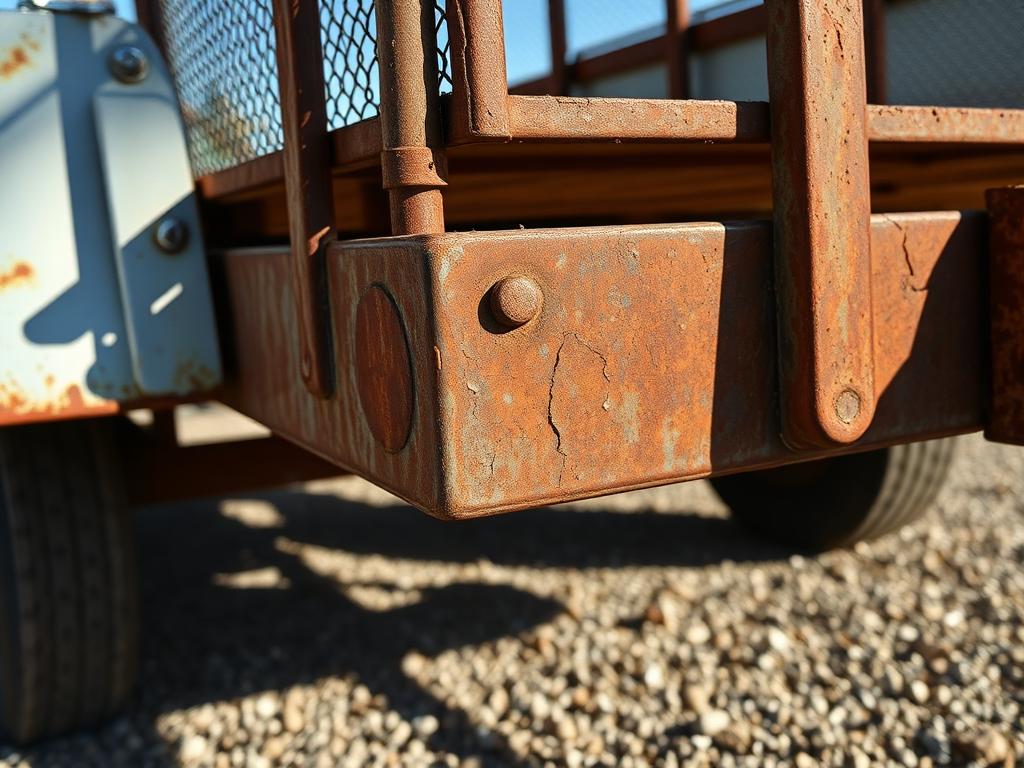
- Rust converter for trailers — United KingdomUnited Kingdom: Treat rust on trailer frames, decks, ramps and hitches with RustGuard™ — brush on, cure 24 hours, topcoat. Bundles from $24.
- Rust converter for iron and steel that leaves a paint-ready surface — United KingdomUnited Kingdom: Brush RustGuard™ onto rusted iron or steel, convert the corrosion and topcoat in 24 hours. Bundles from $24, free shipping on 3+.
Last step
Ready to stop the rust?
Tracked delivery across England, Scotland, Wales and Northern Ireland, typically 5–10 business days. 30-day money-back guarantee.